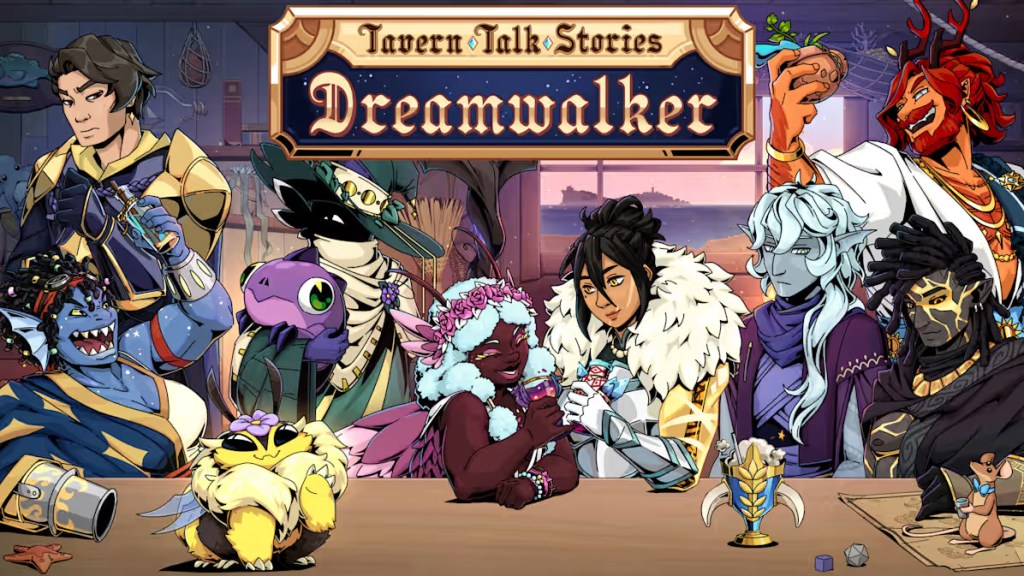
- Price: $15.99 USD (currently on sale for $14.39 until July 1st)
- Decoration DLC: $4.49 each or $7.99 bundled
- Tavern Talk & Dreamwalker Bundle: $33.99 for both games
- Developer/Publisher: Gentle Troll Entertainment
- Release Date: June 9, 2026
A review code was kindly provided by Future Friends Games on behalf of Gentle Troll Entertainment. We thank them for allowing us to cover something they’ve worked so hard on.
Content warning: rated E for everyone. “Mentions of death, grief, and violence.”
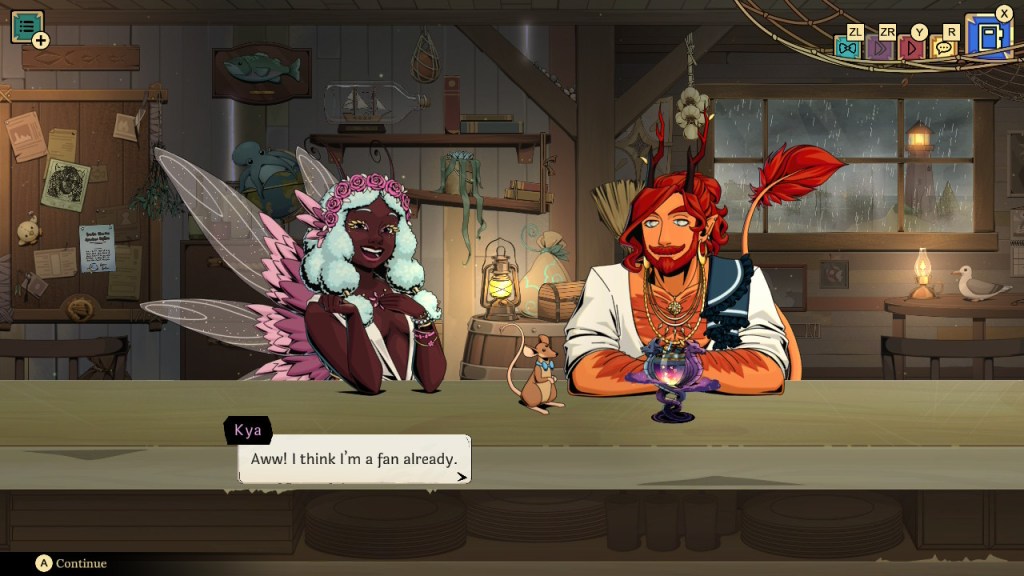
The original Tavern Talk is one of my favorite games, so I was incredibly excited when they announced Tavern Talk Stories: Dreamwalker, their second D&D-inspired visual novel set 36 years before the events of the first game. Dreamwalker is described as a standalone game, although it does include characters who are either briefly mentioned or appear on-screen in the first game.
In this game you play as a different tavern keeper based in a different town further south; this character is named Cosmo (by default) compared to the deliberately nameless “Innkeep” from the first Tavern Talk. While your character is never shown on-screen, it’s nice that both games allow players to choose the pronouns the other characters will use to talk about them.
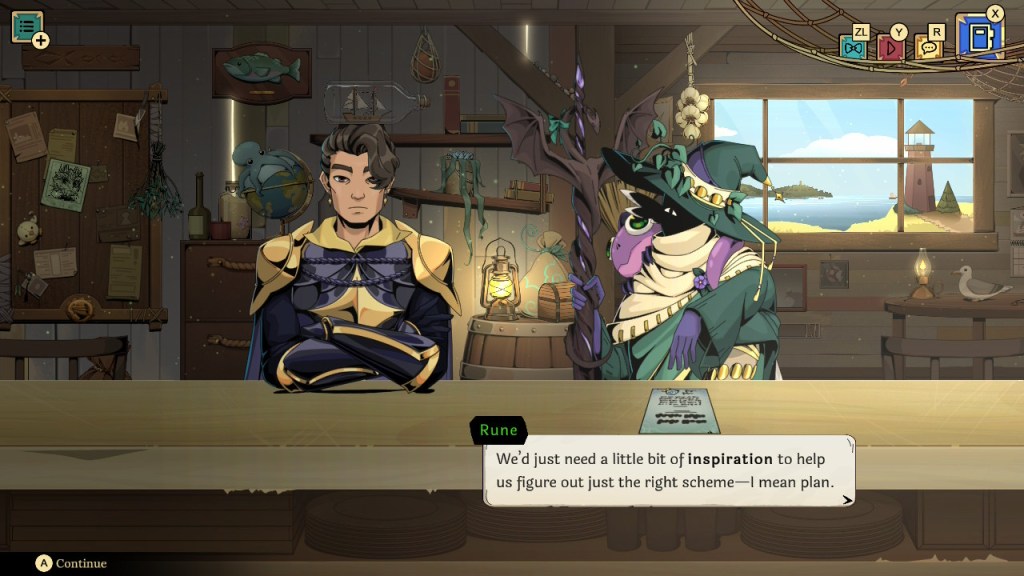
Adventurers will enter “The Drowsy Dragon” in search of magical concoctions that will help them on their latest quest. Your job is to listen to the key words in their requests and select the right recipe that suits their needs. Some requests may only have one right answer, but at times the customer may consider 2 different approaches, ultimately leaving the decision to you.
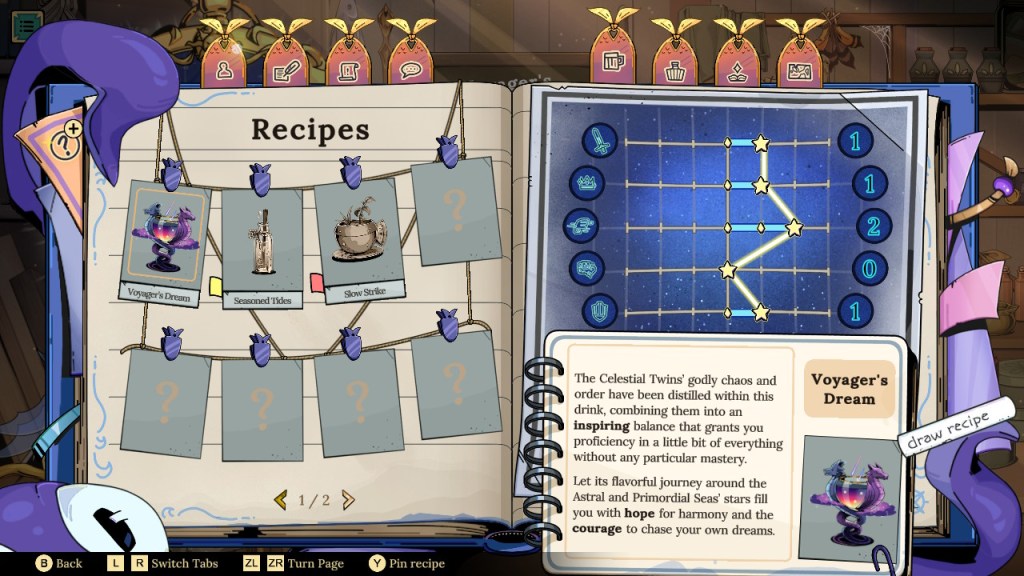
As with the previous game, you must brew and serve a drink only from the recipe book, and the drink has to meet the request requirements to even be served. There are 15 recipes to unlock, and 15 different potion options to mix together to brew those drinks.
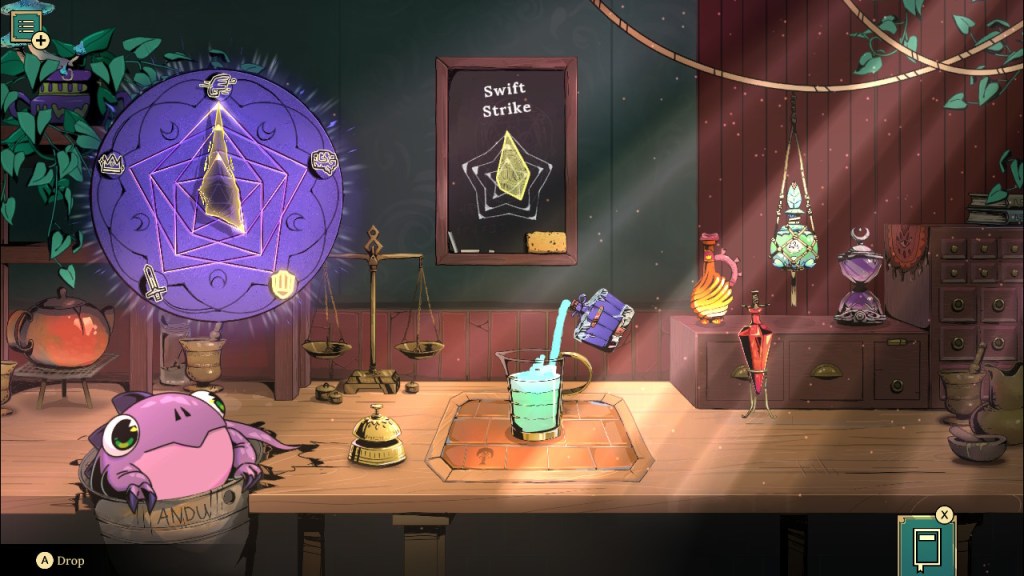
The drink creation in the original Tavern Talk was pretty straightforward, which I liked. Characters would often just request a drink directly by name. They updated the brewing system for Dreamwalker and made some changes to make it much more complex.
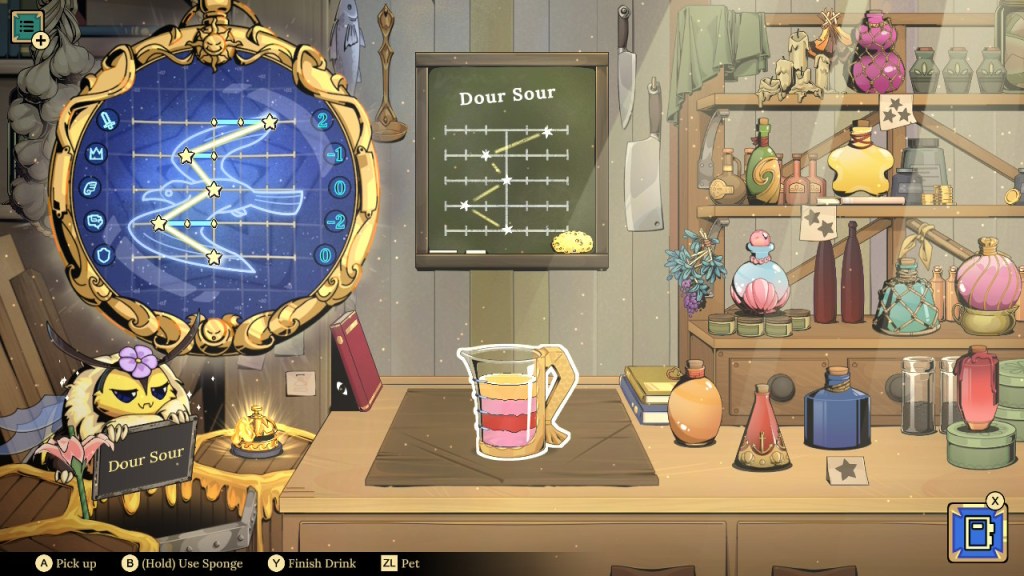
There are now a lot more potions to mix (compared to the 5 options in the original). This makes it harder to choose which one needs to be added – especially with the new graphs indicating a drink’s current stat values.
The 5 stats include Strength, Charisma, Dexterity, Intelligence, and Defense. I did like how they made it so that potions can both add and subtract from stats now (and multiple stats at the same time) because that made it more interesting. However, I was disappointed that they took away infusion ingredients because adding effects such as invisibility made for a better sense of adventure for me.
I will say that I also had a harder time visualizing how each potion would affect the drink’s stats as I considered which ones to add. Granted, they do display how a potion will change the drink’s current stats when you pick one up, but in the first game I automatically knew which potion to choose because they only affected one stat in a positive direction.
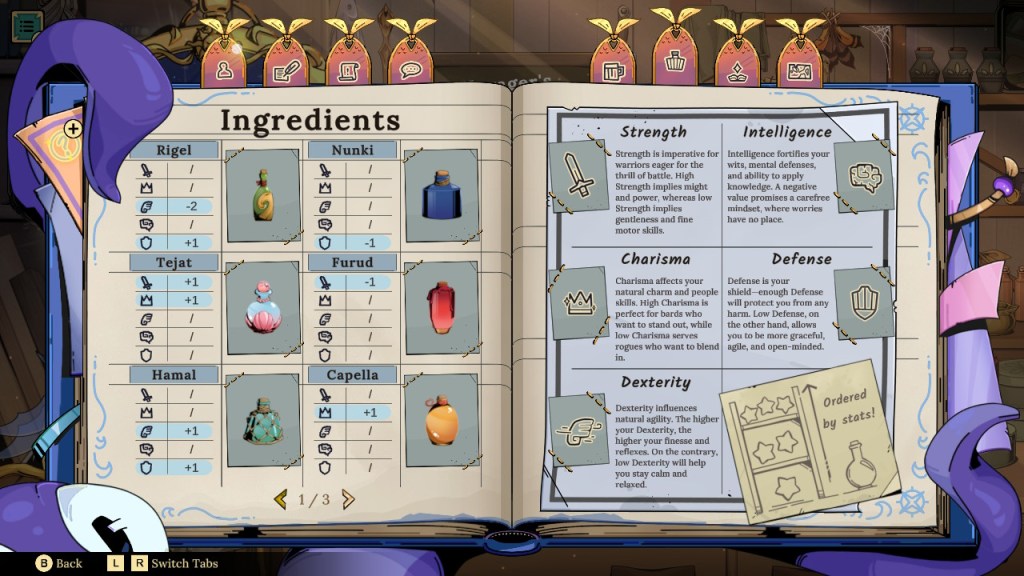
One of my biggest complaints about the new system was that the potions weren’t labeled on the shelf. Yes, you can open your notebook and check, but to me it felt so much more inefficient than if they’d labeled them on the shelf. It would have been faster to mix drinks that way for when characters request a specific potion or for players who use walkthroughs.
I also struggled with identifying the right drink for a request at times – especially in later chapters with more recipes available. About half of the drinks have “courage” as a tag, with several other tags spread across multiple drink recipes’ descriptions.
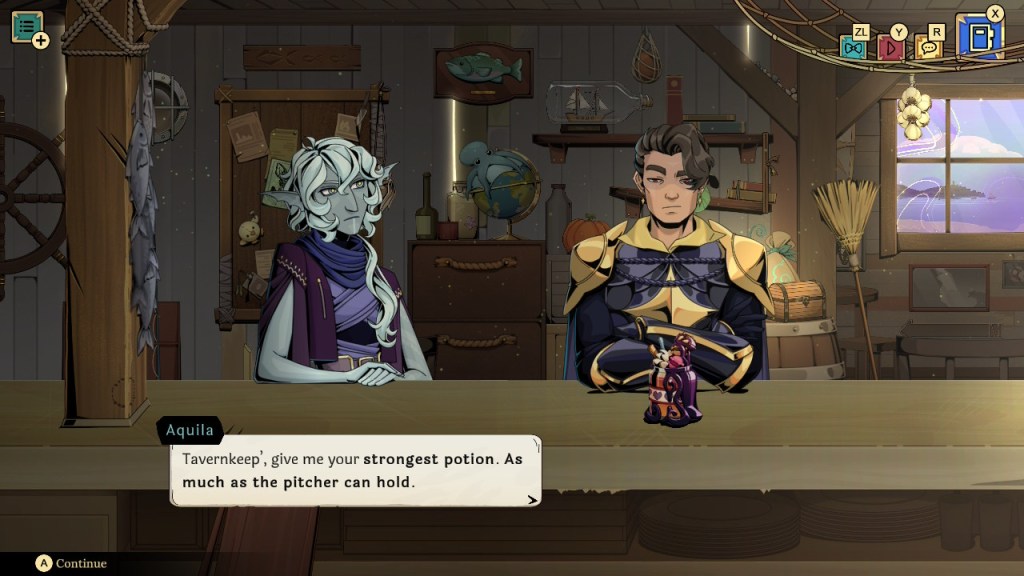
I did appreciate the improved graphics of the recipe book in this game, but wish that it was easier to identify an adventurer’s desired drinks. There was one request that required my “strongest drink” that used 5 shots; I understood that I needed to fill the glass, but incorrectly assumed that “strongest” also meant I needed a drink with a maxed out strength stat.
Overall I still enjoyed making the drinks, but I think I preferred the simplicity of the system in the first game. Conversely, while I loved the characters in Tavern Talk, I do appreciate that they simplified things by paring down the number of characters in Dreamwalker to focus on its 8 cast members.
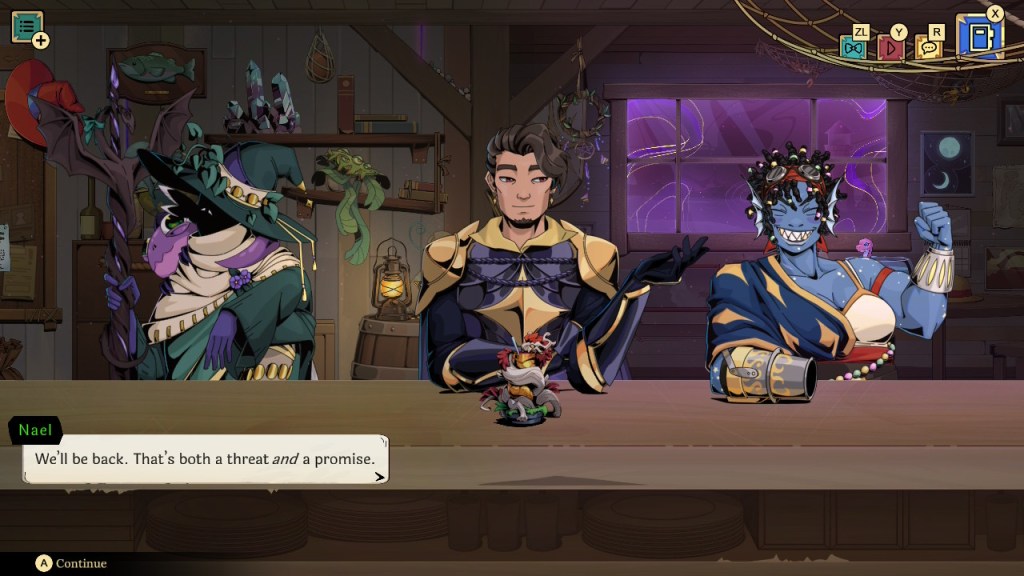
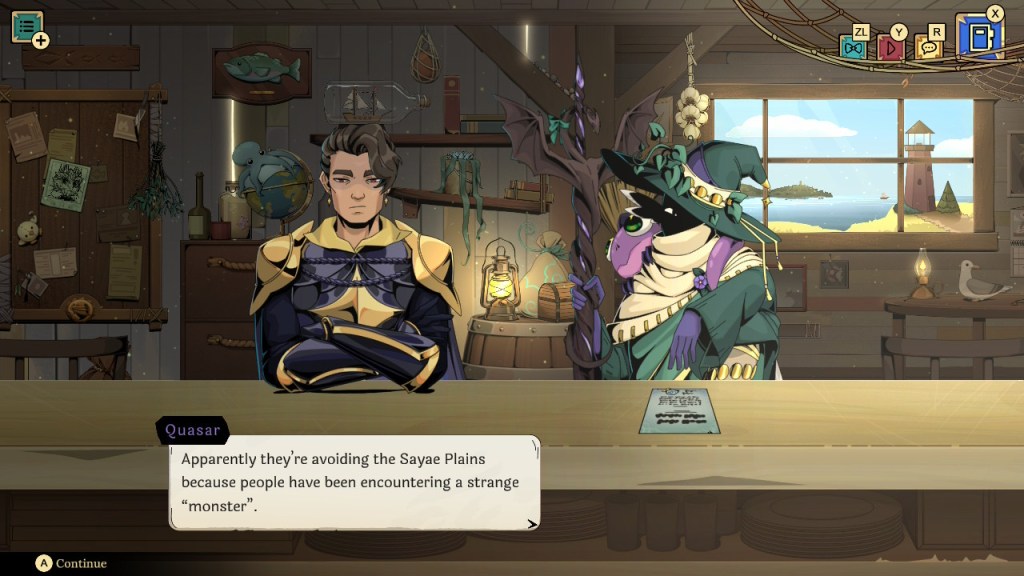
Tavern regulars and newcomers alike will stop by for a drink and a chat, telling you about themselves as well as any interesting occurrences across the land. “Nael” the name-changing warlock far was probably my favorite character due to their mischievous nature and frequent squabbles with Quasar and Una.
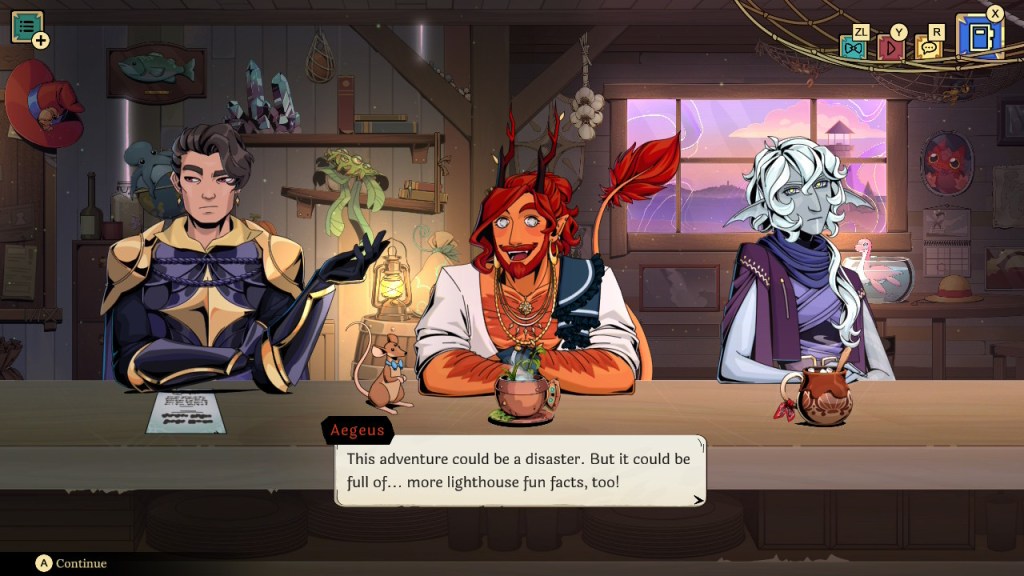
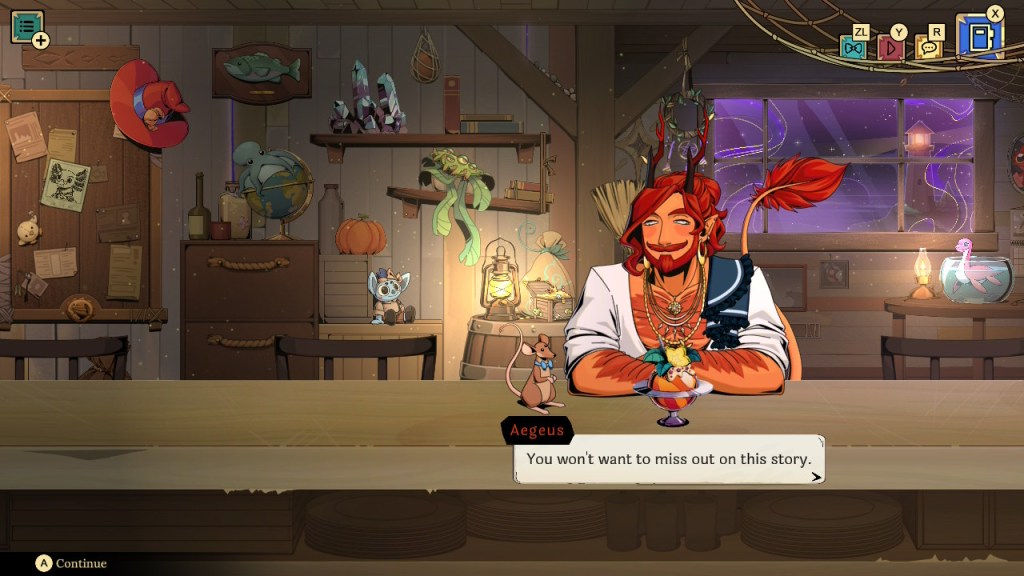
Aegeus reminds me of Fable a little bit, which may explain why he was another one of my favorite characters in this game. I just loved how sweet he is! Cain and Aquila were the 2 other characters I liked. (What can I say? I tend to have a soft spot for the brooding, antisocial characters, too!)
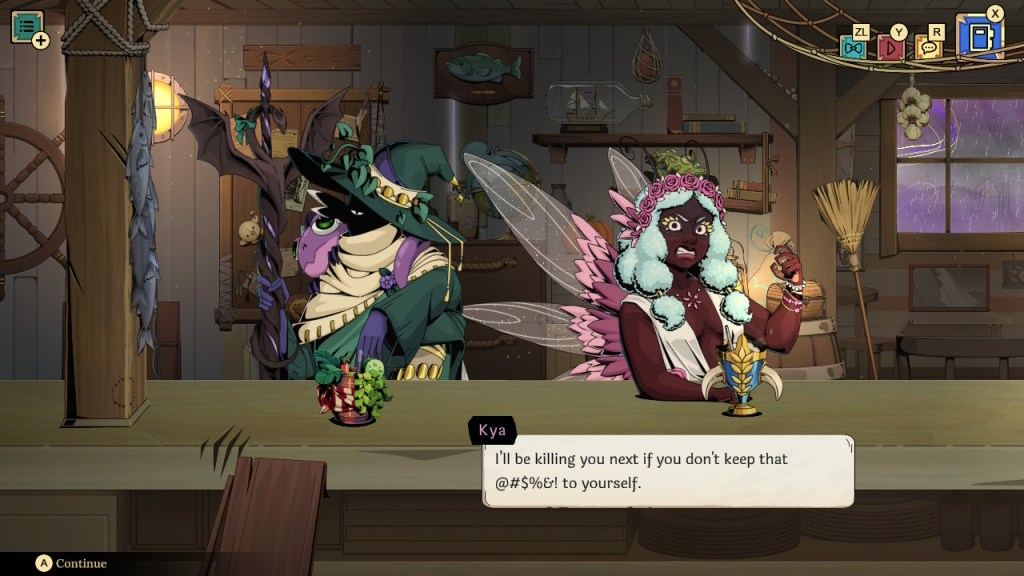
I was somewhat ambivalent about Quasar and Mariyam, but really disliked Una and especially Kya in this one. And I unexpectedly found myself not caring much for our tavern keeper character either.
While there wasn’t constant interpersonal conflict, the atmosphere seemed more negative than in the first game. It felt like there was more conflict than camaraderie in this game, and I couldn’t picture most of the characters staying in contact after the story ends like I could with the ones in Tavern Talk.
After playing through Dreamwalker 3 times I’ve seen 2 of the game’s 3 endings. I didn’t feel like things were resolved as well as they could have been based on the endings I reached, and we don’t get enough backstory for the characters (except for maybe Mariyam). That being said, I would say the writing was still pretty decent overall.
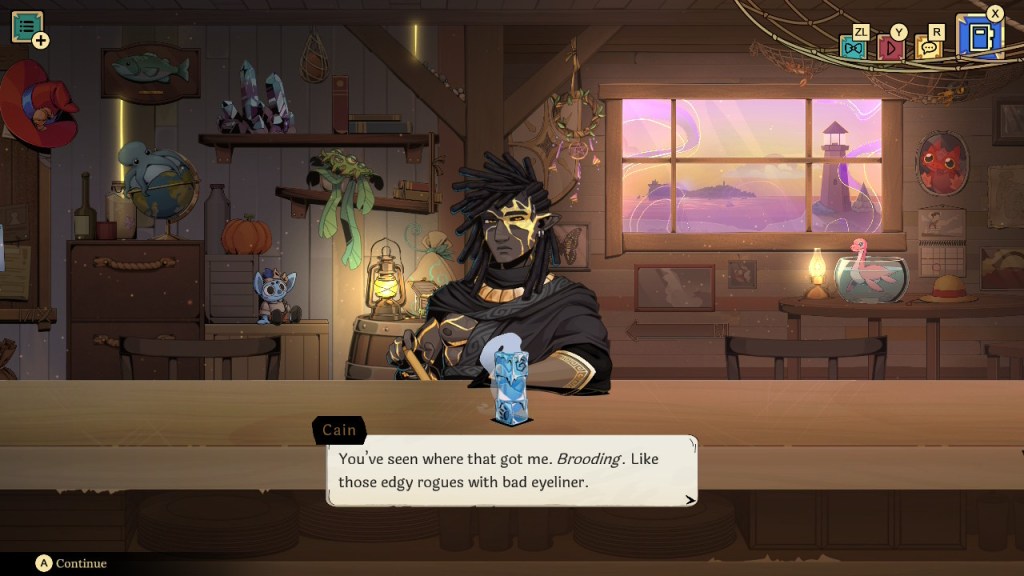
For one thing, it’s cool that they include information about each location on the map, with quest markers that indicate where everything takes place. The banter in the series is always fun to read, and I love the fourth wall-breaking references and jokes based on real life instead of the fantasy universe in-game. Quest names often include silly pop culture references, too.
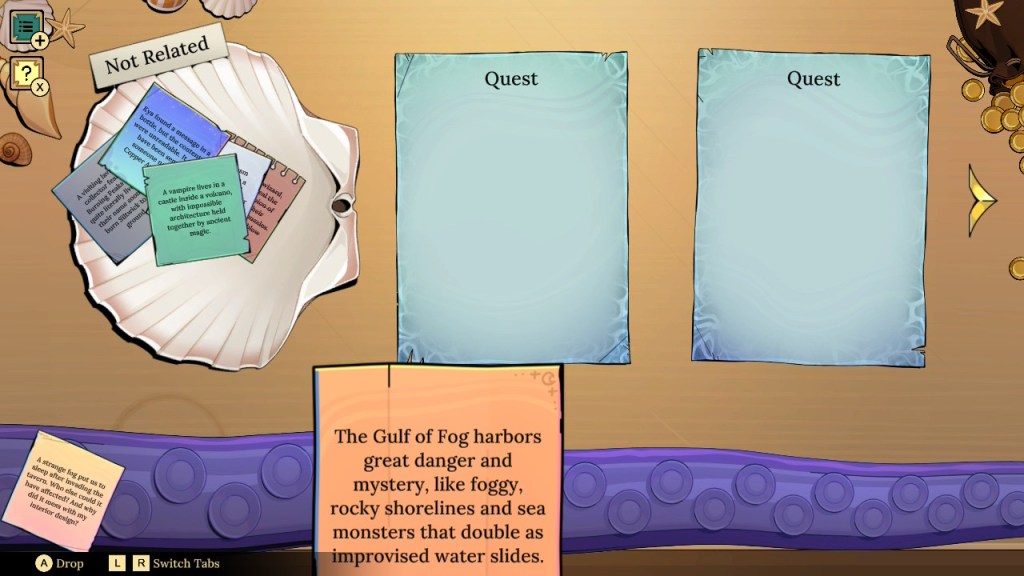
Building quests in Dreamwalker is similar to the way it’s done in the first game, but this time you may need to gather more than 3 rumors in order to create each quest. I like how they make it easy to figure out which rumors go together (when they’re ready to be combined) with a quick push of the X button.
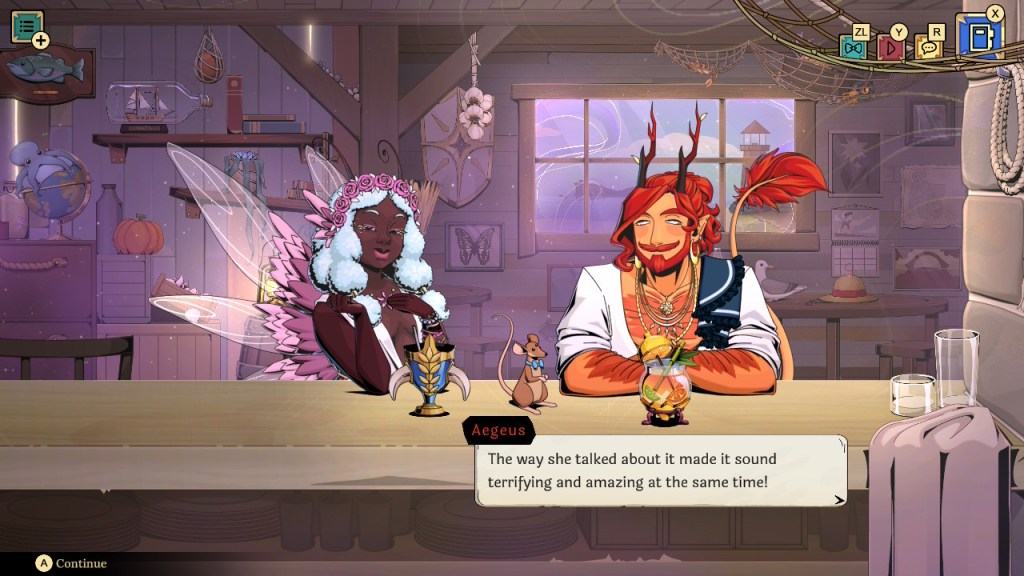
We don’t get to watch the action play out on the screen in these games, but they really excel at writing the characters describing their quests in a way that allows us as readers to almost picture them in our minds.
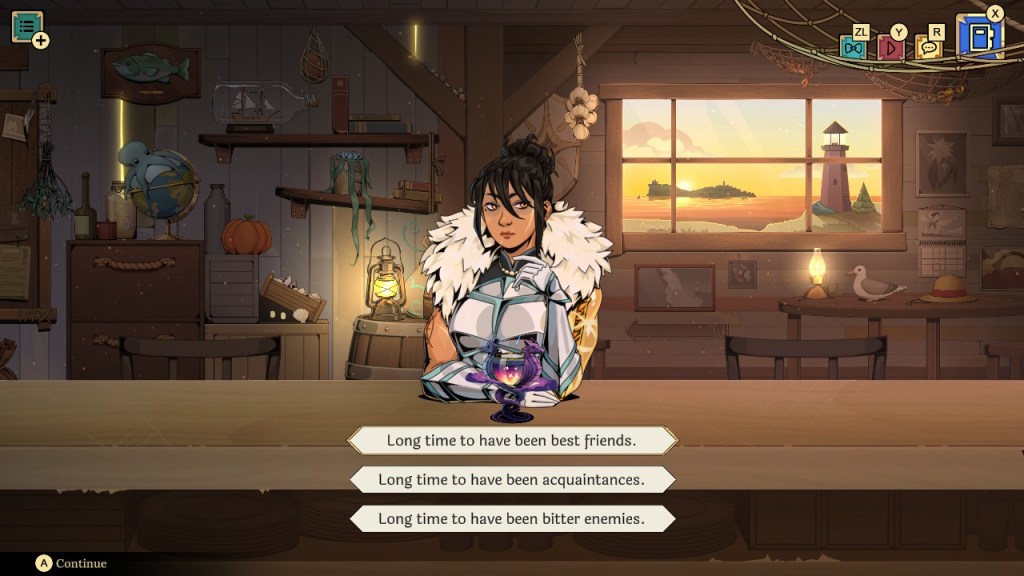
There’s a lot of replay value to the Tavern Talk games, both because they have multiple endings and character dialogue can vary based on the drink you serve them as well as your dialogue choices along the way. Each game will likely take you roughly 15 hours to experience most of the content (or more, if you’re like me and play through the whole thing again at some point).
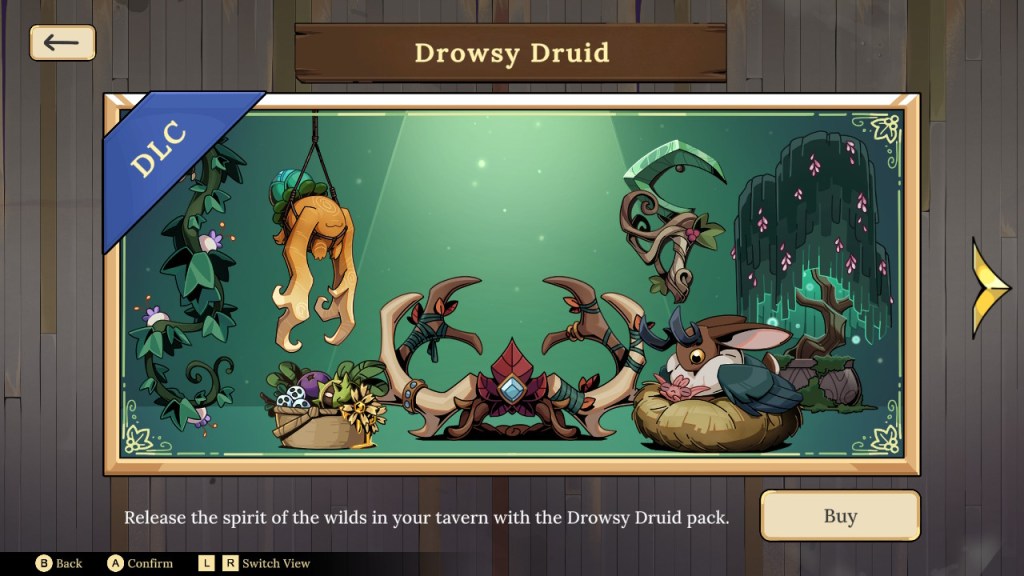
I really like the character designs, and I was happy that they gave us the ability to decorate our tavern, switching out the items on display for trinkets brought back by adventurers and/or DLC decor. The indie developer crossover decorations were some of my favorites.
One issue with the visual aspects of the game was the blinking from a first-person perspective in between days, which I found slightly disorienting. I also experienced the screen going black after I finished a chapter and sorted the rumors; when I attempted to load an earlier save at that point it would crash. Thankfully the game has an auto save feature.
Other than that the game has a lot of visual details that I can appreciate, including the way the characters’ hair or hands move, the way light reflects off of the metal on their armor, and the rain outside the window. The music is always great in this series too, with the tracks changing depending on the character who’s the current focus of the conversation.
Whether you’re a returning fan or a newcomer to the series, Tavern Talk Stories: Dreamwalker tells a nice story full of lore, emotion, and fun quips here and there. The unique drink creation mechanics remain a great way of integrating the fantasy D&D theme.
If you’ve never had the chance to try the series before, be sure to check out the Switch demos for both games!


Leave a Reply