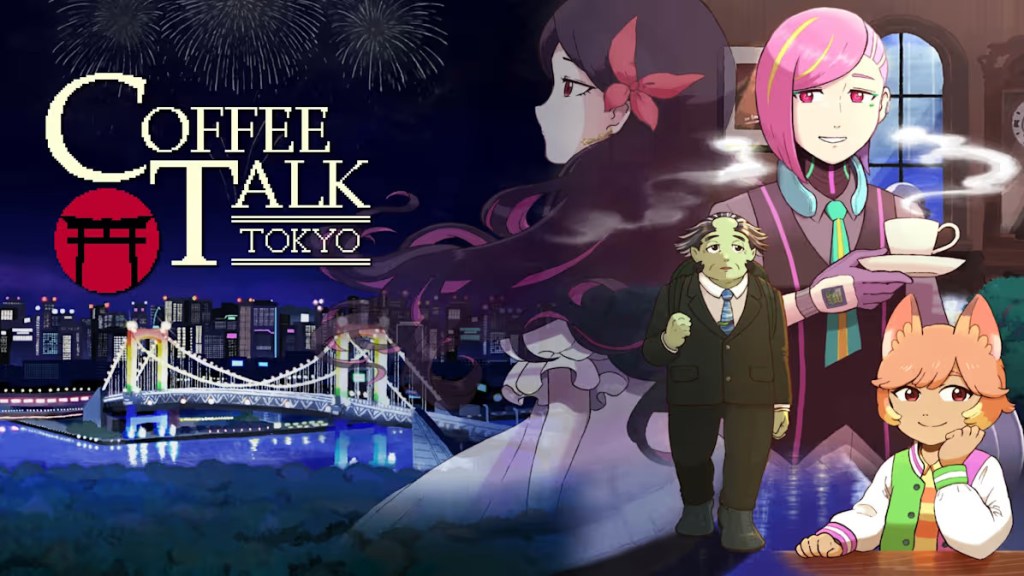
- Price: $14.99 USD (digital: Switch 1 & 2 options available)
- Deluxe Edition: $17.99; Upgrade (Prologue, Art, Music): $4.99
- $34.99 (Switch 1 physical)
- $49.99 (Switch 2 physical)
- Developers: Toge Productions, Chorus Worldwide Games
- Publisher: Chorus Worldwide Games
- Release Date: May 21, 2026
A review code was kindly provided by Chorus Worldwide Games on behalf of Toge Productions. We thank them for allowing us to cover something they’ve worked so hard on.
Content warning: rated T; mentions of bullying and death
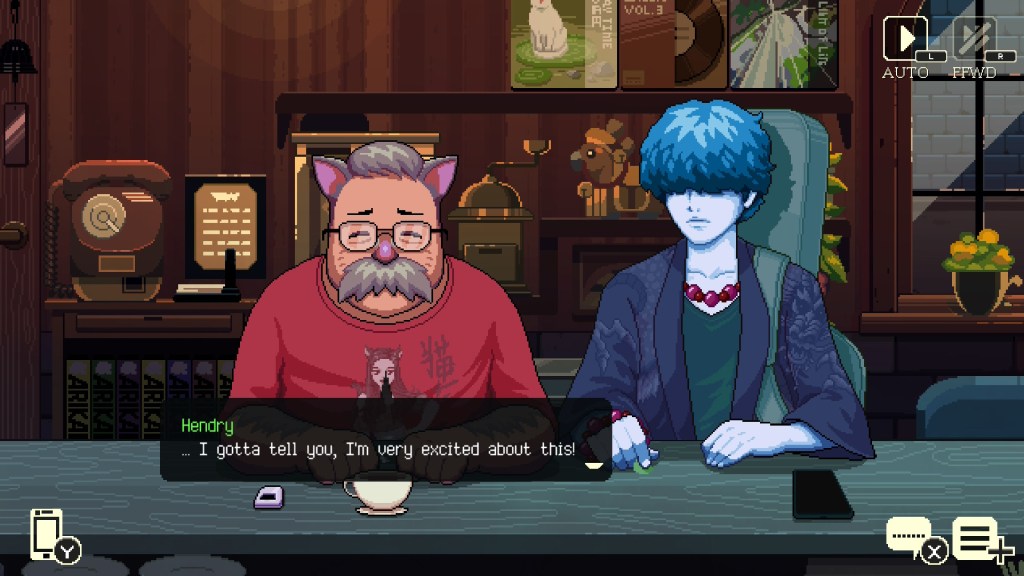
Coffee Talk and Coffee Talk 2 were both wonderfully cozy visual novels set in a nighttime café in an alternative fantasy version of Seattle. While I highly recommend the first 2 games in the series, new entry Coffee Talk Tokyo can be considered a standalone game with its new setting, cast, and drink options. Get to know your customers as you serve them drinks; if you make the right ones you can view their best endings!
There are 11 characters who are new to the series, but those who have played the first 2 games may recognize a few familiar faces who make brief appearances in the café (or on Tomodachill, the in-game social media platform). Each character will order something to drink when they come in, and it will be up to you to figure out how to make it.
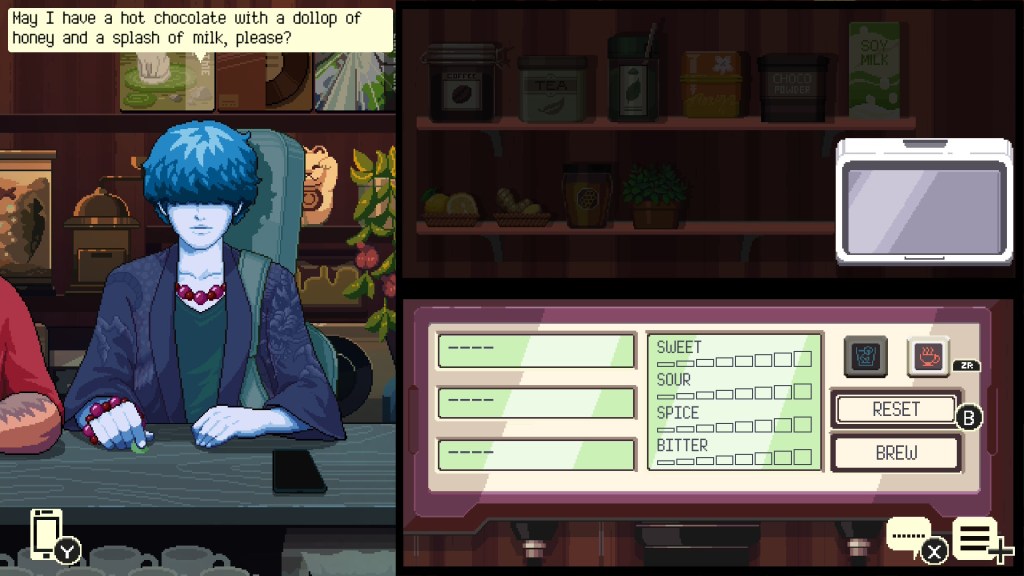
Sometimes customers will tell you the specific ingredients they want in their drink, which is immensely helpful. Other times they’ll give you the name of the drink, which you may not have the recipe for yet. This is why I spent the first few hours playing in the game’s Free Brew mode experimenting with the ingredients, testing different combinations to unlock new recipes before starting the main game.
You can make a ton of different drinks using pretty much any combination of ingredients, but “only” around 50 specific combinations get registered in the Brewpad’s special recipe book. In previous games a beverage’s warmth or coolness was developed based on its ingredients, but here they introduced hot and iced brewing modes and made changes to the flavor profile system.
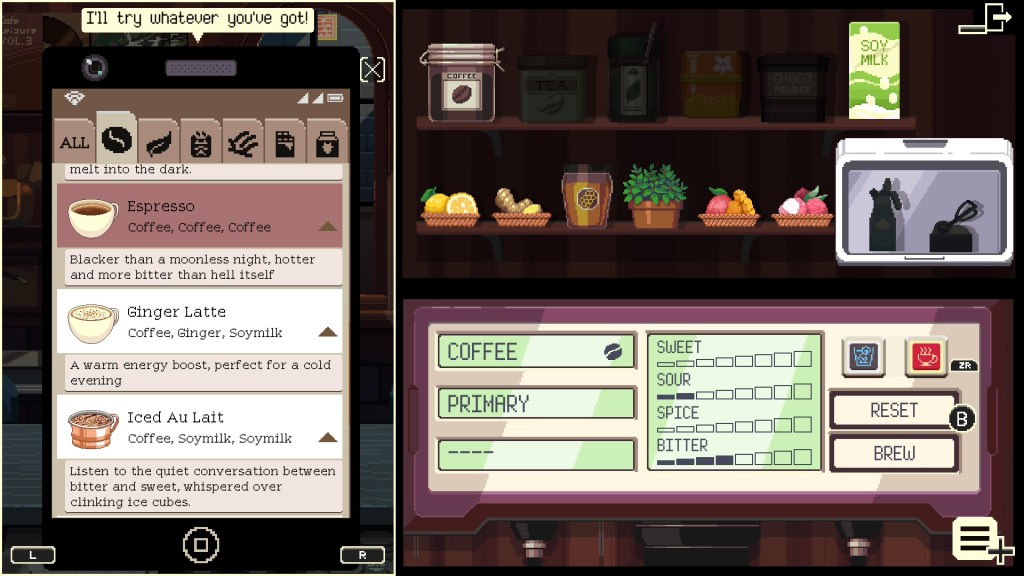
When you brew something you must first choose between the hot and iced modes; the same combination (and order) of ingredients may become a different drink depending on the temperature. Thankfully you can access the Brewpad when making drinks, although I did wish that the recipes included the temperature requirement (if it changes the drink).
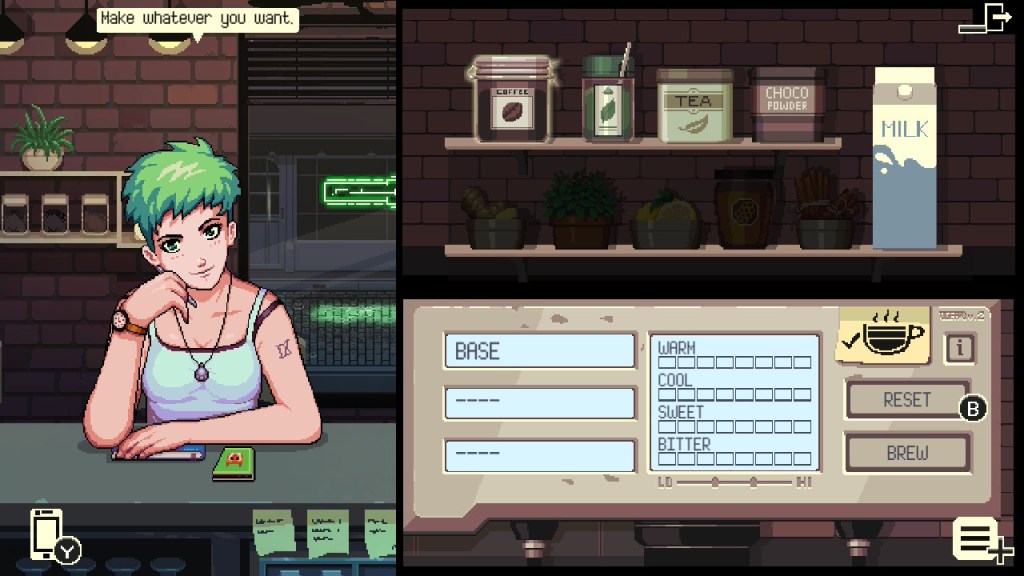
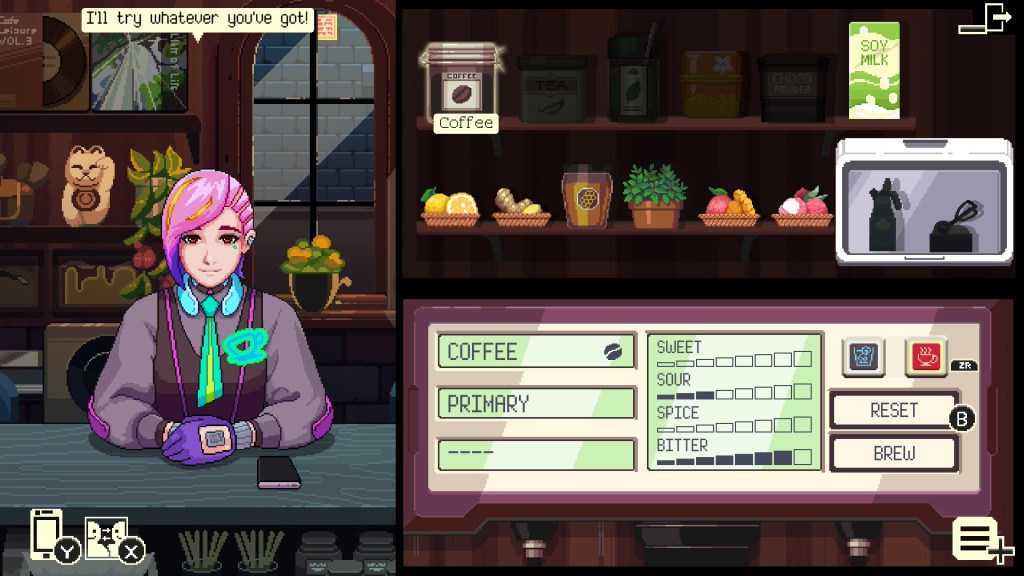
I just love how they keep improving the drinks with each game. I’m glad they’ve kept the number of ingredients the same per recipe (3) and not over-complicated the system with more. They keep the same standard bases for drinks with each game (coffee, tea, green tea, etc.), but change the unique bases and sometimes add new supplementary ingredients. (This time we get ice cream as an option!)
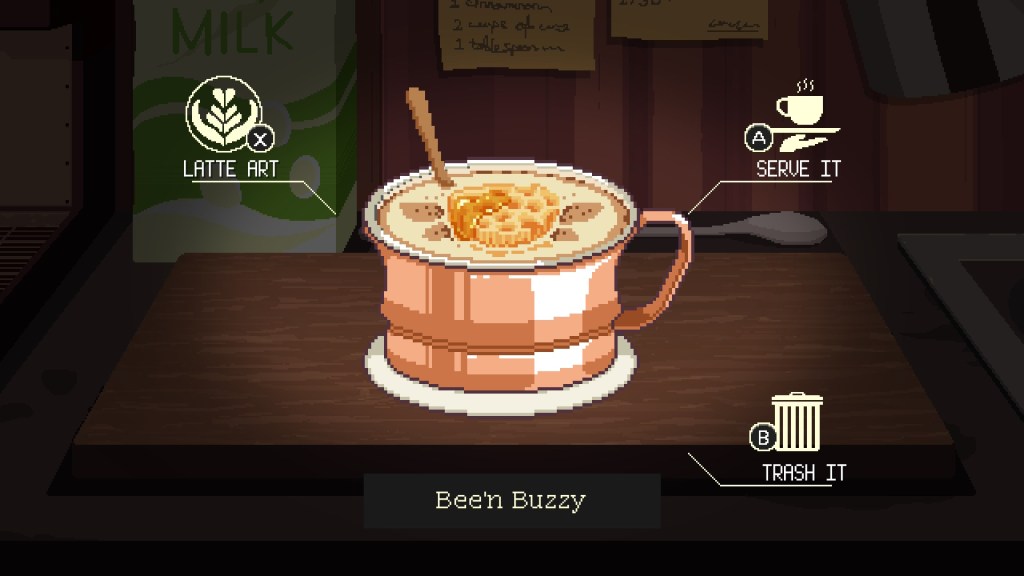
CT2 and Tokyo both have nearly double the recipes the first game had, and I appreciate having more recipes for sure. It’s amazing to see how far the series has come, with changes to the brewing system and drink designs that look much more complex than the ones from previous games.
If you give a customer the wrong drink, that affects their individual ending that you get to see in the credits. The good news is that you can save before brewing their drink, and if they tell you it’s wrong you can simply reload and try again! Creating the right drink often triggers a Tomodachill notification, so if you’re not completely sure that can be a helpful indicator.
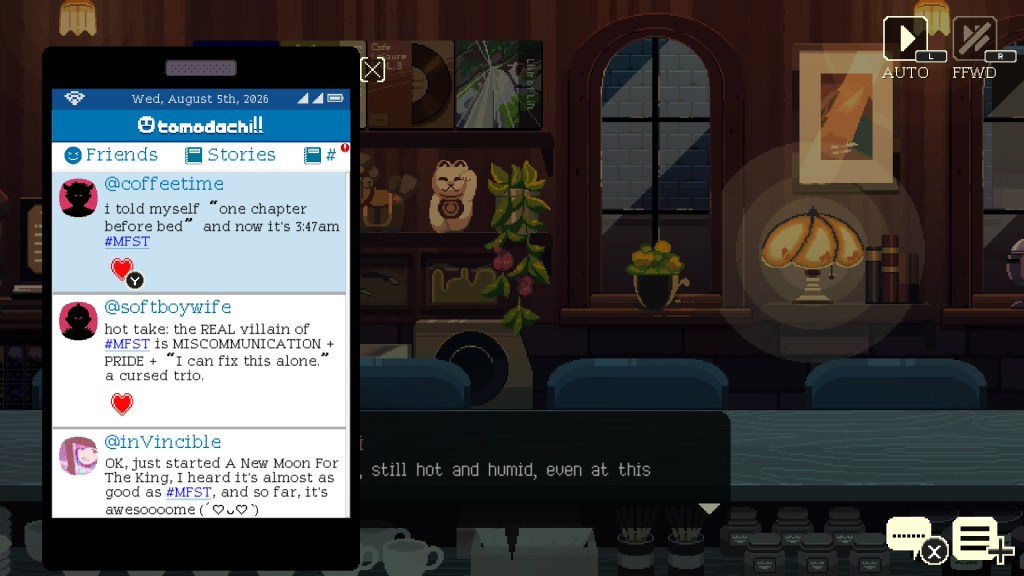
At the beginning of each day you can check Tomodachill to see new posts. Most posts are from our cast, but there are also some posts and replies from people we don’t meet, which I liked because it made the world seem more expansive than “just” the characters who frequent the café.
They even upgraded Tomodachill for this game, with the usual friends and stories sections in addition to the new tags feature on the platform. I really liked the social media integration in this game; you can find some of the recipes on Tomodachill, and interacting with the posts does have an effect on the main story.
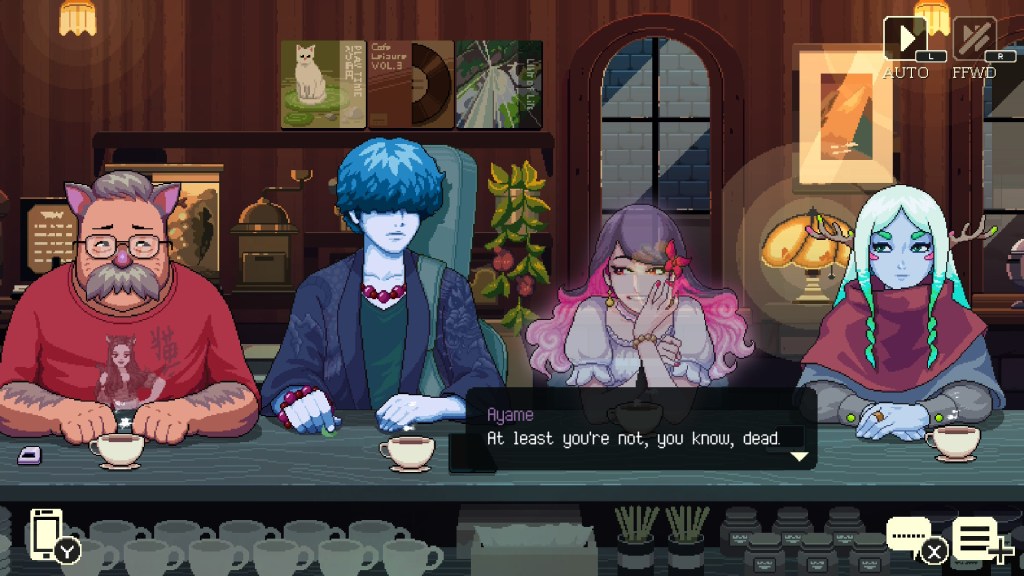
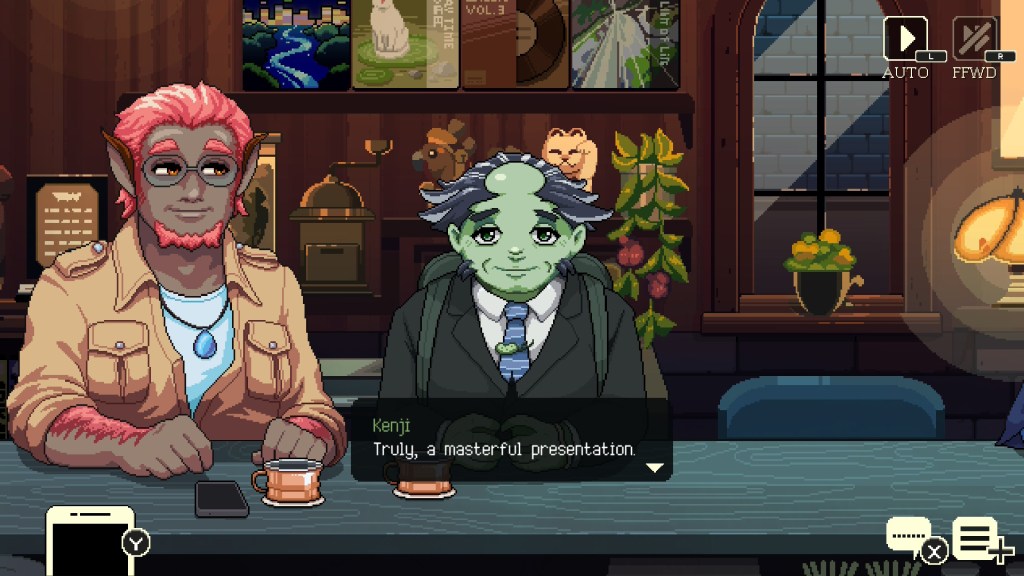
The characters in Coffee Talk Tokyo are just as charming as the ones in the previous games. There’s a decent amount of variety based on the characters’ genders and fantasy races. Some storylines have to do with their fantasy background, but there are also more commonplace stories about characters’ jobs or personal lives that players can relate to.
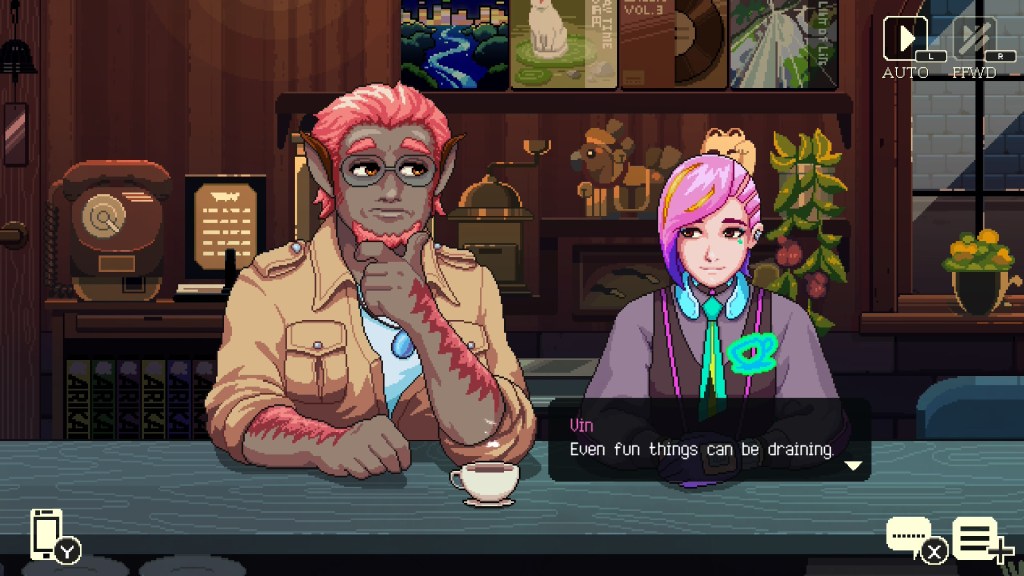
Something that made me extremely happy was the disability representation. At least 2 characters have some kind of disability (I believe Makoto could be included here as well, if I understood correctly). Vin, your character’s part-time employee, deals with chronic pain. As someone who struggles with both chronic pain and fatigue, I felt seen.
I don’t think I’ve ever played a game that explains the concept of “Spoon Theory.” I was so excited that they chose to do so in this game. They show how Vin’s chronic pain affects them, but also how they persevere in spite of it. In my opinion none of the characters felt one-note or defined by their disability; they had other characteristics and storylines as well. The writers were thoughtful and sensitive in their handling of the characters.
As far as the Japanese setting is concerned, it definitely influenced the fantasy races chosen for some of the characters. They sometimes mention special places in Japan or some aspect of Japanese culture, but it sounds natural in the conversations, and the characters – not Japan – are the main focus of the story. (I did have fun looking up things I didn’t know about, such as hojicha!)
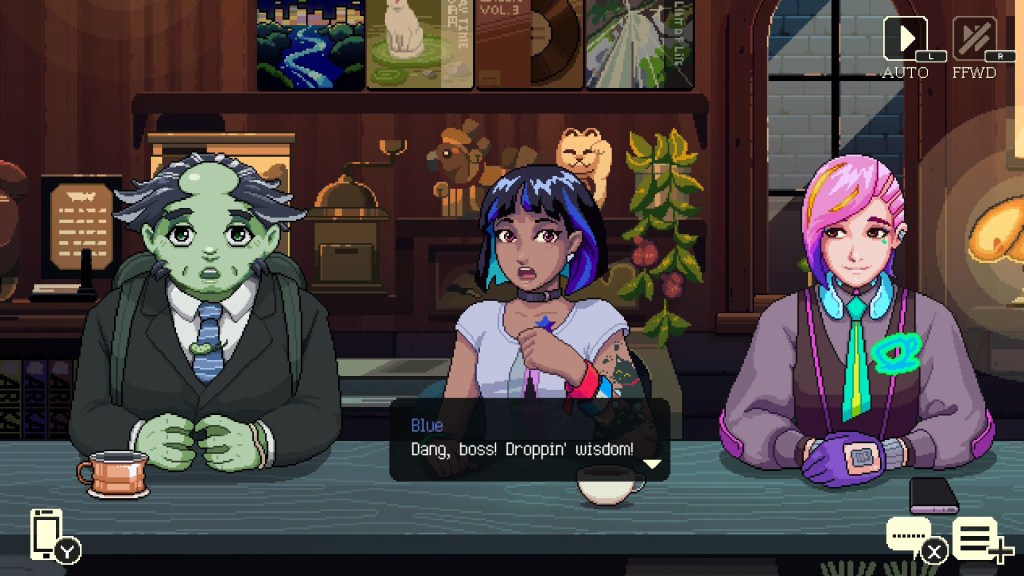
I came to love the new cast as I played through the story, which takes place over the course of 15 days. I really enjoyed seeing them befriend each other and help each other with their problems. Vin was one of my favorite characters, along with Yuki and Erika. Ayame’s storyline had the most emotional impact on me, making me tear up.
Incidentally, those characters had some of my favorite designs, along with Blue, who has some adorable tattoos. I loved the animated way the characters change their facial expressions and move their arms around, like the way Jun fidgets with something in his hand. And Erika’s tail wagging and excited wriggling were just precious.
Sometimes the transitions between characters appearing seemed to lag a little bit. The auto-play and fast forwarding features also could have been a lot better (they could have been faster and fast forwarding needed a toggle on/off option). But other than that the game seemed to run smoothly.
The other animated elements worked just fine. It was cool to see the shadows of people moving outside the café through the window. You can watch it rain and see steam rising from the drinks you serve, or the glint of a character’s glasses. I’ve played a lot of visual novels over the years, and most of them don’t feel as “alive” as the games in the Coffee Talk series.
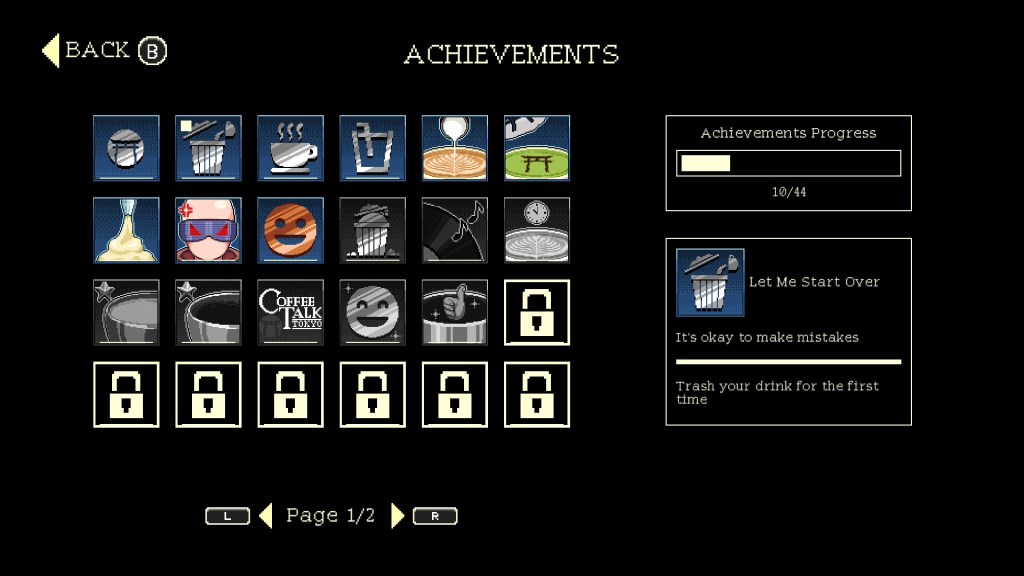
After more than 15 hours I seem to be pretty close to unlocking all the content Coffee Talk Tokyo has to offer. You have to play through the game multiple times to view all of the game’s content. I’ve unlocked 41/44 achievements, and hope to finish the rest of them soon.
If you purchase the Deluxe Edition (or the upgrade) you gain access to even more content at a reasonable price. This DLC comes with a 59 page artbook, 10 more music tracks, and a brief prologue story.

The base game comes with more than 100 CGs, and seeing the concept art for the game in the artbook was really cool. (It appears that they also included character ideas that went unused.) A few pages had some untranslated Japanese, but that didn’t affect my appreciation of the art itself.
I liked the additional songs in the DLC, which seemed more energetic and upbeat than the ones in the base game (which are no less enjoyable). The game’s ending theme is fantastic too, so I was a bit disappointed it wasn’t added to the music player after clearing the game for the first time.
I wanted the prologue to be a bit longer because it was nice to see certain characters again. Overall though the DLC doesn’t cost much and it’s nice to support the development team.
I liked seeing the thought processes behind development in the artbook, and appreciate being able to switch between the songs with more chill vibes and the faster-paced DLC tracks when I need a change of pace. (Something important to note is that while endless mode starts off displaying all songs together, in story mode you have to press the select button to change playlist options and view all songs.)
Coffee Talk Tokyo is another successful entry in the Coffee Talk series. It has a great cast of new characters for everyone to enjoy, while also rewarding existing fans with a few brief appearances from characters from the first games.
The game is said to take around 20 hours to achieve 100% completion. It offers an impressive amount of content at a price that is more than reasonable. If you enjoy cozy games with great artistic and narrative quality, Coffee Talk Tokyo is definitely worth checking out.


Leave a Reply