- Price: $24.99 USD
- Developer/Publisher: Studio Aurum
- Release Date: April 30, 2026
A review code was kindly provided by Studio Aurum. We thank them for allowing us to cover something they’ve worked so hard on.
Rated T; Content warnings: oppression, capital punishment, beheading, unethical experiments, etc.
Studio Aurum previously released Monster Crown on Switch in 2021, and 5 years later they’ve brought Monster Crown: Sin Eater to the console. Said to use a new game engine and a larger team than the first game, Sin Eater offers new features that enhance the monster taming experience.
Before starting the game, you get to choose between 3 difficulty levels, from Story Mode to Monster Crown difficulty. Your decision affects not only how challenging battles are, but also how easy it is to make money and find resources. Thankfully, there’s no difference between the 3 difficulty options as far as the story or available monsters are concerned.
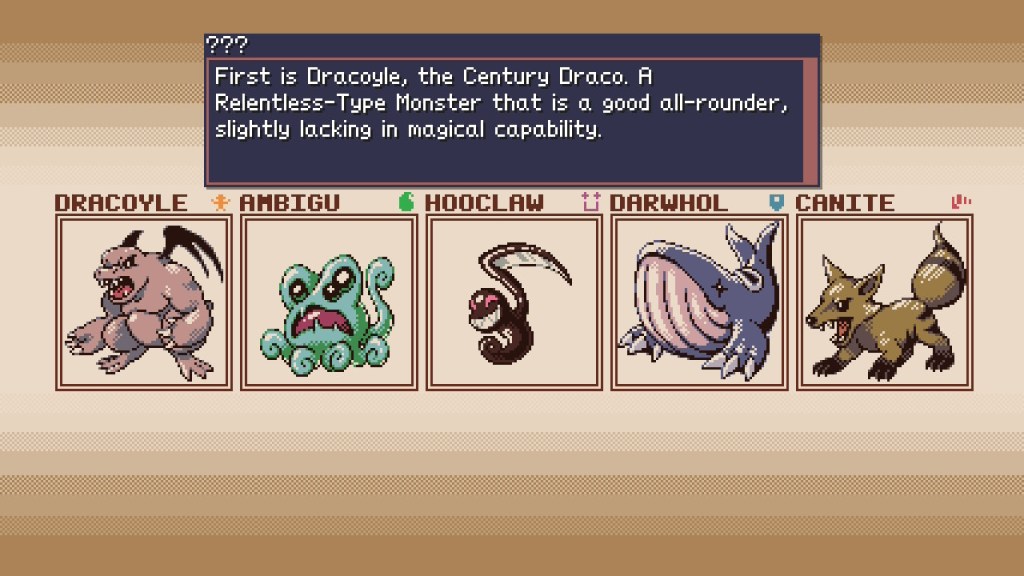
Our story begins with our character, Asur, leaving his home to help his family by becoming a Monster Tamer and gaining enough strength to (hopefully) save the day. You’ll have to walk to the nearest town to get your first monster, but there’s no Pokémon Professor (Monster Maestro? Taming Teacher? 😂) to give you one for free. Instead you have to pay for one, choosing from 1 of 5 options.
I like that we have more “starter” monster options than most monster taming games, and there are also 8 slots in your party compared to the standard 6. Something else that is interesting is the way that you can actually fight monsters with your character, so technically you have 9 party members!
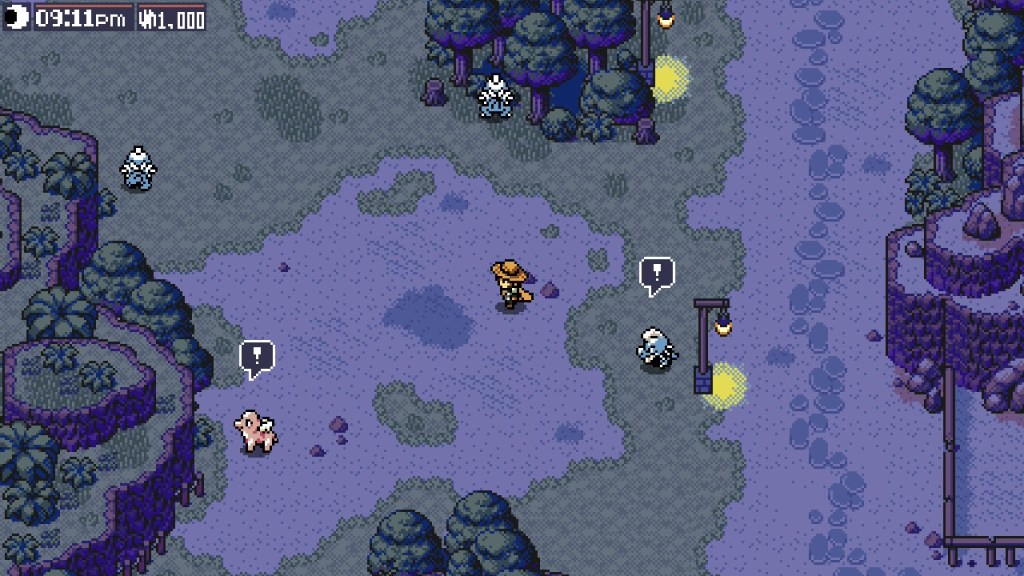
Traveling across the land (and searching far and wide 🎶 😂) you’ll run into new monsters who roam the overworld. Some will run away from you, while others aggressively chase you. There are only 5 types of monsters in this game, which I actually liked because it was a little easier to deal with less types than memorizing a ton of weaknesses.
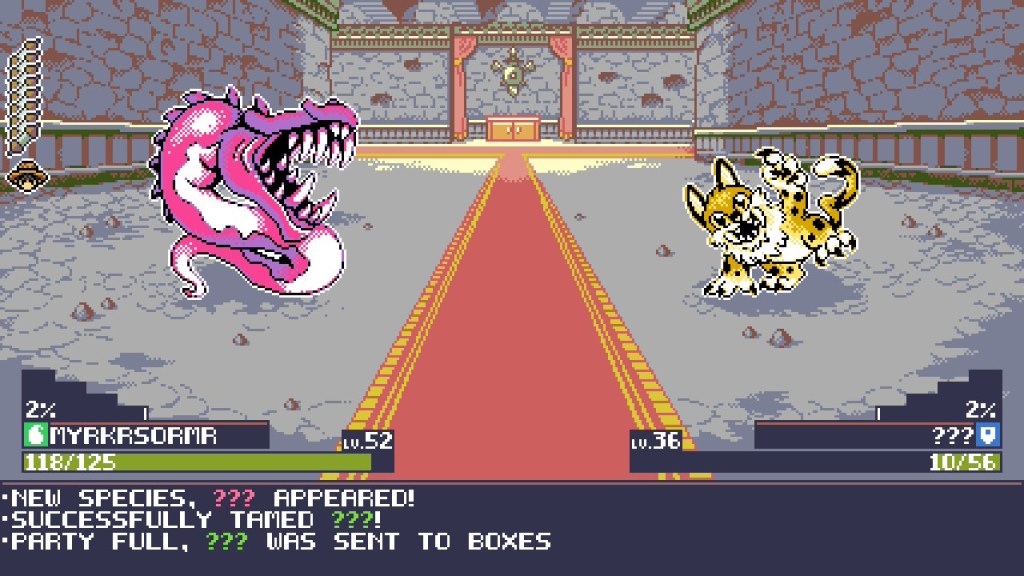
You tame monsters by weakening them, and then using “Pact” items to capture them. There are “Brilliant” monsters that occasionally appear on the map, which are different colors than the base version of the monster and provide some benefits in both battles and breeding. They added another twist with Demon monsters, who require the much rarer Demon Pact items to capture them.
I did wish that there were icons that let us know if we’d tamed a monster before when in battle, and it took me until the end of the game to realize that the monsters who required a Demon Pact seem to have an animated shine effect on their battle portrait.
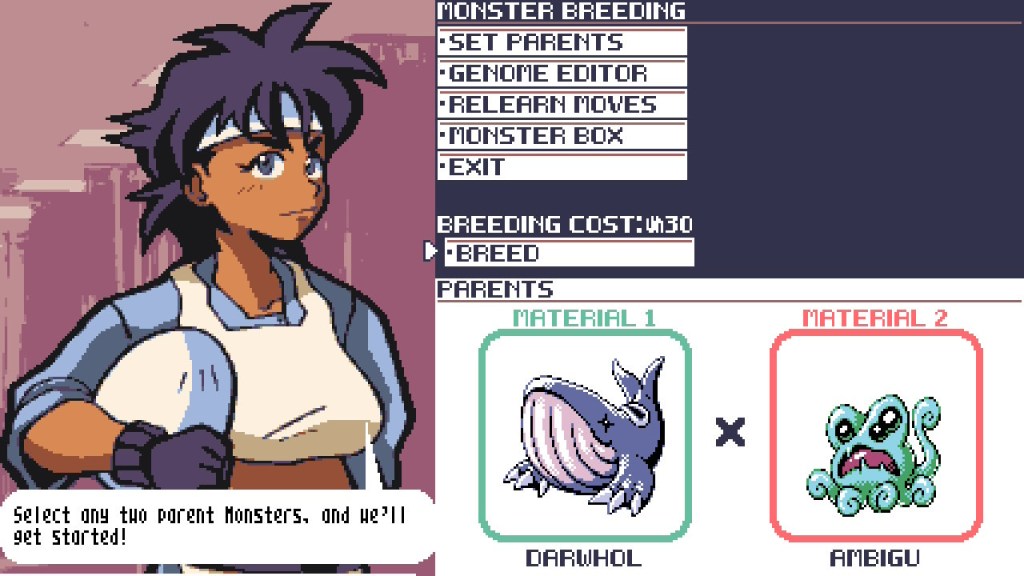
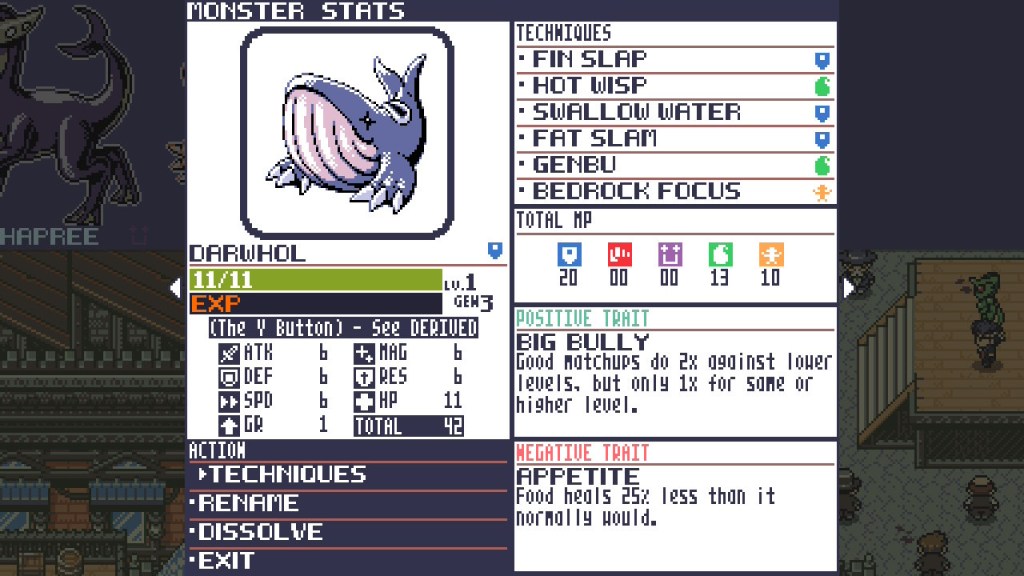
Monsters don’t evolve in this game (with exceptions for those who use items to “transform”); instead players must rely on breeding and fusion facilities to gain stronger monsters. When breeding monsters you need to consider what positive trait and negative trait each of them have so that their offspring end up with traits that benefit them the most (and harm them the least).
With breeding you keep the 2 parents, but with fusion the monster “material” vanishes when they’re fused together. I think the trait inheritance may work similarly with both breeding and fusion, though. There’s also a Genome Editor, but I didn’t really understand how it worked.
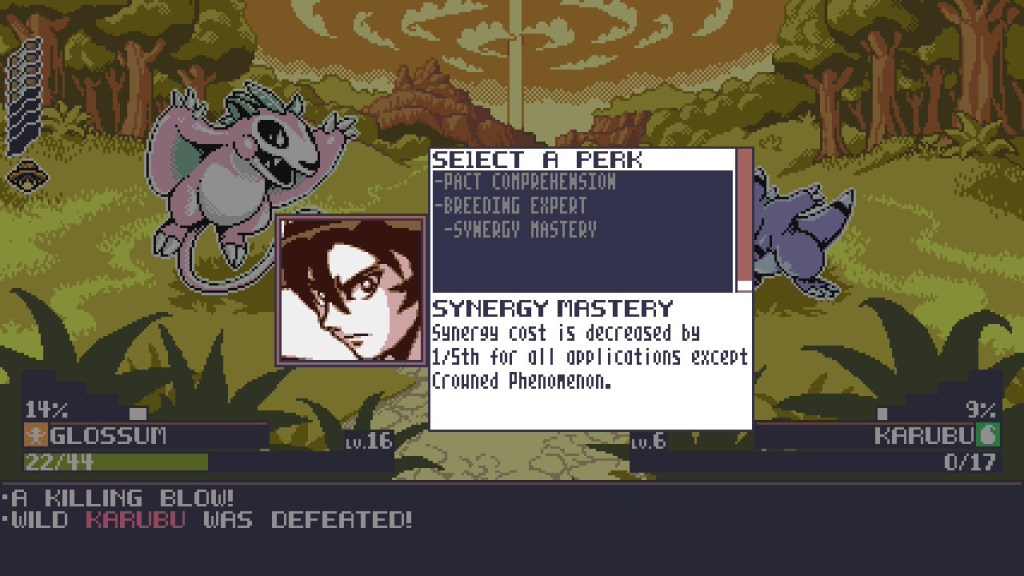
Asur levels up and gets stronger just like the monsters. Once he reaches certain levels you can select a Tamer Perk, such as less time for eggs to hatch or earning more money.
There’s a point where Asur can start learning new abilities, but I found this mechanic extremely confusing because the method wasn’t explained at all. Being able to fight monsters with your character is an interesting idea, but ultimately I didn’t think he was worth using due to a small amount of HP and the fact that he never goes past level 20 for some reason.
Battles are turn-based, and there’s a “Synergy Bar” that fills up as the fight goes on, which can be used to “Crown” an ability and power it up. I’d say that even on Story Mode the game isn’t that easy. I don’t remember losing to regular wild monsters much (if at all), but some bosses were especially tough.
It’s unfortunate that we can’t seem to use healing items on monsters who aren’t currently fighting (so you can’t revive them during battles). Thankfully when I did lose to a boss I was able to retry the battle – and they stayed at the same amount of HP from the point when I’d lost. It felt like there was a steep, sudden increase in the difficulty of the last couple of bosses, though.
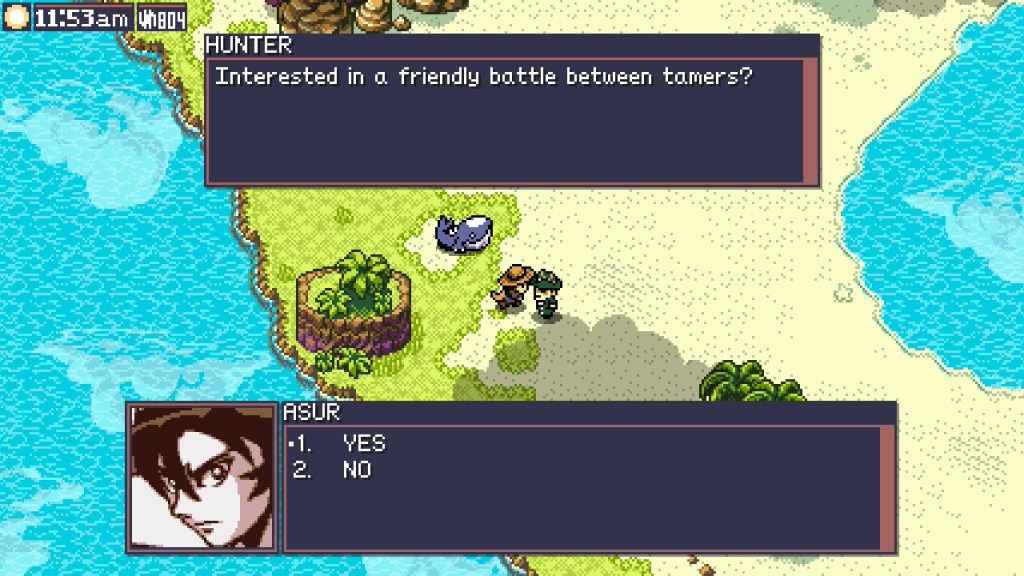
You can also battle other tamers. I liked how the stationary tamers don’t just automatically start a fight with you upon making eye contact. Other tamers – similar to some monsters – are more aggressive and pursue you relentlessly. Sometimes I just wanted to get to the next location and would flee from wild monsters, but the game doesn’t tell you that forfeiting a tamer battle means losing all of your items (and I think money as well).
Ultimately I think my biggest issue with this game is the minimal direction and explanations. There are Tamer Notes that explain the way some things work, and also an Objectives section that often lists a quest’s location. But I didn’t think those were enough for me personally.
I found myself confused on what to do and where to go next early on in the game. I didn’t know I was meant to face a certain enemy that early on in the game so I kept wandering around trying to figure out what to do.
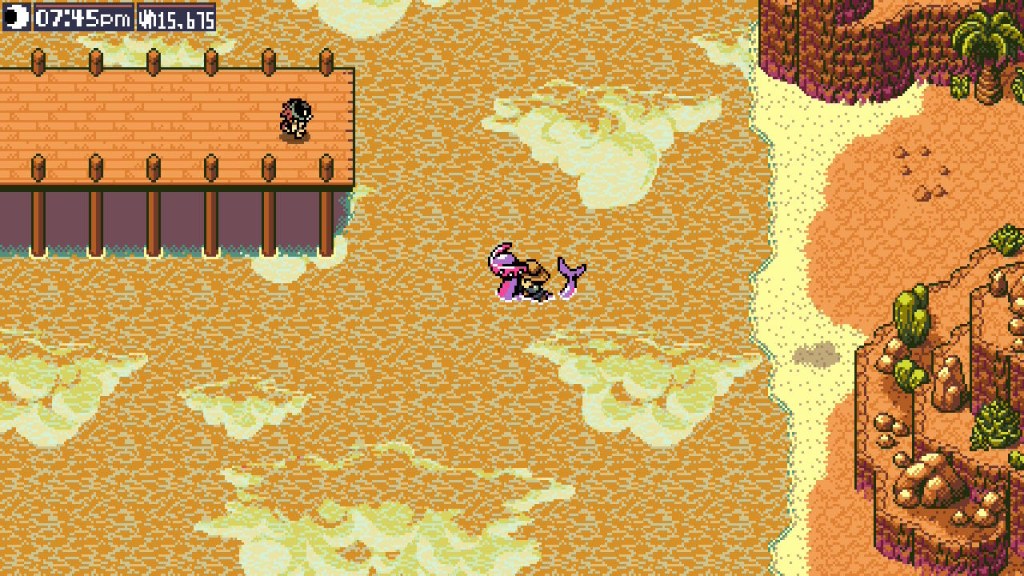
At one point someone told me to find a monster who could swim so I could travel to an island for my next steps; I kept trying to use monsters like Darwhol the whale (who can’t swim for some reason?) and others that were recommended, and didn’t realize that I had to go find someone all the way on the opposite side of the map who could teach me how to get monsters to swim. I also didn’t understand the store menus until I ended up selling a lot of good items by accident.
I don’t need my hand held the entire time I play a game, and I generally enjoy exploring. But at the same time I don’t enjoy it when I would never have figured something out without help. This was the case with several locations that apparently require the “King’s Tendril” ability, and for the True Ending.
There is at least a fast travel function in the game, which reduced some of the time I spent walking around in circles trying to find things. Despite my frustration I did still find a lot to like about Sin Eater (especially the battles).
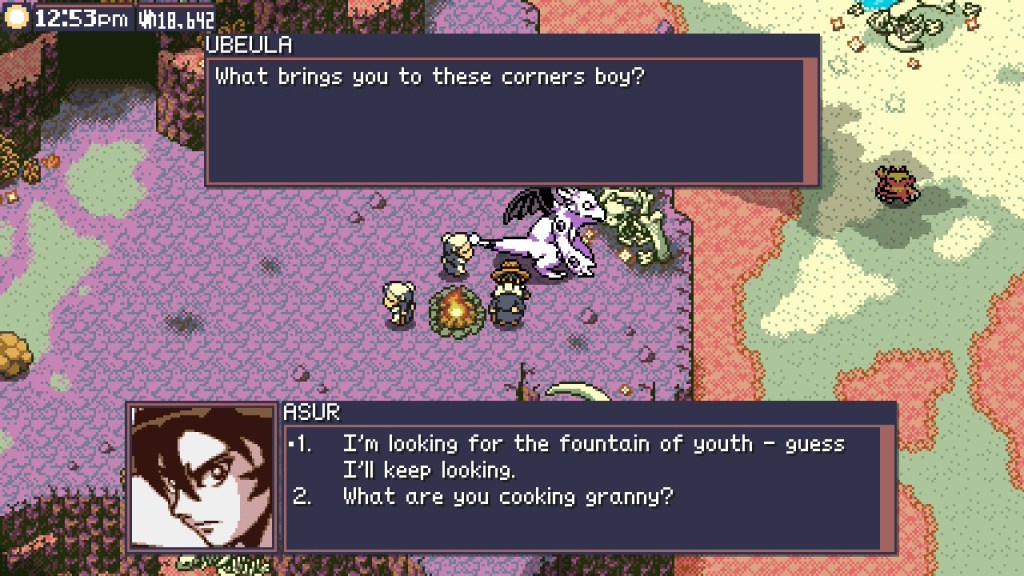
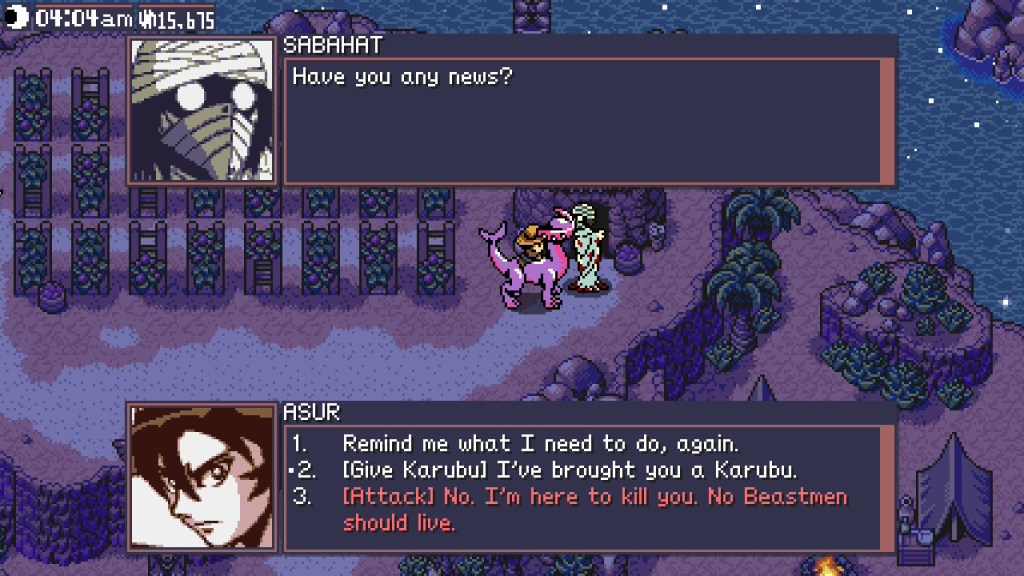
I was a little confused even after experiencing the True Ending, but overall I thought the writing was decent enough. In the earlier areas several NPCs say the exact same thing as the others, but it gets better as you get further along. I really appreciated that Asur wasn’t a silent protagonist, and he actually had some cool or entertaining lines. It was also neat how certain decisions split the storyline somewhat, making it so you can’t complete the other quest(s).
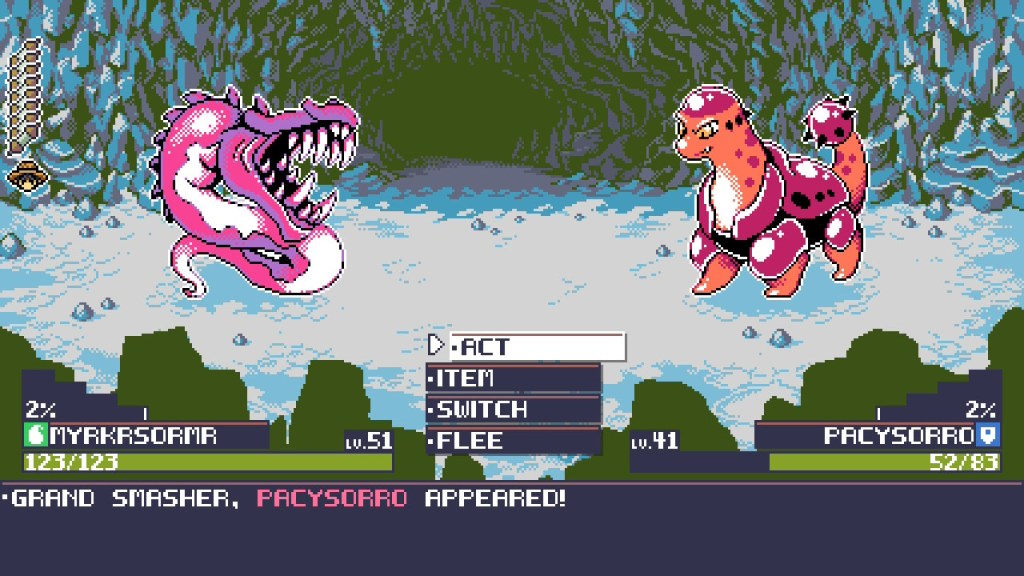
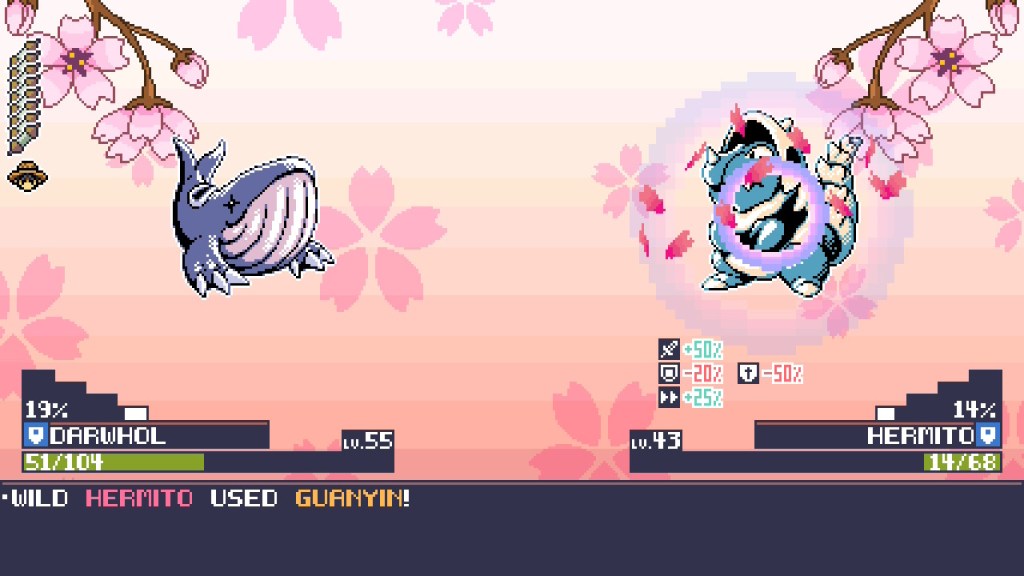
The music is fantastic, and I really liked the graphics. I loved the art for all the different monsters (and the cute chibi versions that follow you around). The attack animations were fun, and it was cool to see some monsters actually flying around the map.
It took me about 20 hours or so to complete the game on Story Mode, but when you consider that there are “over a thousand unique, hand-crafted monster sprites, and hundreds of colors to choose from,” players who really get into experimenting with monster breeding and fusion will likely have much longer play times.


Leave a comment