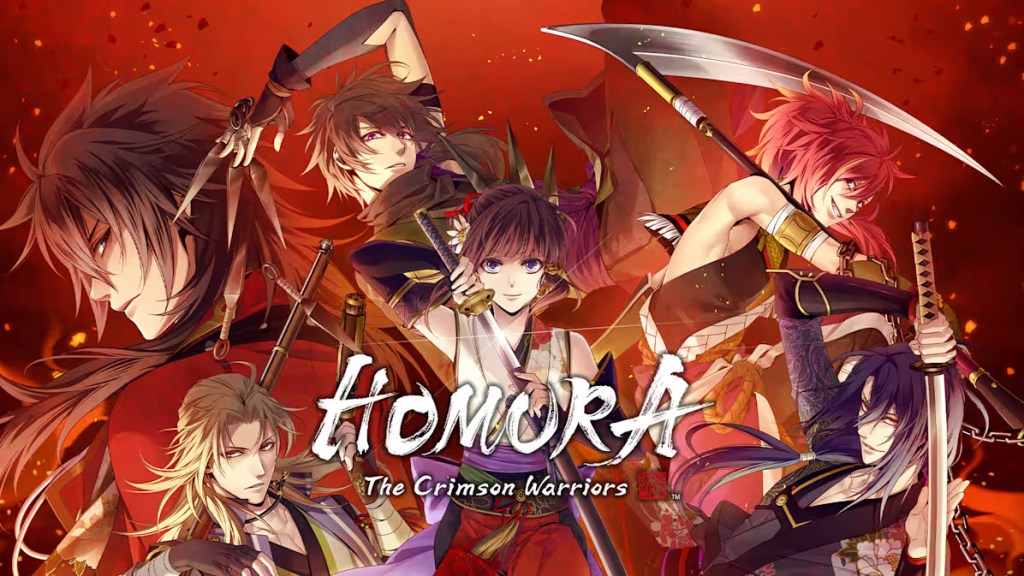
- Price: $39.99 (digital); $49.99 (physical)
- Developer/Publisher: Idea Factory
- Release Date: March 31, 2026
A review code was kindly provided by Idea Factory International. We thank them for allowing us to cover something they’ve worked so hard on.
Content warning: rated T; blood splatter & sound effects (no wounds shown), implied threat of sexual assault, choking, suicide, arson, war, mass murder, etc.
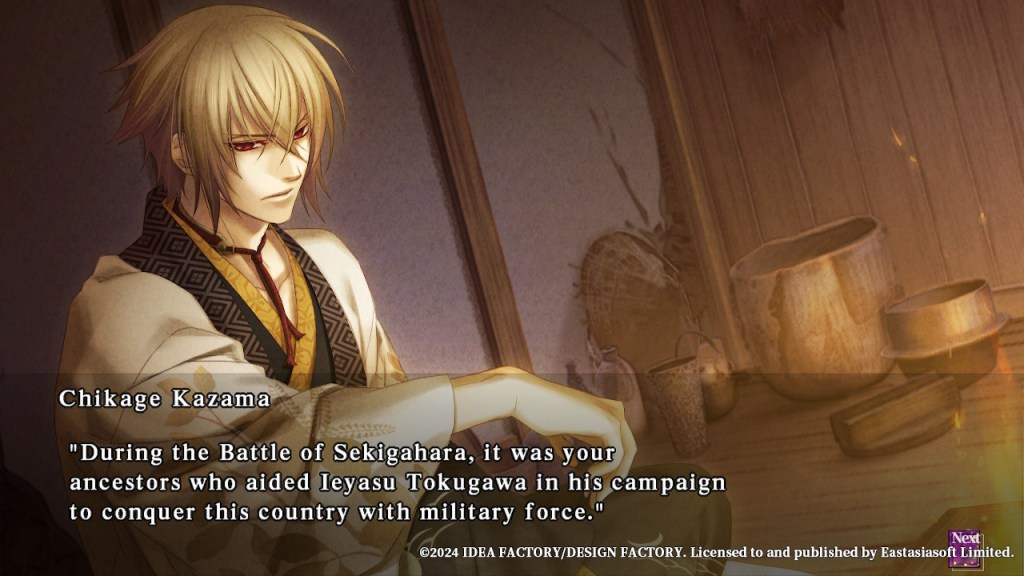
History has always been one of my favorite subjects, so I love it when they add a bunch of pretty men to an otome to tell a different version of historical events. 😂 Homura: The Crimson Warriors takes place more than a decade after the Battle of Sekigahara, which I vaguely remember seeing mentioned in Hakuoki. While the games aren’t connected (besides a shared artist), Homura is set around two and a half centuries before the events of Hakuoki on the (real) timeline.
The story of Homura begins in 1614. Heroine Mutsumi has been trained as a ninja in order to serve the Sanada clan. Her master sends her on an urgent mission to deliver a letter to their lord, after which she is to remain there to serve under him at his current residence.
Lord Nobushige Sanada participated in the Battle of Sekigahara, and was exiled for his role in the events there. He’s been waiting for another opportunity to serve the Toyotomi in battle against the Tokugawa shogunate, and the time has come for him to travel to Osaka Castle with his men to prepare for war.
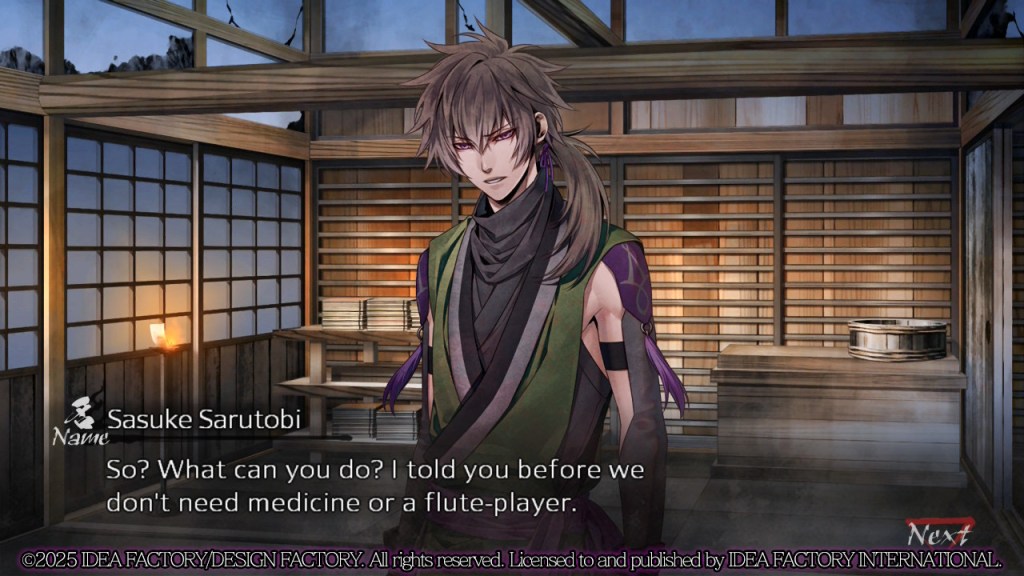
Unfortunately for Mutsumi, she’s told that her ninja skills are not up to par, and she can’t go with the Sanada ninjas when they leave for Osaka. They allow her to do housework until then, but I sympathized with Mutsumi because she was so desperate to do something useful for her lord. I really liked seeing the camaraderie among the men as they wait for their summons, and despite rejecting Mutsumi as a ninja they are still kind to her. (I did find it odd how she calls them all “Sir ____” – even after they get together. 🤔)
When it’s time for the men to leave for Osaka without her, something happens that allows Mutsumi to prove her worth, and she’s finally allowed to go with them to Osaka Castle. The Sanada ninjas arrive at the castle towards the end of the common route, and then we get to spend more time with each love interest in their individual routes.
I started with Sasuke; I liked him based on his appearance at first, and I also giggled thinking about how both his first and last names belong to characters from Naruto as well. Anyway, this Sasuke may come off as harsh, but his blunt honesty comes from a place of caring. I like that he’s good with animals, and his culinary efforts for the team are hilarious.
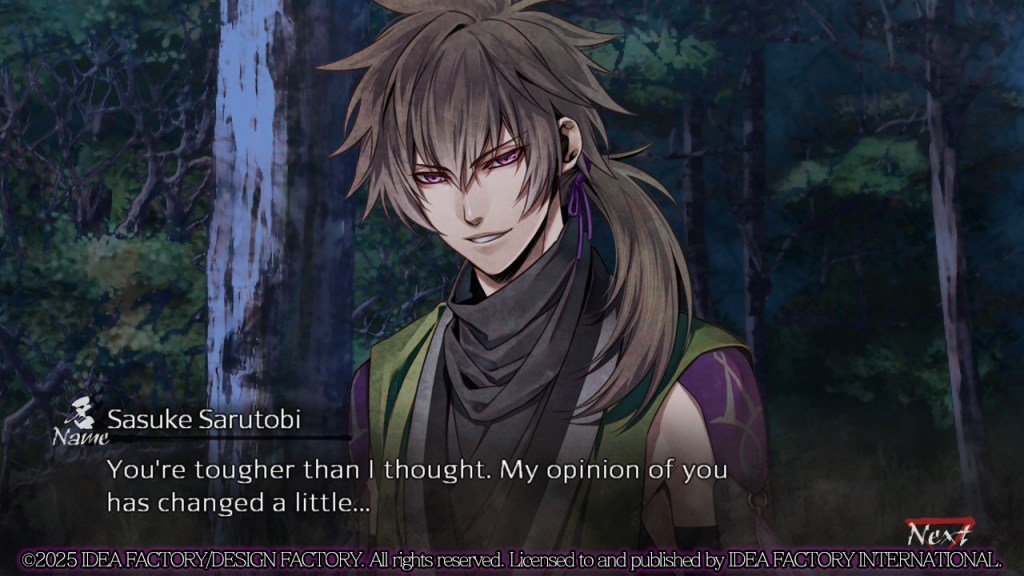
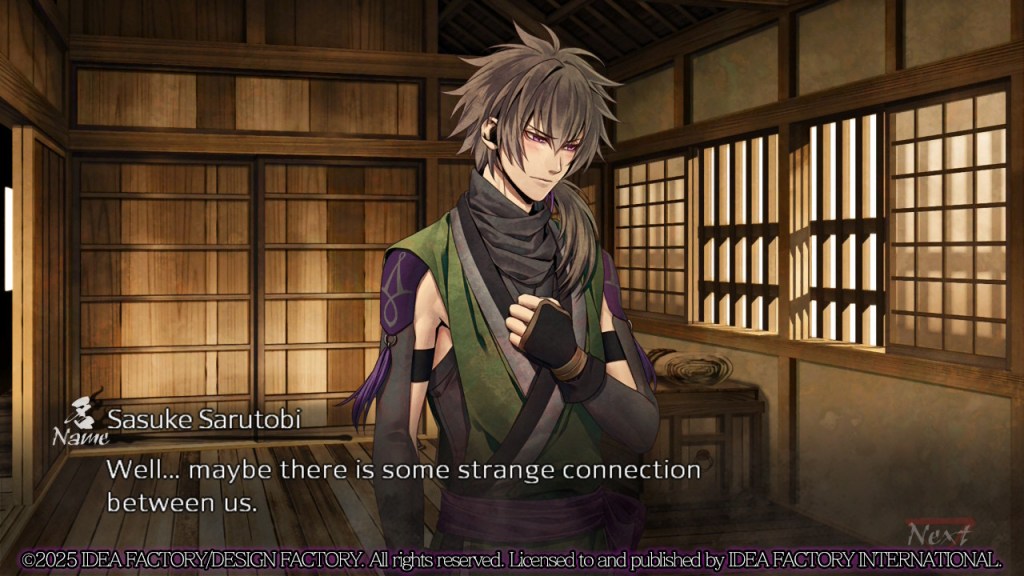
It was nice to see how he encouraged Mutsumi and gave her advice and constructive feedback on how to improve as a ninja, acknowledging when she’d improved. That being said, Sasuke’s route felt like one of the weakest to me as far as the plot and romance were concerned. The buildup of his relationship with Mutsumi didn’t seem natural to me, feeling quite sudden. I thought Sasuke’s antagonist didn’t stand out as much as others, although they had an interesting weakness, and I appreciated how Mutsumi exploited it in Sasuke’s good ending.
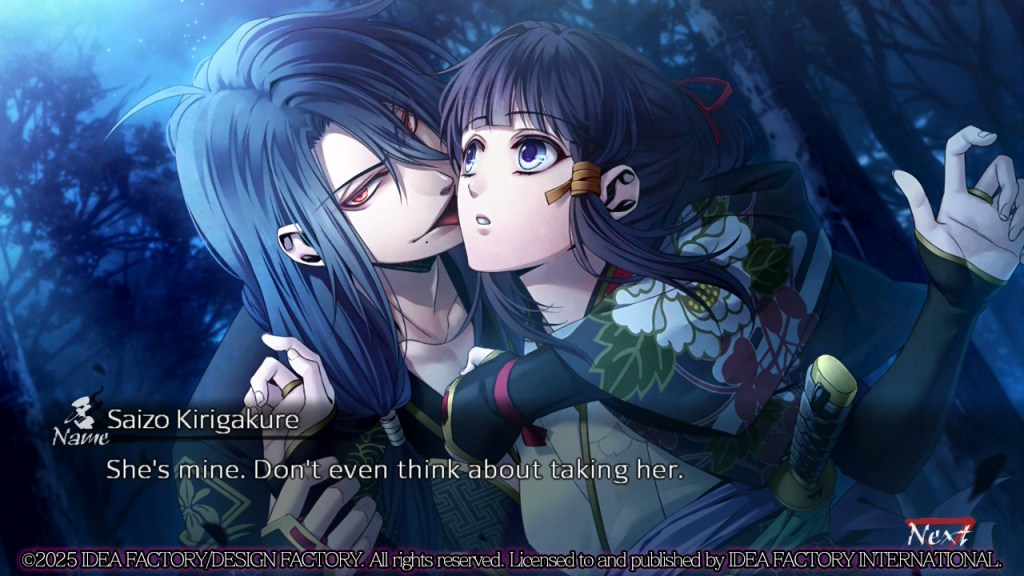
Next up was Saizo, who I seriously thought would be up there with Yori (Illusion of Itehari) as one of my least favorite love interests of all time. He seems like a real creep at first, and he calls Mutsumi plain in the beginning, which is so RUDE! 😡 And yet as I played through his route he ended up being my favorite of the bunch in this game. 😱
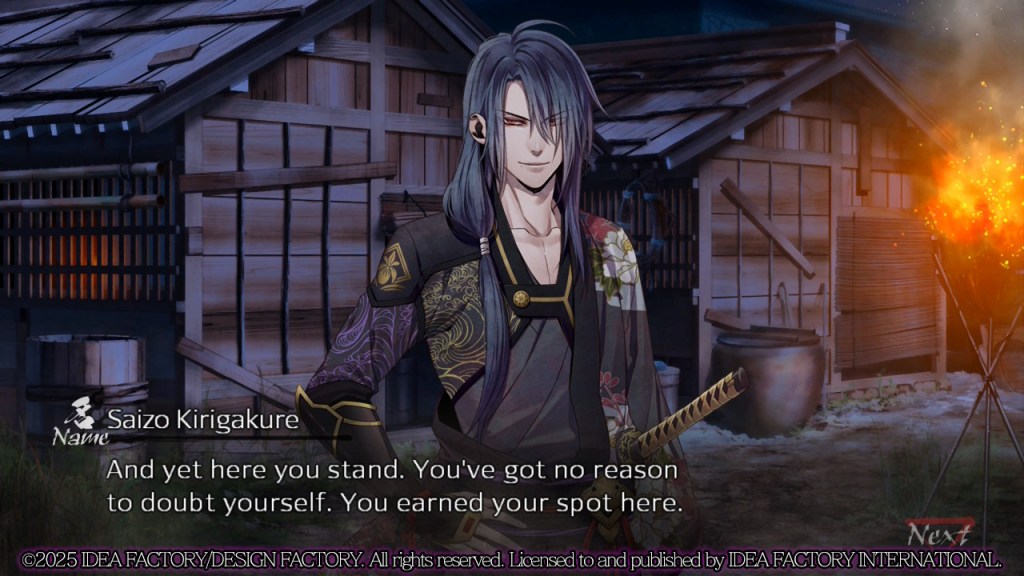
Saizo’s route felt like one of the most romantic ones; it was well-developed and also happened to tie into his “Ring” story more. Additionally, Mutsumi seemed to develop more in that she becomes more outspoken and “ninja-like,” and Saizo really gives her credit where credit is due for her role in events. The antagonist in this route was definitely one of the most interesting enemies.
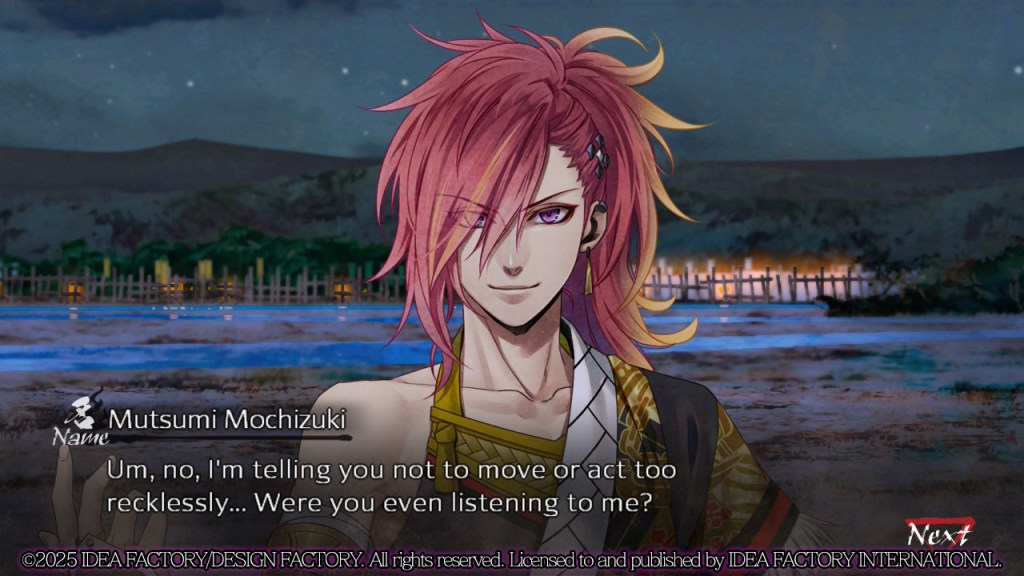
Then we have Kamanosuke, who on paper seems like he’d have one of my favorite routes. He’s the most friendly towards Mutsumi, and he often serves as the comic relief in a more serious story about war. But while the rest of the Sanada ninjas enjoy the thrill of battles, Kamanosuke is pretty reckless, and he didn’t listen to Mutsumi as much as he should have.
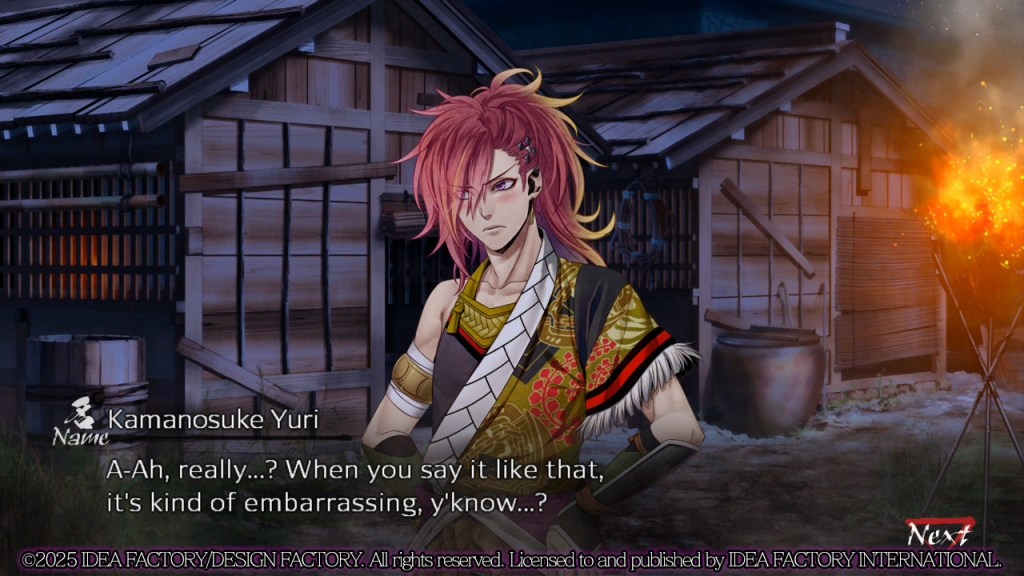
Something I particularly enjoyed about Kamanosuke’s route was the way that Mutsumi would just come out and say something about him having beautiful eyes and then wonder why his face is red! It was very silly. The romance was decent enough, and his route featured my favorite antagonist in the game. (Kamanosuke also has the coolest weapon in my opinion: the chain scythe.)
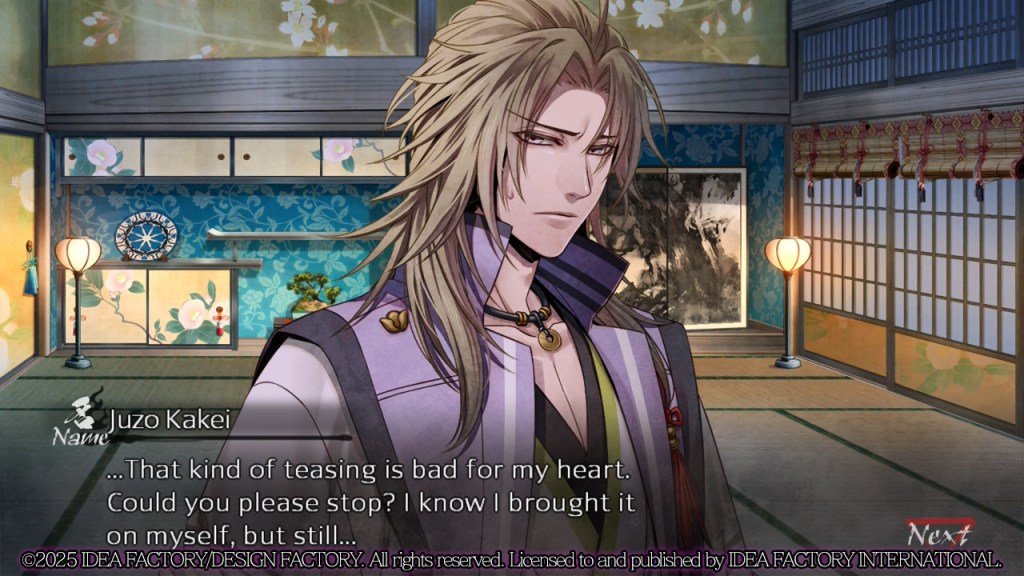
Juzo wasn’t my favorite love interest because his story and its antagonist were a bit boring at times. The conflict resolution in his route (and Kamanosuke’s) didn’t feel very believable. Something happened in Chapter 5 of Juzo’s route that made me facepalm at how obvious it was. However, I thought that Juzo’s route brought out the best sass in Mutsumi, and the way she confessed to him was so entertaining that it made up for the lackluster conflict.
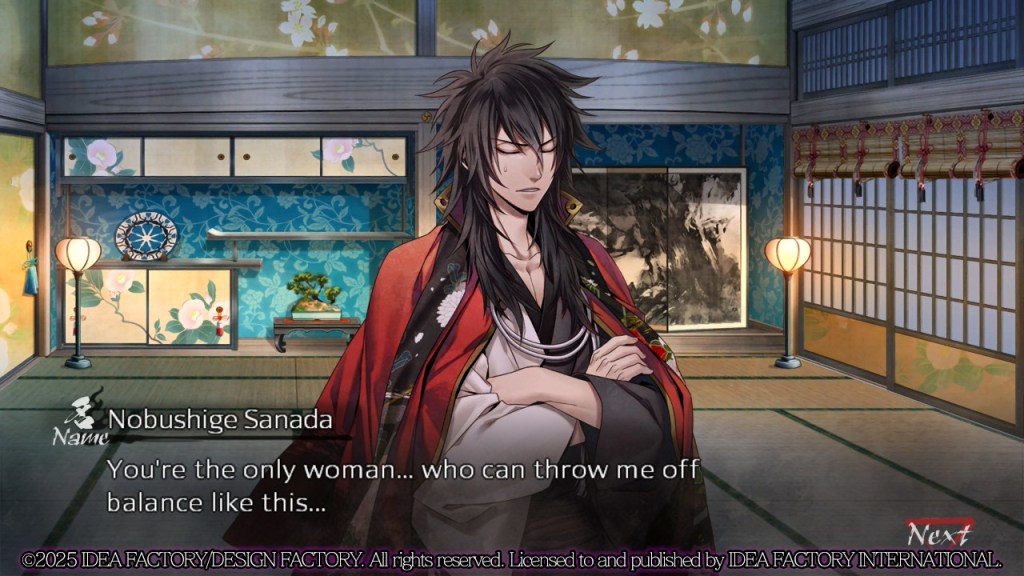
Our final love interest is Lord Nobushige Sanada himself. He’s a grumpy guy who ultimately cares deeply for his men and Mutsumi. His exasperation at Mutsumi’s dramatic declarations of service was especially amusing. I liked that he at least listened to her when she asked him to try to slow down and rest.
I didn’t love how dedicated he is to the Toyotomi’s cause. Nobushige often talks a big game about defying the odds in battle even though he acknowledges that losing is likely. At one point he says, “Battle isn’t about numbers! We’ll push through with our spirit!” And I was like, sir please, that’s not how it works. 🤣 To me that attitude didn’t bode well for a future with Mutsumi. However, an aspect of his good ending offered the best closure compared to the others’ routes.
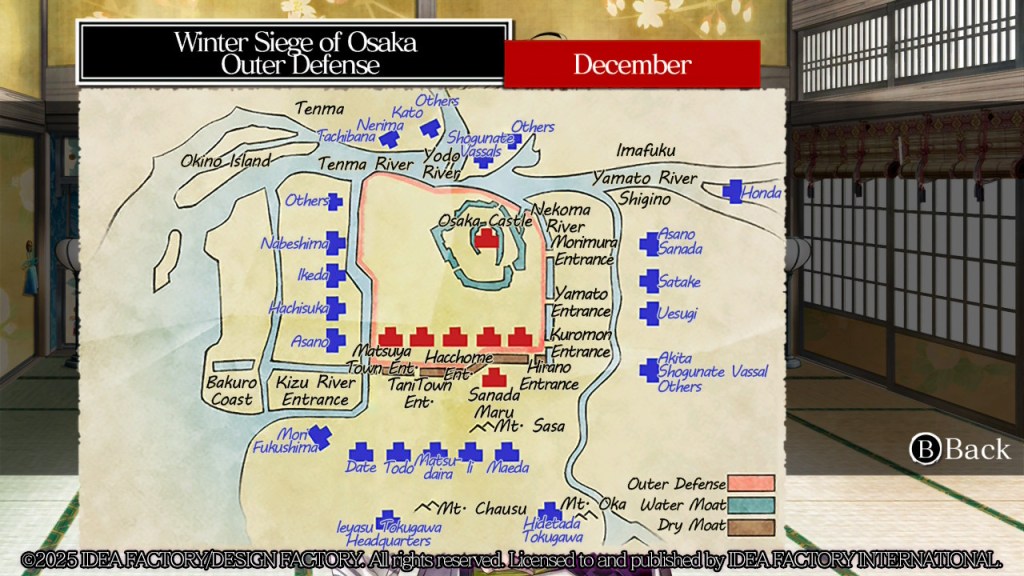
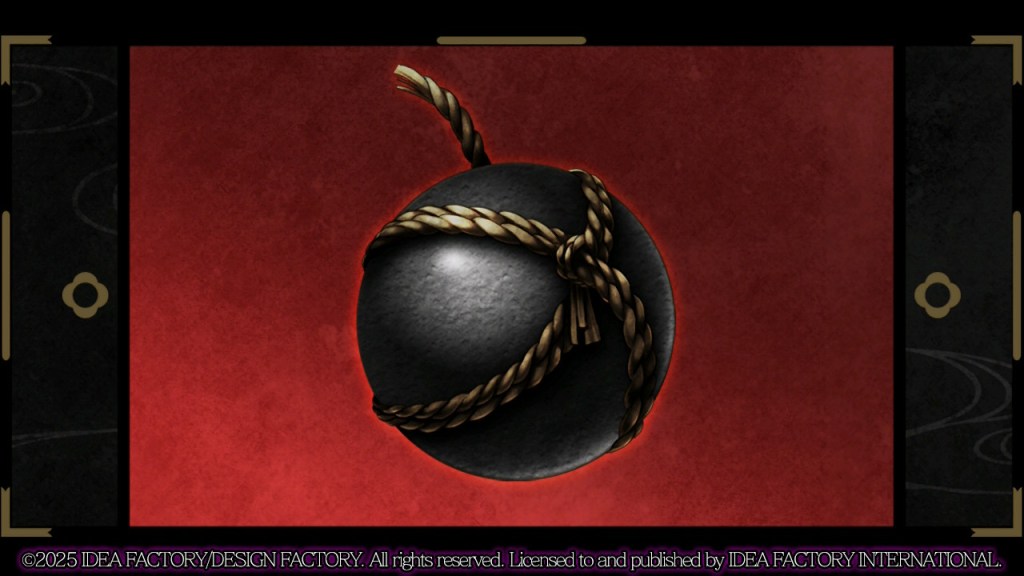
Like his late father before him, Nobushige is known as an excellent strategist, so unsurprisingly the characters talk about tactics a lot. It was interesting to see the different weaponry used by the Sanada ninjas and their enemies alike, such as the “horoku bomb.” The battle maps were a nice touch as well.
When the ninja characters fight it isn’t just regular combat; they actually have special ninja arts they can use to produce clones, conceal themselves, and more. Most techniques will probably be familiar to you if you’ve seen something like Naruto. I really appreciated that the battles were more exciting because there were ninja powers involved. The love interests’ special abilities – and their drawbacks – were fascinating.
I thought Mutsumi was perhaps not quite as unskilled as she was initially made out to be. It almost seemed like the top-tier Sanada ninjas were unintentionally underrating her abilities because she simply wasn’t up to their levels? Because besides her performance in the first battle they see with her she actually seems to do pretty okay.
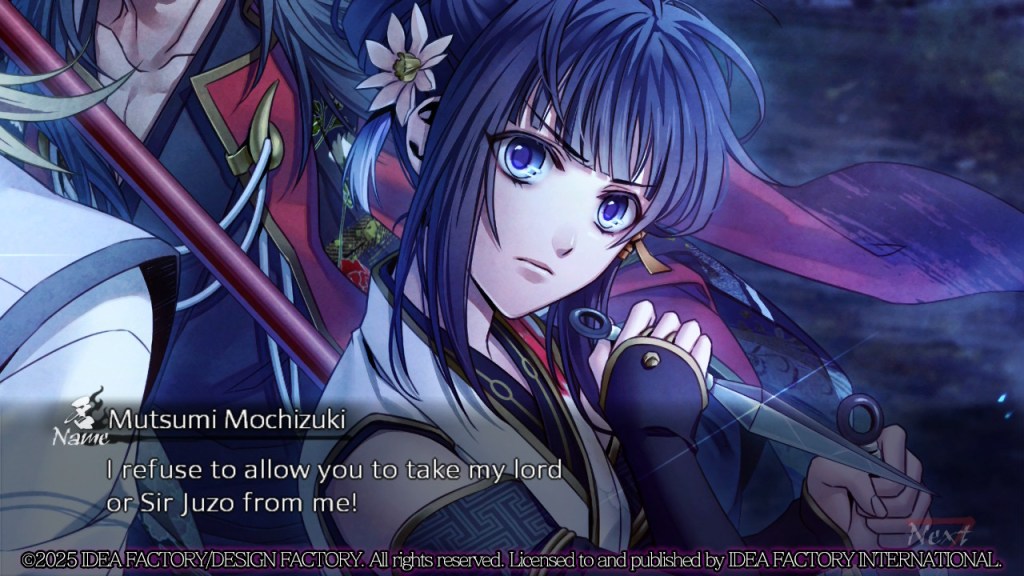
She manages to kill some minor enemies, and in battles with the main antagonists she at least helps distract them and supports the love interest well. I don’t know if she just improved a lot during her time with the Sanada ninjas, but they comment that they’re surprised by her speed and ability to conceal her presence. I felt sorry for her because of how desperate she was to serve Nobushige, but ultimately she’s a fairly strong heroine who actively participates in battles and becomes much more confident along the way.
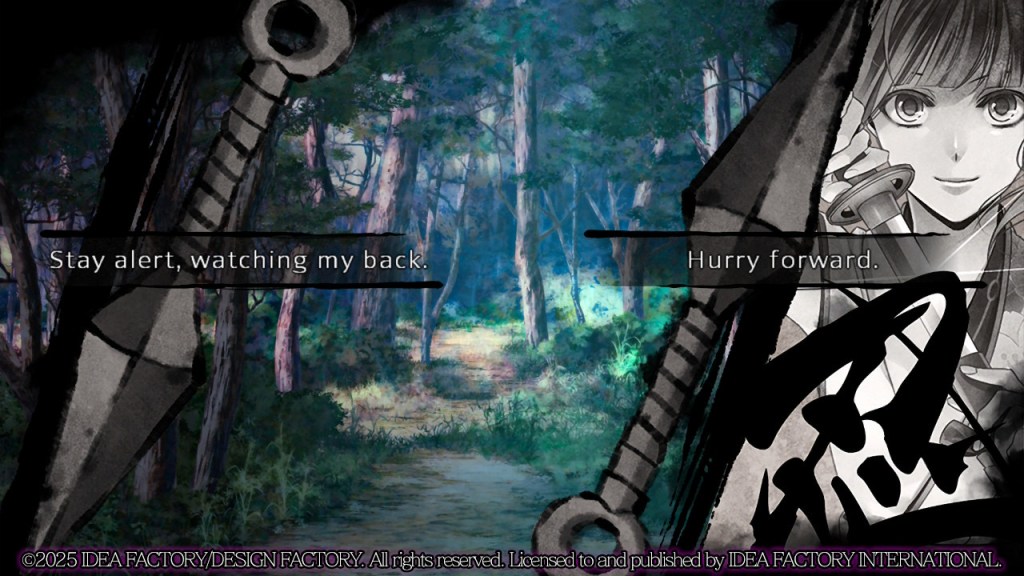
When they need to scout ahead to check for enemies and/or traps, you get to choose what Mutsumi will do in “ninja mode.” Some of the right choices are pretty obvious since they’ll often consist of “go full speed ahead” versus “move cautiously.” At the end of each route you’ll earn one of three levels of ninja certification based on the choices you’ve made. I liked how each love interest would make different comments in the end depending on your final rank.
There were many aspects of Homura that I enjoyed, but I will say that one of my biggest issues was the repetitiveness not only in the main conflict with the enemy, but also in Mutsumi’s interactions with the love interests. Besides the seemingly-constant “did you sense that” dialogue, the story about the war played out almost exactly the same in each route. I wanted more variety there.
The relationship development seemed to have similar patterns in each route – particularly in certain scenes where Mutsumi must choose between respecting their decisions or doing something anyways. There are also roughly 5 bad endings per route, which felt unnecessary and contributed to the repetitiveness.
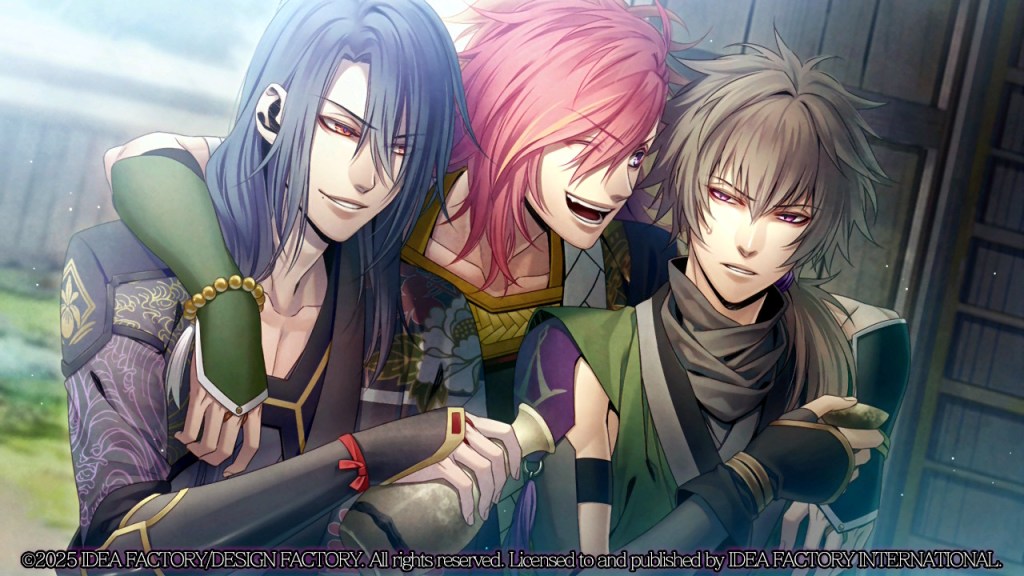
Despite my issues with some of the writing, I was still intrigued and entertained by the history and character interactions. The “Sanada Ten Braves” make snarky comments about each other that made me laugh, but when it comes down to it they’re very loyal and have each other’s backs.
I wanted more background on the members of the Sanada crew who were not love interests because I found them so likable. Honestly, if they made some sort of fan disc I’d be interested in seeing everyone (except for Seikainyudo) as a love interest.
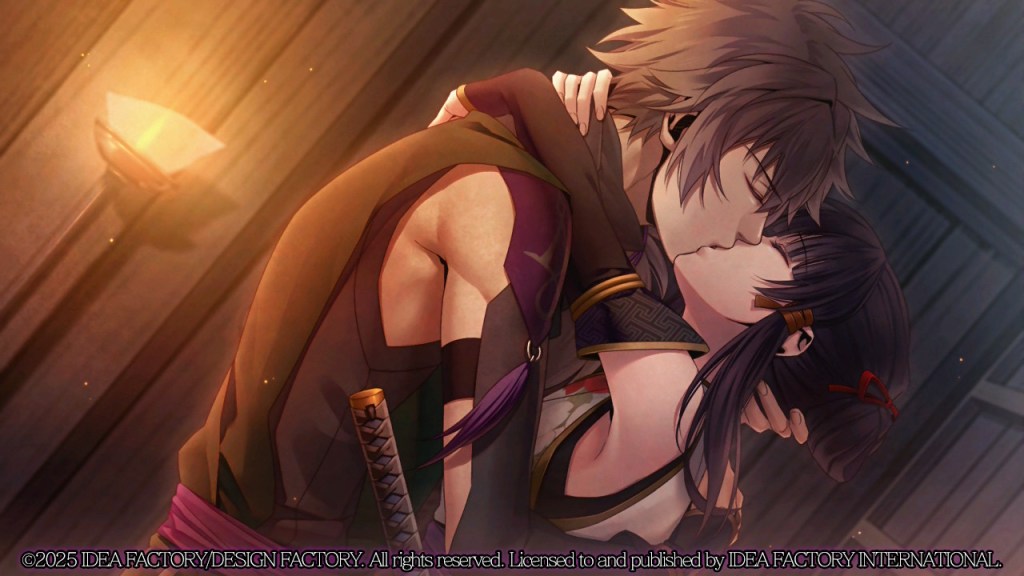
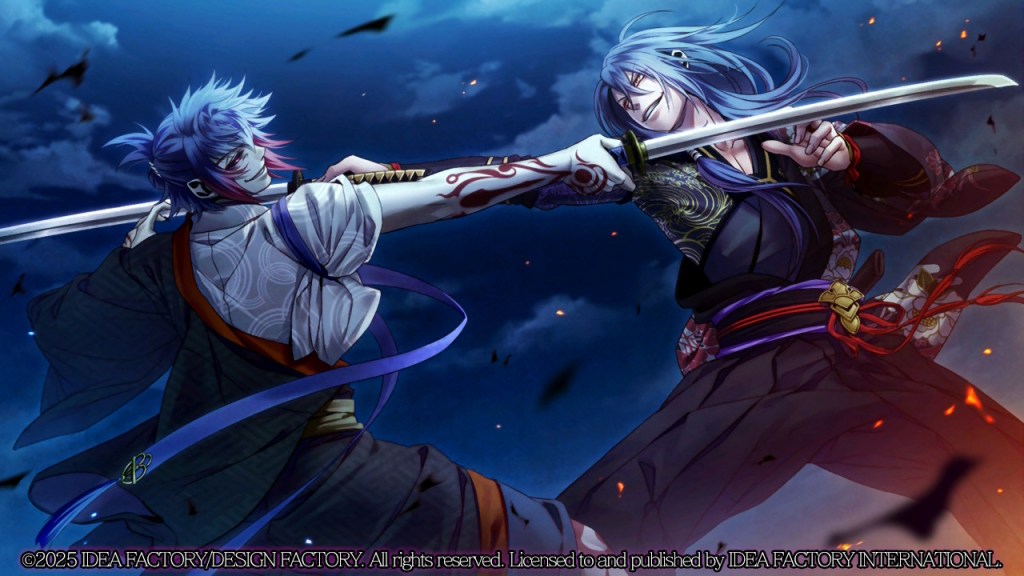
I don’t think any of the guys have any real red flags, and they’re super pretty. Something that made me incredibly happy was the large number of CGs for each love interest’s route. Even when the characters are bloody and bruised the CGs are still so lovely. There’s a nice variety of romantic, battle, and even special item CGs. I was happy to have CGs that included Mutsumi fighting alongside the men.
If you enjoy historical fiction that balances the serious, the romantic, and the occasional humor, you may enjoy Homura: The Crimson Warriors. The happy endings hint at the possibility of something sad, but it’s not as emotionally devastating as Hakuoki.


Leave a Reply