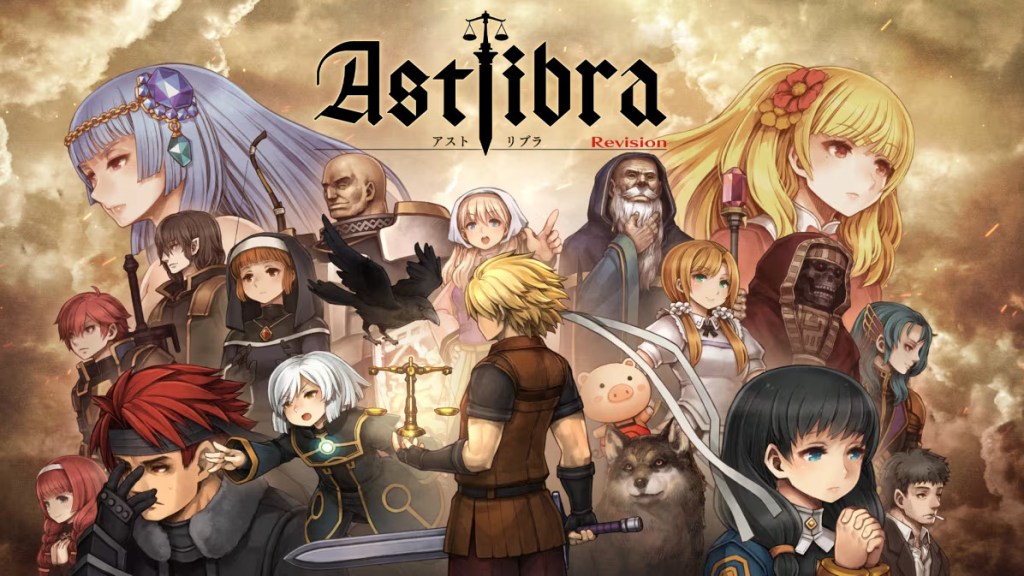
- Price: $24.99 USD
- Developer: KEIZO
- Publisher: WhisperGames/Whisper Interactive
- Release Date: November 16, 2023
A review code was kindly provided by PR Hound on behalf of KEIZO and Whisper Games. We thank them for being able to cover something they’ve worked so hard on.
This game is rated M for “Blood, Violence, Suggestive Themes, and Partial Nudity.” Player discretion is advised.
ASTLIBRA Revision is a side-scrolling action RPG more than 15 years in the making by solo developer KEIZO. It certainly caught my attention when I saw the screenshots on the eShop! With time travel as one of the major plot elements and an emphasis on customizing your character’s build, I couldn’t resist checking it out.
The game has a demo mode on the main menu, which seems to be a tutorial mode of sorts. You can play that first if you’d like, and then you can start an actual playthrough. There are 6 difficulty levels to choose from:
- Easy: “Not very challenging. For people who just want to enjoy the story.”
- Light: “A casual mode. For people who want to progress quickly.”
- Normal: “Normal difficulty. Moderately challenging battles.”
- Difficult: “A challenging difficulty level. For people who are not satisfied with standard difficulty. More Force, experience points, and gold available.”
- Hell: “A very dangerous mode for hardcore gamers. Can be quite unreasonable. Select it at your own risk. The screen doesn’t pause when using items or Possession Skills. Abundant Force, experience points, and gold available.”
- Impossible: “This is a completely unreasonable mode. Nothing good will come of it. The screen doesn’t pause when using items or Possession Skills. Abundant Force, experience points, and gold available.”
I believe that you can only change between the lower 3 difficulties after a certain point.
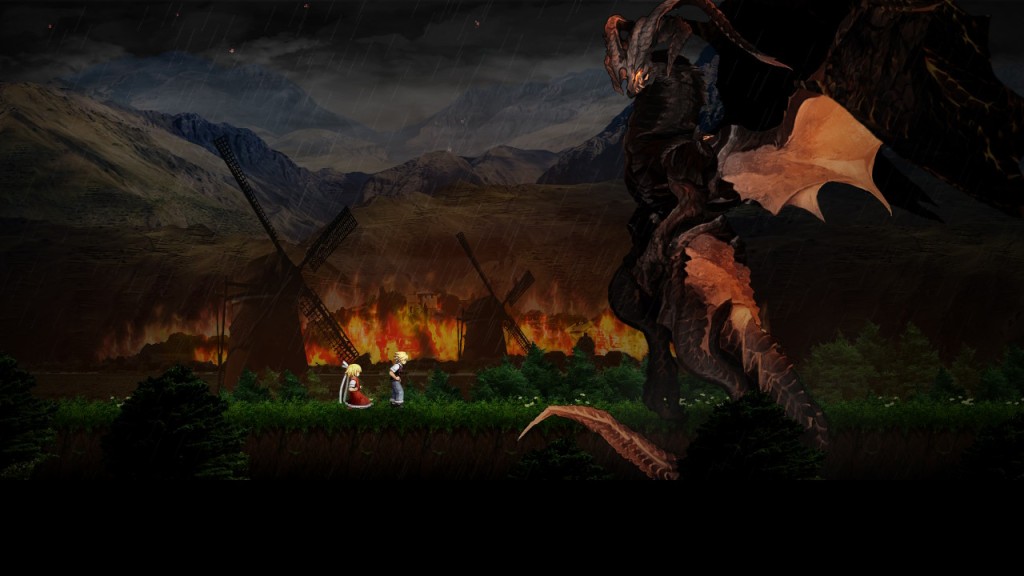
The story begins with two kids cornered by monsters as their village is under attack by demons. The screen fades to black, and the little boy – your character – and a crow remain, transported to an isolated cabin. Karon the crow is capable of speech, and he tells you he doesn’t remember anything before the cabin.
Karon does his best to convince your character to stay in the cabin since it’s a safe location away from demons, but the boy is determined to find his way back to civilization to look for his friend. It takes them eight years to finally find signs of humanity.
You obtain a special artifact and meet a new friend, who offers to help you locate your village and discover the whereabouts of your friend. Once you arrive in the kingdom, you join their small guild and are given a place to stay as you complete jobs and wait to hear any news.

As you advance the plot, you’ll leave the kingdom in each chapter and explore new areas on the way to your destinations. You’ll have to defend yourself from the demons that appear in dungeons and in between inhabited areas. As mentioned above, combat is action-based. When you level up, you get to spend points to increase your stats; this allows you to somewhat customize your build.

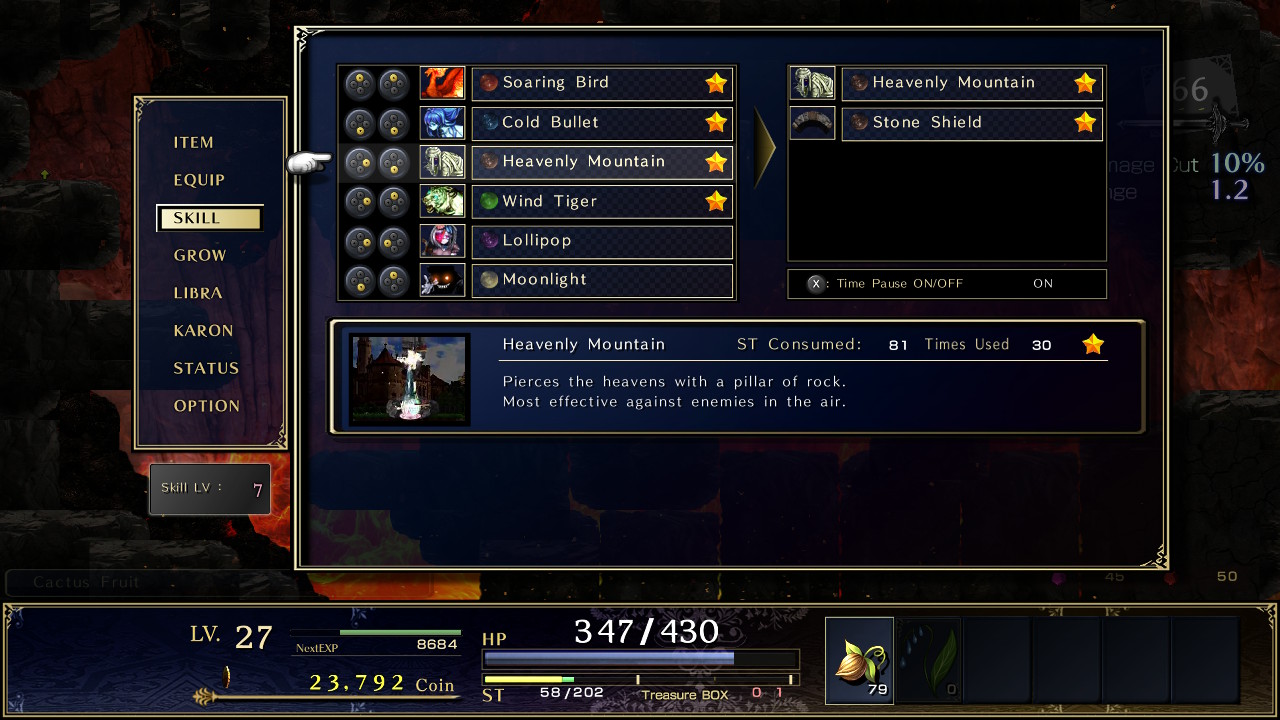
Enemies drop money, materials, chests, and “Force,” which you use to upgrade your stats and learn new “Possession Skills” based on your connection with Karon. These Possession Skills essentially act as your magical abilities, and you have to use them a certain number of times to master each ability.
They cost “ST” to use, which is built up by attacking enemies. Unfortunately, the ST gauge is not like traditional MP systems, as you have to maintain a chain of attacks or you lose that ST. That does make things a little harder. I really liked the designs for the skill animations, though.
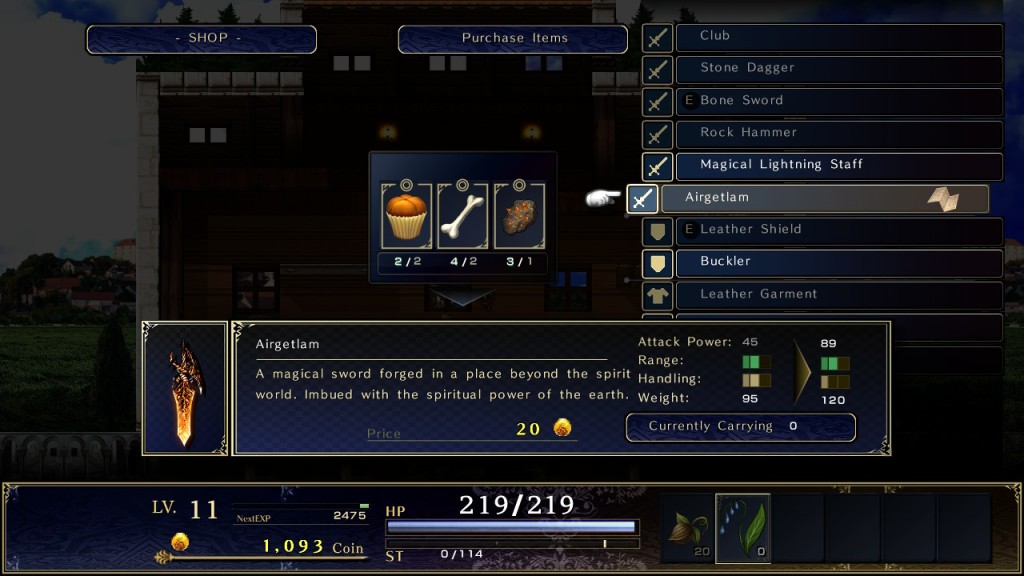
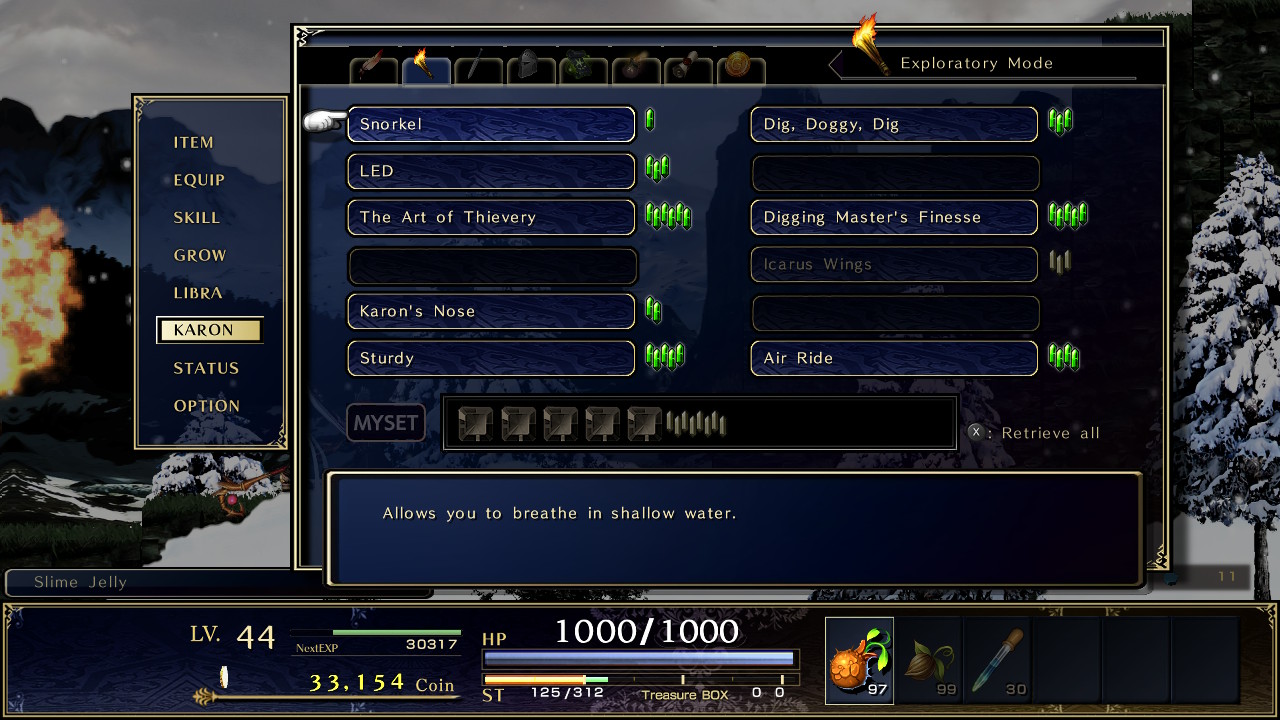
The character building system is pretty extensive, and Karon is a very helpful crow in that regard; besides the active Possession Skills, you also learn passive Karon abilities when you master each weapon, armor, and shield. The equipment shop requires you to have both the money and materials for your purchases. I’d always spend some time gathering all of the materials for every equipment recipe in each area.
I highly recommend getting each piece of equipment and mastering them; it can start feeling “grindy” after a while, but unlocking the ~100 passive skills is definitely worth it. These skills range from viewing enemy attributes to dashing, or increasing your resistance to environmental effects such as snow. There are items hidden in some of those environments as well.
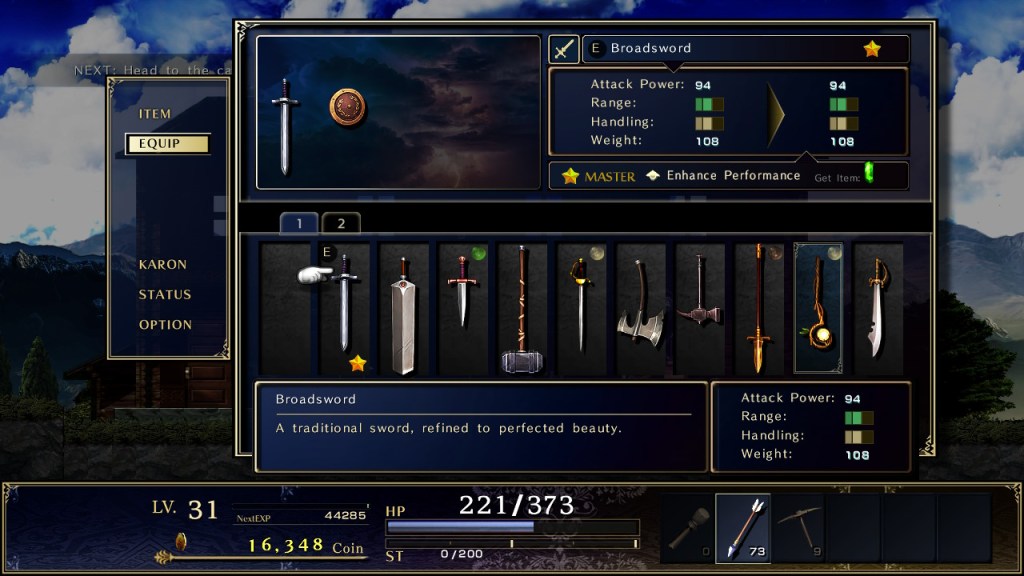
After taking the time to master each piece of equipment, you can decide which type of weapon you want to use. I really appreciated this because I found the heavier swords too unwieldy, and I also liked the way that your appearance changes based on your equipment. You can try out the arena challenges to get your hands on more helpful items.
I had fun with the combat, and didn’t think it was too difficult, but it also wasn’t too easy. (I played on Light difficulty for most of the game, until battles did start feeling too hard around Chapter 6 or so.) It’s easy enough to grind, as interacting with save crystals heals you and respawns enemies in the area. Save crystals aren’t very far apart, either.
For me the cycle of plot/grind/craft/upgrade was quite enjoyable. My only real annoyance in battle was that the item gauge has to empty before an item can be used. If you take damage at all – directly or from the bleed status ailment – the gauge is interrupted, and you have to try to use the item again.
You may be defeated before you can heal, and defeat results in a game over, which means you’ll have to load from your last save. (Boss battles appear to be an exception, allowing you to restart the battle instead of reloading a save.)
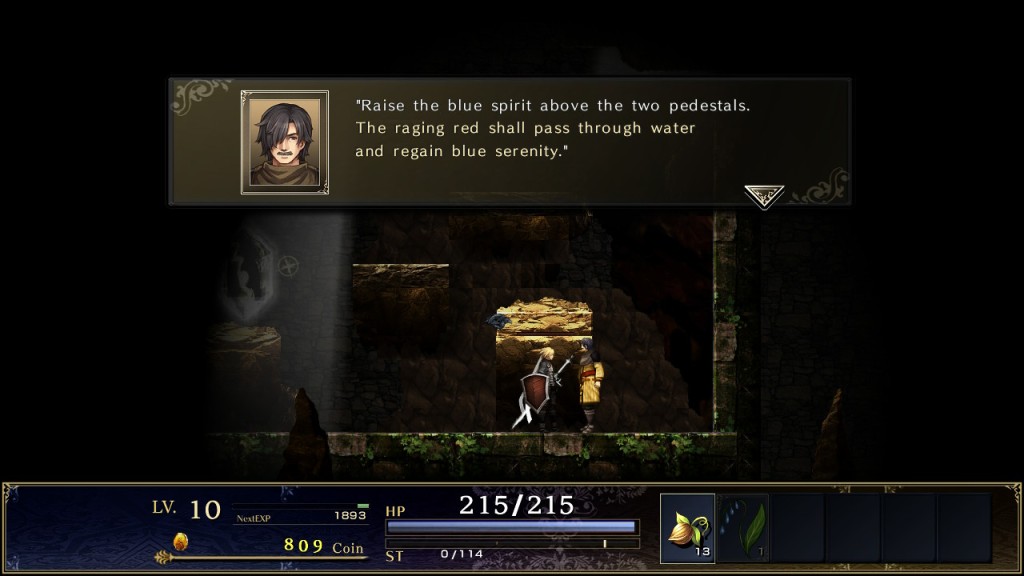
I admittedly wasn’t defeated that often, so this wasn’t that big of a deal. My main source of trouble in the game was the puzzles. I’m usually not great at puzzles to begin with, but I was completely stuck on the first few, and never would have figured them out myself without using Google. (A combination of Steam and Reddit posts plus the Japanese Wiki for the game were my assistants.)
I don’t mind puzzles in games, but I often need a hint system or something. These puzzles do not hold your hand at all for the most part – they remind me of those older games where you had to type commands to use specific items. I’m not saying that that’s necessarily a bad thing, but you may experience some frustration before giving up and looking up the answers. Some people like this kind of game design and may find the answers obvious, but others may not.
Whether you figure them out on your own or look up the solutions, I think it’s worth the frustration to get through to the next parts of the story. I always find time travel plots fascinating, and the events that occur in ASTLIBRA Revision are no different. The time travel artifact allows you to not only travel back in time, but it also offers some customizable benefits for your character build.
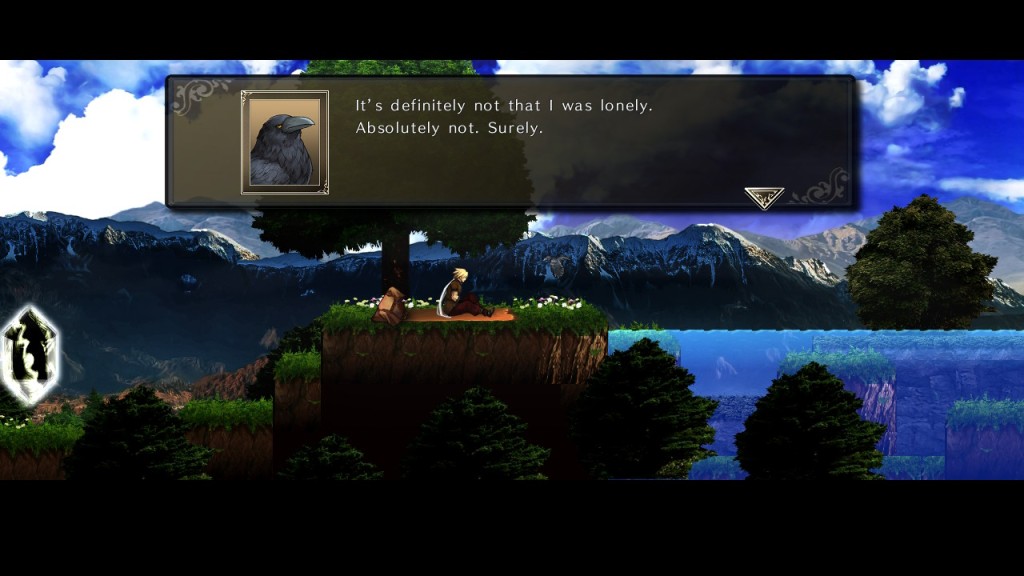
Using the time travel artifact may not always work out the way you intend it to; you might save one person and end up dooming another. The way that the artifact works felt pretty unique to me. Throughout your journeys through time, you’ll meet new allies and get to know more about their pasts. I really liked the flow of the storylines and usage of flashbacks. The overall tone of the game is more solemn, but there are still some comedic moments here and there that I found amusing.
Now, there are some rather risqué moments in Chapter 4 and with the final boss in Chapter 5. (You’re probably not going to want your grandma in the room for that boss.) I think there’s a time and place for more “NSFW” elements, but given the general tone of this game that boss seemed especially out of place. Other than what I viewed as some missteps though, I found the writing to be well done overall.
There are technically multiple endings in that you’ll be asked to make a decision in a few instances; you’ll see the credits roll, and then you can load the most recent save and make the other choice to continue the game. Once you’ve actually completed the game and seen the proper ending, you will want to save and then load it again to play the post-script chapter.
The post-script chapter adds more story to the game, as well as some more content and equipment customization. I was a little frustrated by a lack of direction on what to do in the post-script chapter, but once I figured out where to go I was quite happy with it. Besides the additional plot, there are new arena rounds to challenge and some secret bosses to face if you’d like. (I believe you could face them earlier, but it’s recommended to wait?)
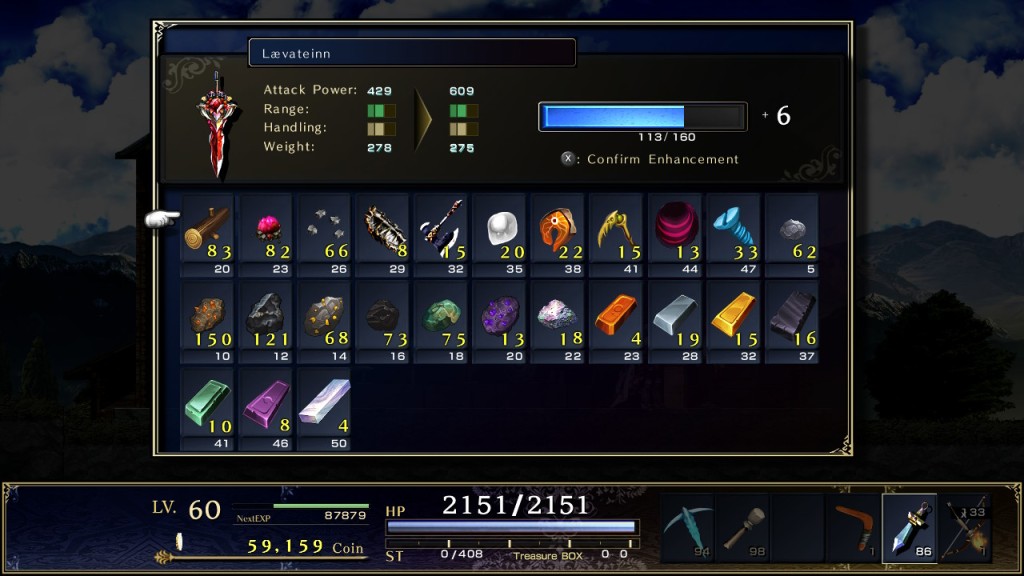
You can enhance your equipment using ore and other materials in the post-script, which I wish was possible in the main game as well because I really liked getting to strengthen my character even more. They also added “Equipment Boards” to further modify your equipment in the post-script.
There’s just so much to do in this game – it’s really impressive. I spent around 70 hours with it. It’s not without its flaws; it can be very frustrating at times with its puzzles and late game difficulty spike. One of my other complaints is that there isn’t a New Game+ option; it’s kind of ironic that a game about time travel doesn’t let you replay the entire game with your levels and equipment from your first playthrough.
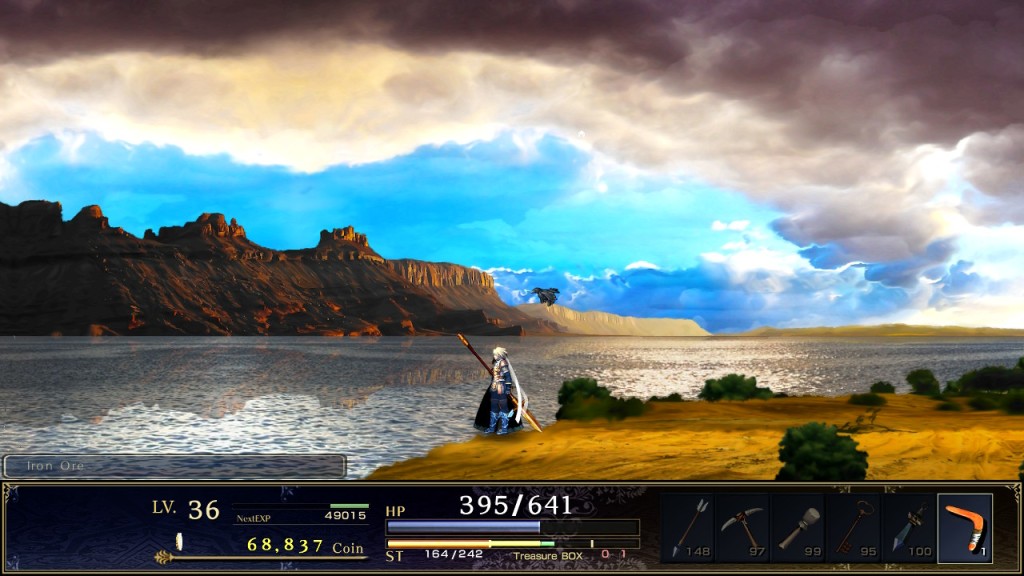
A lot of my issues with ASTLIBRA Revision are certainly subjective, and may not put off other players. Even with my criticisms, I would definitely say that the game does a lot right. The graphics were breathtaking, for one thing. The soundtrack was top-notch, and hearing those songs play during battle really added to the experience.
I liked the characters and the story, and if you enjoy gathering materials and crafting, you’re more than likely going to enjoy this. It was so satisfying to constantly upgrade my character’s stats, battle abilities, passive abilities, and equipment. I think the character progression system is fantastic. With so much content, I’d say this is absolutely worth the price of admission. DLC is apparently in progress, and I’m excited to dive back into the game once it’s out.

 Switch It On Gaming
Leave a reply to ASTLIBRA Gaiden: The Cave of Phantom Mist Nintendo Switch Review – Switch It On Gaming Cancel reply