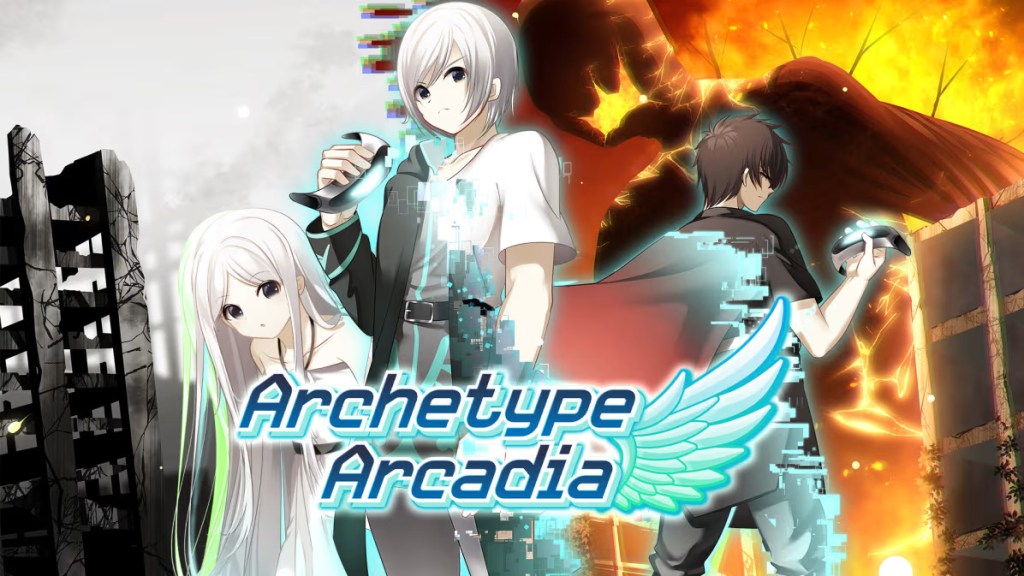
- Price: $29.99 USD (digital), $39.99 (physical)
- Developers: Water Phoenix & Kemco
- Publisher: PQube
- Release Date: October 24, 2023
A review code was kindly provided by PQube on behalf of Water Phoenix and Kemco. We thank them for being able to cover something they’ve worked so hard on.
Please note that Archetype Arcadia is rated M for “Blood, Violence, Suggestive Themes, and Language.” Further content warnings: Suicide, Torture, Mercy Killings, Gore, etc.
Available in English for the first time, Archetype Arcadia tells the story of a post-apocalyptic world in which a disease called the “Original Sin” has affected the majority of the population. With dark sci-fi themes, this visual novel focuses on a boy named Rust, whose sister has fallen victim to the illness. There may still be a chance of saving her though – it’s possible to manage the symptoms by entering the virtual world of Archetype Arcadia. Can you find a cure, or will “Original Sin” cause his sister to take her last breath?
“We didn’t want to spend our days losing things anymore.”

Rust (17) and Kristin (13) are the only survivors from their village – the rest of the villagers succumbed to the psychosis associated with the disease, which caused them to kill each other and/or themselves. Now the sibling pair travels together in the hopes that they can find survivors in other settlements.
With Kristin experiencing symptoms of “Peccatomania,” she must login to Archetype Arcadia. It’s not clear why the game seems to delay the progression of this illness. One day Rust finds Kristin unresponsive, and all he can think to do is enter the game himself to see what went wrong. The only problem is that he’s never had a reason to use the game before, as he doesn’t have the disease. Peccatomania may be frightening, but unbeknownst to Rust, greater dangers await him in the game.

Rust finds out that Archetype Arcadia involves players summoning avatars that represent their experiences with emotionally charged memories. For Rust, his strongest memory card “Tin” would have to be related to his sister Kristin. Avatar abilities derive from some aspect of a memory; as the real Kristin is all about having fun, she throws stones representing Reversi game pieces. This sounds like a fascinating battle system. I absolutely love little Tin as Rust’s primary avatar. (So cute!) But there are a lot of issues with the game he’s entered.
“Stay detached.”
After the destruction of their village, Rust shut down emotionally, which is understandable. Unfortunately, he lacks access to mental health professionals, and he’s determined not to “think about what’s unnecessary.” This is a problem for multiple reasons, including the fact that using memory cards requires empathizing with one’s memories and the emotions associated with them.
Without much knowledge on how the game works and an inability to properly use his memory cards, Rust starts the game with multiple disadvantages. Why is that a bad thing, you might ask. Isn’t it just a game? You’d think so, but when players take damage, they actually feel the pain like they would in real life.
If a player takes enough damage – to the point that they’re about to be defeated – the enemy can choose to shatter their memory card(s), which means that the player not only loses that avatar, but also the memories associated with it. And the memory loss extends to real life, too.
Losing all of your memory cards leads to a permanent Game Over, which could potentially affect the real world as well… Rust has no way of finding out, with what appear to be deserted wastelands for miles around. Are the other players even real people anymore? You’ll have to find out.
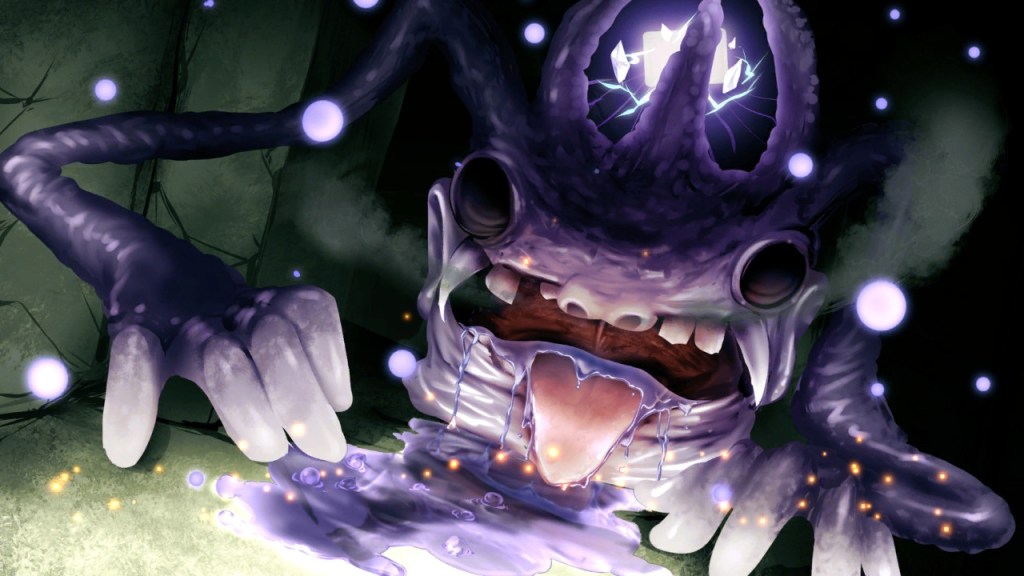
Real or not, the other players’ morality – or lack thereof – certainly varies like it would in real humans. Even if a player is a good person, they may still pose a danger to you. Those who absorb themselves in one memory card and “who forgot reality to bask in memories” turn into monsters and lose their sense of right and wrong. All of these factors mean that the story gets really dark almost right away.

Given the stakes in the game, it’s not surprising that it has a large number of bad endings, of which there are 20. The 1 main “true” ending also includes 6 character endings after the credits roll. (Check out our spoiler-free guide!) Whenever you hit a bad ending, even if you haven’t saved in a while you can return directly to the choice you just made by hitting “New Game” then “Index” on the main menu. I appreciate this function because it’s so convenient.
I do recommend viewing each bad ending because they really demonstrate the need to make good, cautious decisions even in the world of virtual reality. The situations in the real world and in Archetype Arcadia are quite dire, and the bad endings reflect that. Appearances and actions can be deceiving, and Rust must decide who – if anyone – can be trusted.

I thought the world building and character development were really impressive. They explain the way things work in the game in great detail, from the battle mechanics to any amenities. The explanation of different strategies for raising players’ Empathy Ratios was especially fascinating.
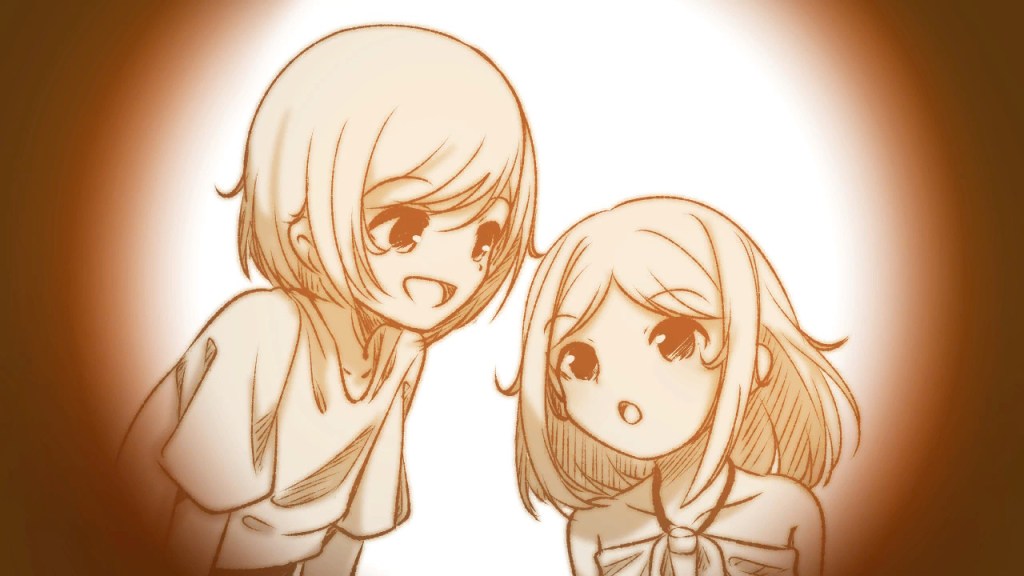
You also get to find out about the backgrounds of Rust’s new allies, but also what motivates his (fr)enemies. Flashbacks offer you a glimpse into the inspiration for characters’ avatars/abilities and the reasoning behind their actions. Although Rust serves as the main character, we often get to see events from the other characters’ perspectives during the main storyline or after a bad ending. The changes in points of view help flesh out the story even more.
“We could break this world that only takes away from us.”

Like many online games, Archetype Arcadia offers a guild system. Some guilds are obvious enemies, while others live by more morally ambiguous codes. The interactions in the game are prime examples of good people doing bad things and vice-versa; they did an amazing job managing the spectrum of morality and the way you perceive characters. Who is incapable of redemption? Where is the line for unforgivable behavior in a post-apocalyptic world where everyone is trying to survive?
Everyone has their own goals in the game, and one way or another, someone’s going to die. This is an emotional roller coaster; one minute you’re distraught after death or betrayal, and the next you might find yourself laughing. Dark themes and scenes do dominate the story, but there are still some fun moments here and there to break things up.
One of the main themes is empathy; the characters must empathize with themselves and their memories, and sometimes other players too. I nearly cried several times when things inevitably went wrong for Rust and his friends. The Japanese voice actors went all out with their agonized screams, and the poignant music suited the scenes well.
I also liked the art style they used for player and avatar designs; visually the avatars are adorable, in stark contrast to the darker tones of the game. Yet they serve a dual purpose in that they’re also a reminder that not everything in the game is as it seems. Tin may be tiny and cute, but she’s very useful in battle (with a competent player controlling her). I particularly enjoyed the dynamic fight scenes.
I don’t have anything really negative to say, although I would offer some mild critiques. The main issue would be the proofreading. Overall they did a good job with the English translation, but sometimes it gets a little awkward here and there. For example, Rust calls everyone Mr./Ms. ____, which I assume is based on translating honorifics? (There’s even one incidence of “Mr. Rosa.”) For localization purposes it just doesn’t sound natural.
There were also missing definite or indefinite articles (the, a/an) and typos in some of the dialogue. A decent amount of words were missing letters in Chapter 5 onward (“I once again sand [stand] before you”) – almost like they were typing too quickly and hit some keys too lightly or something.
Elements of the final conflict were a bit cheesy, and the gory descriptions got too graphic for my tastes, but I absolutely enjoyed the writing even with the aforementioned issues. Archetype Arcadia is a story with great tragedy, but there are also moments of triumph even in a world that highlights the effects of tragedy on human apathy.
The game description estimates a 50 hour playthrough (it has nearly 2 million words), so it has a lot of content to get through. Extras include a CG gallery with over 200 CGs, a section with character designs and details on scrapped plans, and a music player.
To be honest I do usually prefer stories with much lighter themes. But the concept of Archetype Arcadia intrigued me, and I am so glad I gave this a shot because it’s fantastic! The amount of work put into this is truly impressive.

 Switch It On Gaming
Leave a reply to Aksys Games 2024 Nintendo Switch Release Schedule (So Far) – Switch It On Gaming Cancel reply