
- Price: $24.99
- Developer: Pixpil
- Publisher: Chucklefish
- Release Date: September 16, 2021
Eastward focuses on John, a digger in the mines of the subterranean Potcrock Isle, and Sam, an adorable young girl in his care. As the story unfolds, you are eventually forced out into the world above, which those in charge of Potcrock Isle had used as a scare tactic for the people underground.
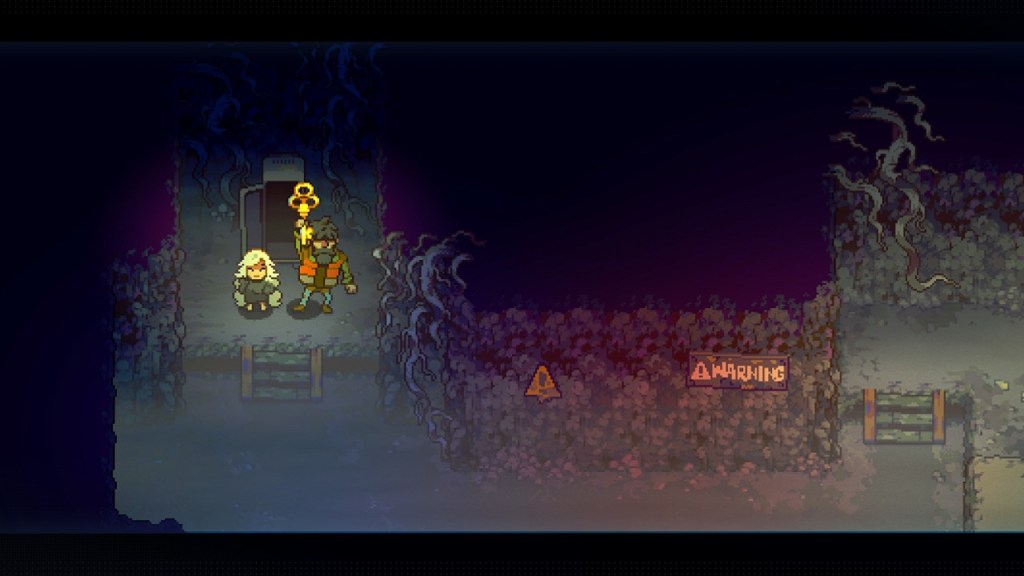
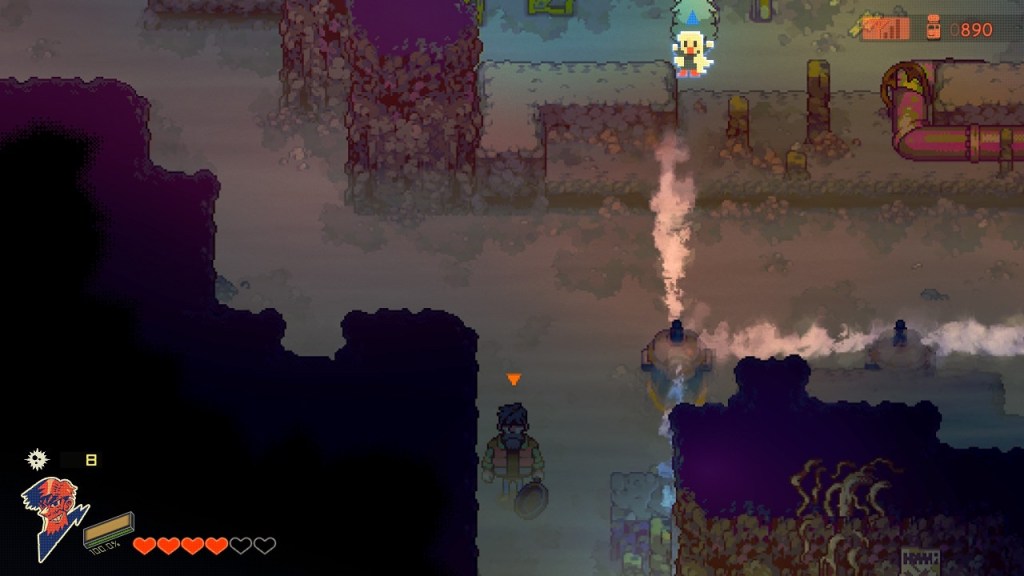
The apocalyptic world in which John and Sam live poses a danger to everyone, with monsters and miasma and more. John wields his trusty frying pan as a weapon in action based combat (and also uses it in a rather questionable way by cooking with it after wiping off monster goo). His frying pan can also be used to interact with environmental puzzles – John somehow manages to smack his frying pan around to muster enough force to move a raft around on the water! Sam, on the other hand, is a little girl who really shouldn’t be in combat. But this is an apocalyptic setting, so I suppose certain child protection standards went out the window a bit. Sam uses energy blasts to freeze enemies, activate parts of puzzles, and more. She doesn’t have a real way to harm enemies, which is why the game allows you to quickly switch between John and Sam by pressing ZR. Certain puzzles require John and Sam to work separately, and they help each other from different sides of the screen. While I often have difficulty with puzzles in games, I did not find them overly difficult in Eastward.
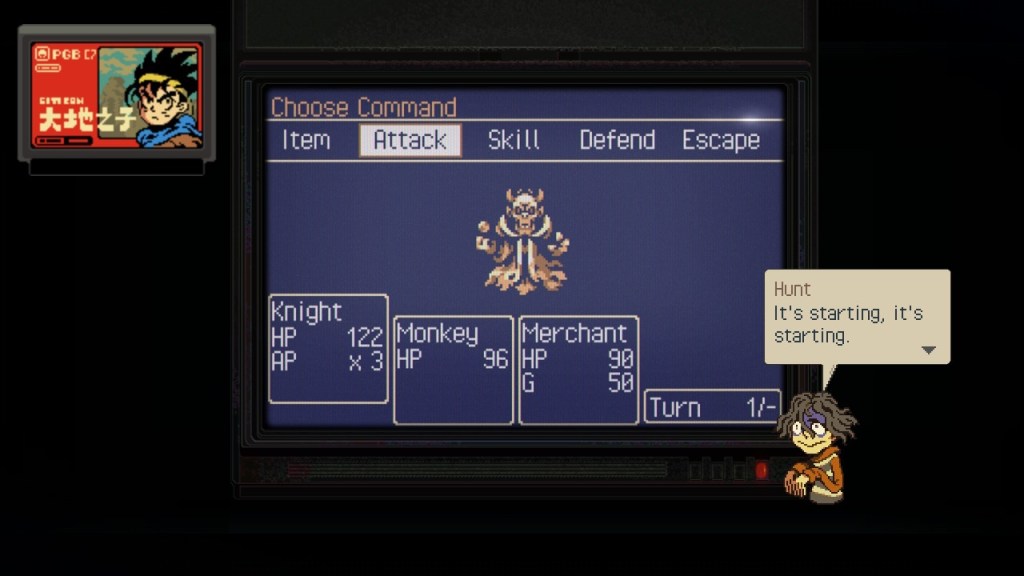
As John and Sam travel around, they meet a variety of characters that they help in some way. Sam often cajoles John, the silent protagonist, into helping others (if she doesn’t run off and attempt it herself first). The game allows for some downtime of sorts in each chapter before things get serious. One way for you to spend some of that time is by playing Eastward’s in-game turn based arcade RPG, called Earthborn. In Earthborn, you play as a nameless knight who tries to save the princess from the Demon King. You must gather other party members to help you in your quest. The game gives you one week to prepare your party for battle with the Demon King. If the knight is defeated, it’s game over. You do not keep any levels or items for subsequent playthroughs, but you do keep the party members you have gathered as well as the teleport points you have activated.
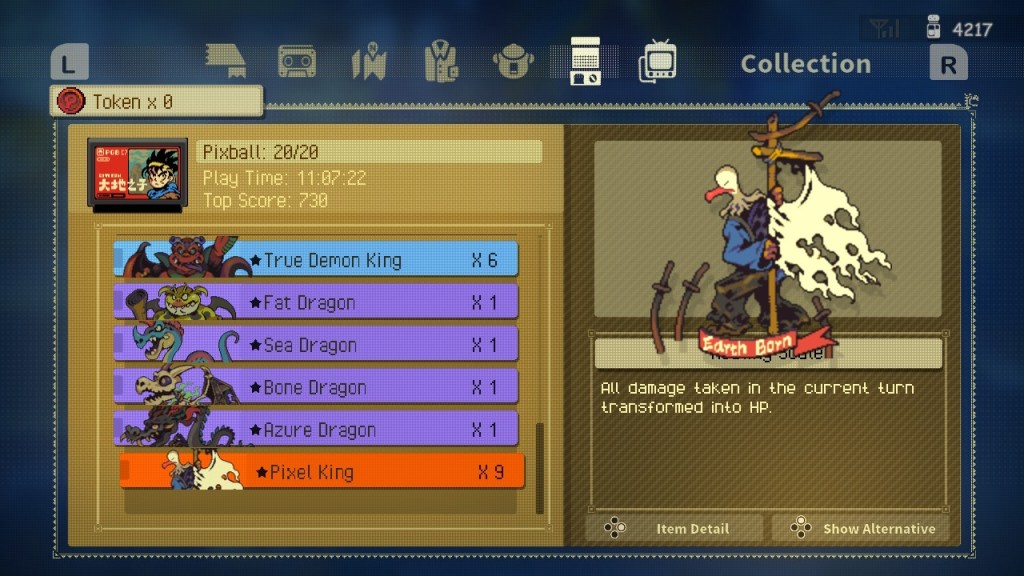
In addition, John and Sam can collect tokens to use in gachapon machines outside of the Earthborn game in order to receive Earthborn figurines that give you items in the game. These items include potions to heal your party, increase stats, change the shop’s inventory for the day, shop coupons, and more. These items from the “real world” gachapon figurines can be reused in each playthrough. Within Earthborn, you are able to purchase different items each day. There are unfortunately no options in the shop for healing items, so you must rely on those received from the gachapon figurines. Whether or not the shop stocks good items throughout your playthrough comes down to luck, and your party members’ abilities change between playthroughs as well. The different abilities and equipment can be the difference between winning and losing, but you’ll lose a lot more than you win against the Demon King. Your best bet is to get to level five, which is when your characters learn the best and most powerful moves. It’s easiest to do this by challenging the cave dungeons across the map. I managed to defeat the Demon King by the end of Chapter 3 in Eastward. It took me many tries (about nine hours of separate playthroughs), but I figured it out. It’s a really neat, unique addition to Eastward. Earthborn in the world of Eastward consists of not only a game, but a TV show as well. The world building in Eastward is really impressive to me.
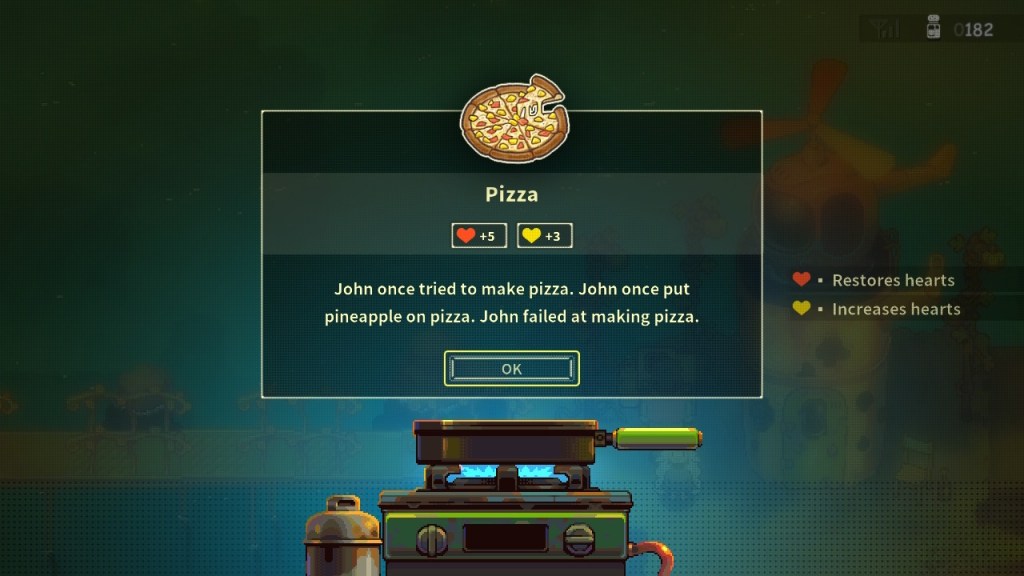
Besides the ability to play arcade games, in Eastward you are also able to shop for ingredients and discover recipes. This can be important for survival; some enemies can be pretty difficult and will quickly chip away at your hearts. Having food to restore your HP is a necessity. If you are defeated, the game’s auto save feature places you back before you were defeated. Thankfully, you also keep your items from before your defeat. You manually save your game by interacting with the refrigerator, of all things. It’s a quirky way of saving your game, so it suits the world of Eastward just fine. There is often a cooking station next to these saving point refrigerators, so if you see one and don’t have healing items with you, cook something up, as a boss fight may be ahead. Some ingredients can be acquired from treasure chests (be sure to purchase the Treasure Radar from a store in Potcrock Isle in Chapter 1). Other ingredients are occasionally dropped by enemies. Usually though, you get ingredients by going to the store. The stores will restock their items after events happen in game, so be sure to stock up as much as you can.
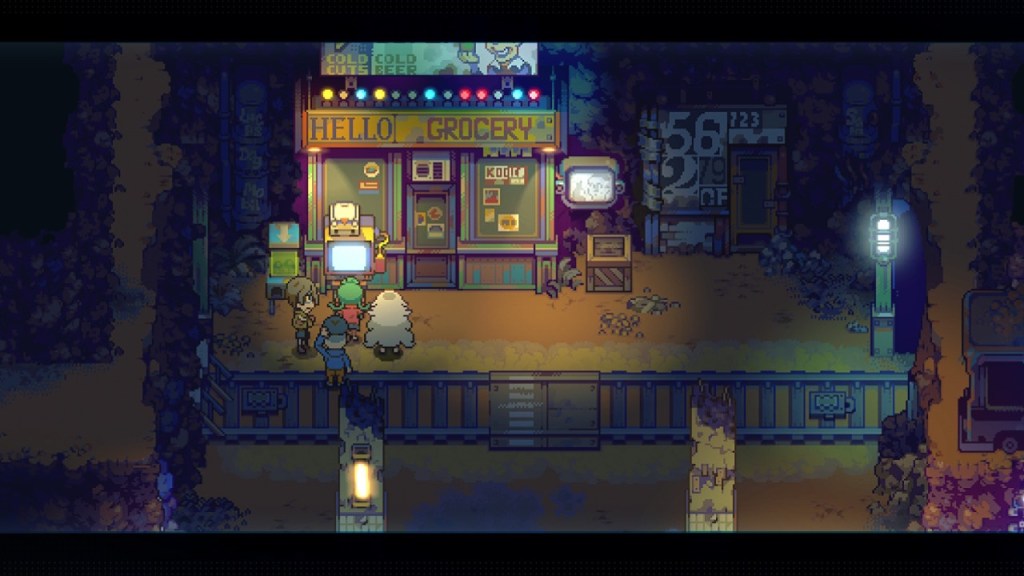
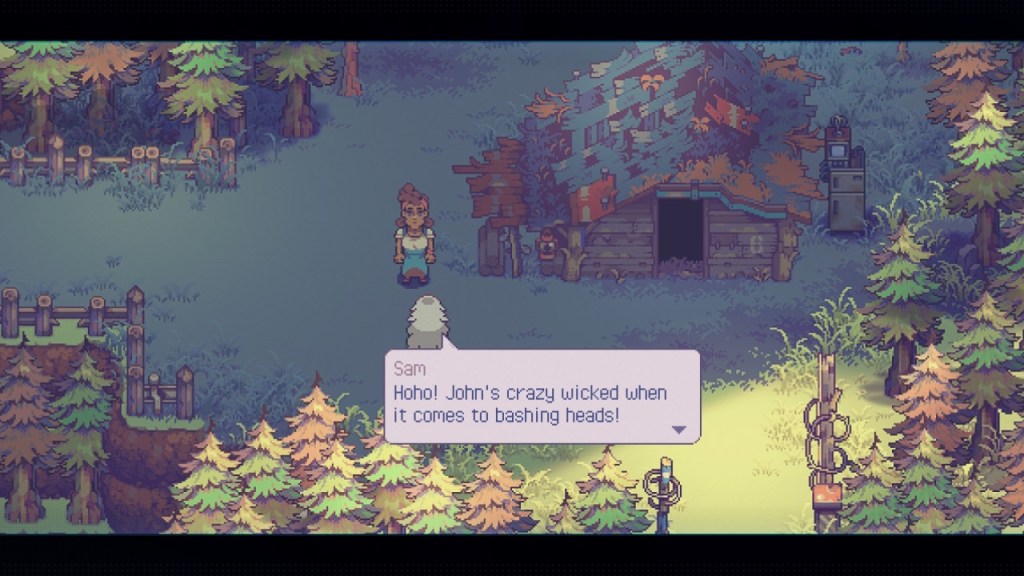
The graphics in Eastward are pretty muted; considering the setting, that’s not much of a surprise. I will say that at certain points in the game, the environment is too dark to move around easily – especially when being able to see is really important. There was a moment in Chapter 2 where I ended up dying many times due to an inability to see properly. While that was certainly frustrating, I ended up getting through it without an extreme amount of time wasted. Now, the character design is excellent in my opinion. My favorite design is definitely Sam. The characters are all very expressive in movement and facial expressions. I personally got some Gravity Falls vibes from the character design (John reminded me a little bit of Grunkle Stan in terms of appearance, and Sam reminded me a bit of Mabel in terms of personality). Some of the plot also reminded me of a book from 1995 called “Running Out of Time,” by Margaret Peterson Haddix. In that book, a young girl is raised believing that she is living in the eighteen hundreds; eventually, she discovers that things were not as they seemed. John and Sam leaving Potcrock Isle to go to the unknown world above made me think of that novel. The overarching plot in Eastward is rather dark, with the occasional frivolity sprinkled in. If it matters to anyone, there’s a decent amount of swearing here and there. I don’t know if this would be a good game for children, depending on the restrictions set by parents/guardians. As an adult, I’ve enjoyed the game.
There are some aspects of Eastward that are user friendly. The menu has a section where you can view current objectives, and you can look back to the plot points of previous chapters in case you have been away from the game for a while. There is another section with a map, and it indicates where you need to go with a person holding a flag. I also like that there is an achievement section under the system tab. One issue I had was the minimal inventory space. Over the course of the game, you can purchase backpack upgrades, but by Chapter 4 I only had eight slots. For me, that wasn’t enough, as I have some difficulty with action combat and need more healing items. I opted to invest in as many S.O.S. items as I could, in addition to some healing items, as that item will revive you should you be defeated.
The first three chapters were fairly lengthy, but Chapter 4 and Chapter 5 were oddly short. Chapter 6, without spoiling anything, is incredibly odd and seems out of place in this game. Ultimately, the first five chapters were much stronger in the writing. Chapter 6 through the final chapter, Chapter 8, were perhaps too cerebral and abstract, with a lack of real explanation of the overarching plot. The ending was sad but also confusing. I spent about 45 hours with Eastward (about 15 of which were spent on the arcade game Earthborn), and I did enjoy most of those hours. The puzzles and combat were never so difficult that I couldn’t complete them (despite my coordination issues). I think this could have been a strong contender for my game of the year if not for the confusing plot in the second half. The graphics were cute despite the dark themes, and the music was absolutely top notch. Despite my reservations about the plot, Eastward is still a very strong entry on the Nintendo Switch, and is a pretty decent value for the money as well.
Switch it ON or Switch it OFF? I would Switch it on and play! Solid 7 or 8 out of 10 from me.


Leave a comment