- Price: $24.99 USD (currently on sale for $22.49 until December 2nd)
- Developer: Necrosoft Games
- Publisher: Ysbryd Games
- Release Date: November 19, 2025
A review code was kindly provided by Stride PR on behalf of Necrosoft Games and Ysbryd Games. We thank them for allowing us to cover something they’ve worked so hard on.
Content warning: rated T for “Blood, Sexual Themes, Violence.” Abuse of authority, death.
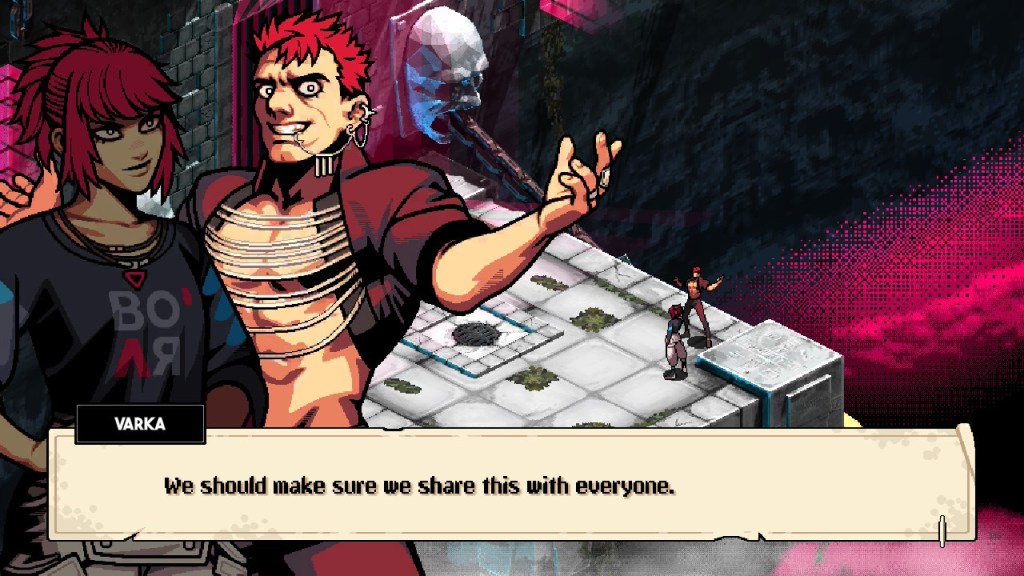
When Demonschool was first announced I was immediately sold on the idea. It’s a “new-style” tactics RPG that combines a school life theme with demons. (Hence the name.) While I’m not familiar with Italian horror movies, I’m a big fan of the Persona and Shin Megami Tensei series, which are the game’s other main inspirations. Add an art style that really appealed to me, and I couldn’t wait to check this out!
Now, in contrast to many “school life” games, Demonschool’s cast consists of college students instead of high schoolers. The story is set towards the end of 1999, just before the Y2K bug was predicted to affect computer systems worldwide and potentially take down countries’ infrastructure in a “computer-induced apocalypse.”
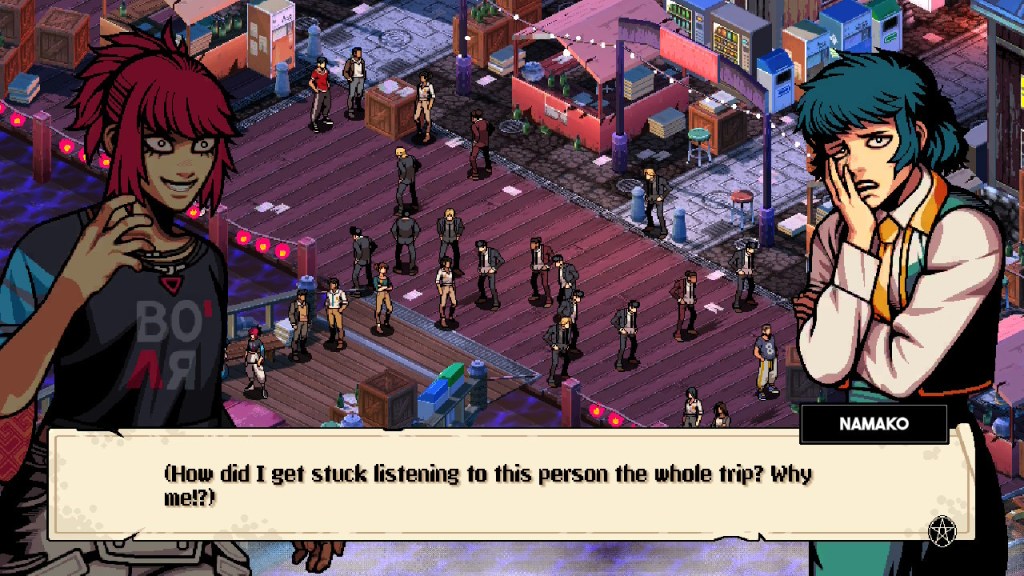
On the boat heading to their new school, our heroine Faye excitedly explains her interest in demonology to new acquaintance Namako, informing her that demons will arrive on the island soon to start a demonic apocalypse. Namako is naturally skeptical of her claims, hilariously asking if this is “like…a Y2K thing?” – but she’ll soon find out that Faye is not just some sort of conspiracy theorist.
Faye came prepared for battles with demons due to the knowledge passed down from her family, but Namako continues to deny that anything is happening and rejects the violence…until she can’t. You start the game with only Faye and Namako on your team, but you’ll recruit an additional 13 members as the game progresses.
You’re limited to 4 characters in your battle party. Each character has their own specialty, whether they’re a Brawler, a Phaser who passes through enemies, a Modifier who heals or uses (de)buffs, etc. Additionally, party members possess an elemental affinity that’s more effective against certain enemies, and they have elemental resistances and weaknesses of their own.
Before you even start a battle you can develop a strategy on how you’ll deal with the enemy. You can examine enemy units to see what they’re weak against, and then select your party members for that battle accordingly. While there are undoubtedly party combinations that work better for each battle, there aren’t any required combinations to win. The game allows players to really plan out each battle.
This is particularly evident in the way that battles are designed. In each turn you have a planning phase first, where you try to come up with the best use of your Action Points (AP) before executing that plan in the action phase. With the exception of a few battles, you get a maximum of 8 AP per turn, which go in the AP Pool to be shared by all 4 battle participants.
I thought the AP system was interesting, as the amount of AP a character uses depends on how many times they’ve acted that turn. (1 AP for the first action, 2 AP for the second, etc.) So if Faye acts 3 times, she’ll use 6/8 AP for that turn, leaving 2 AP in the pool for the rest of the party. This could allow 2 other characters to act once that turn.
Alternatively, you could have 2 characters act twice to use 6 AP, which again would leave 2 AP for 2 more characters to act once. You can experiment with different strategies as much as you want in the planning phase thanks to the rewind button, which can be used as much as you’d like (in the planning phase).
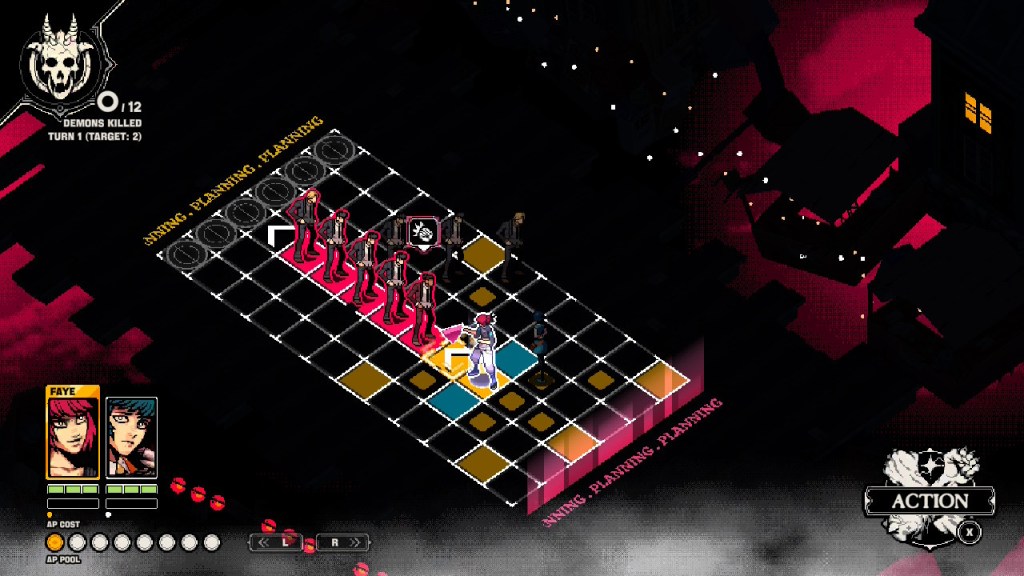
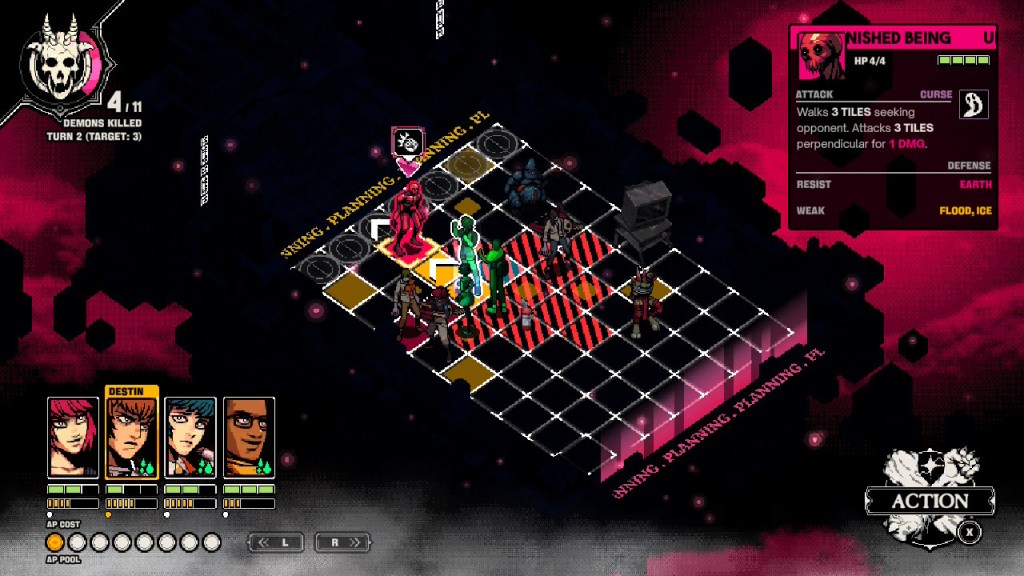
As you try different moves the game shows you how your planned actions would play out, letting you know if they’d accidentally kill your character or hit them with a status ailment. You can also see the projected area where an enemy’s AoE attack will land in the next turn, allowing you to move your characters out of the way beforehand.
The movement mechanics are another area where Demonschool differs from many tactics RPGs. You can only move your characters (and attack) in a straight line or diagonally, but you can’t choose a specific stopping point as “you must move the full distance possible” in that direction.
This does limit your options somewhat, although you can have your characters use the “Side-Step” to move one space on either side to change the column of squares that you’ll attack. The Side-Step allows you to reach enemies you couldn’t have before, and as an added bonus the actions you take after using this technique don’t use any additional AP.
Depending on a character’s class (which can’t be changed), they’ll either push enemies away or pull them towards/behind them. If you can manipulate the field so that multiple enemies end up in the same “column,” you can do a lot more damage and take out more enemies in a turn by pushing them into each other.
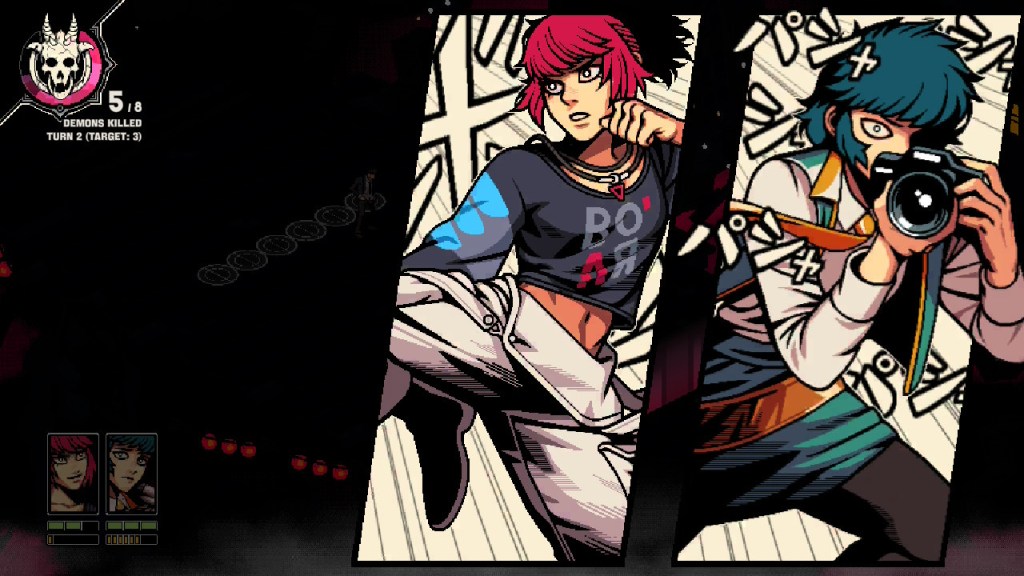
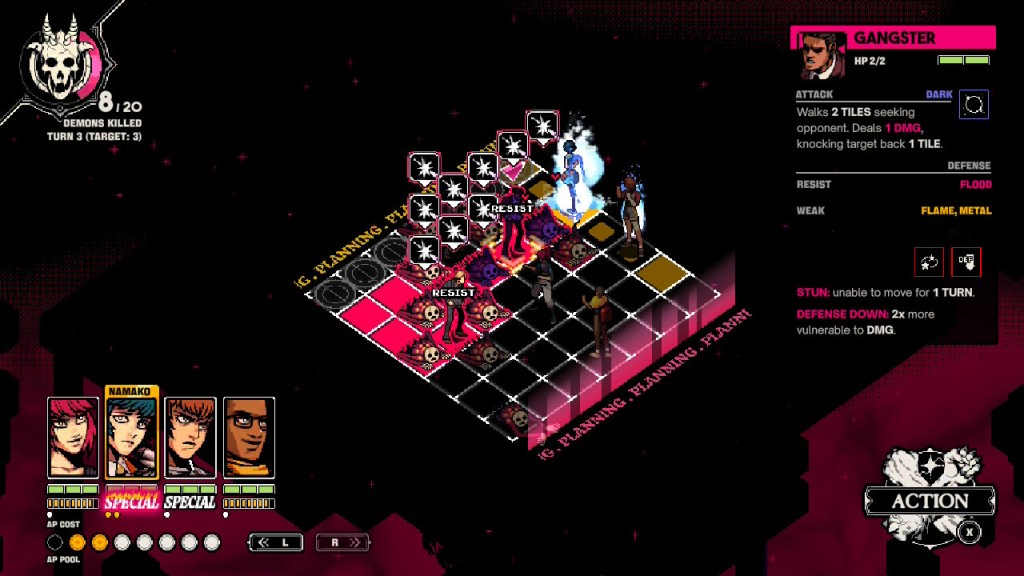
You can also push enemies into an ally to create a combo attack; characters with compatible elements will combine them together to deal even more damage if the enemy is weak against that combo element. Characters also have their own unique Special Attack that they can use once their SP meter fills up.
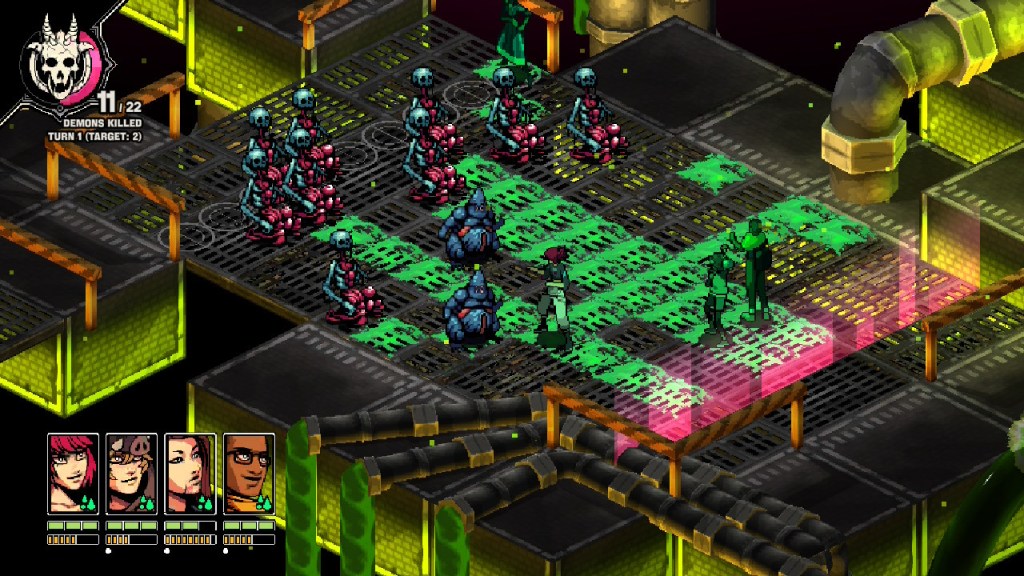
The battle system does take some getting used to, but overall I had fun with it. The battlefields are fairly limited in size (and shape), and there’s no real geological variation (i.e. different elevations). Some more experienced tactics RPGs players may find that a little odd or disappointing. I will say that I did think there could’ve been more enemy variety, but as a longtime fan of tactics RPGs myself I find the battle system quite engaging due to its unique mechanics!
I don’t know if I’d say that completing battles is difficult so much as getting high marks is; battles have a minimum amount of enemies that you need to defeat in order to finish the battle, and they’d like you to do it within a certain number of turns.
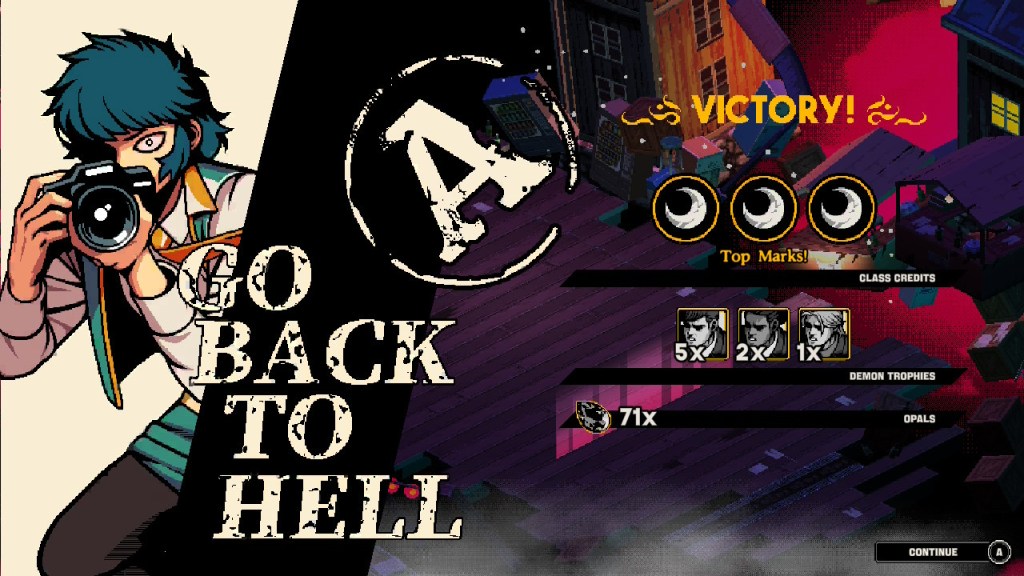
You don’t have to do it within the requested turn limit, but not doing so decreases your score for that battle. If any of your party members die, that also decreases your score. Each character only has 3 HP, and they don’t get an increase due to the lack of a leveling system. Not having to grind is nice, and it does make for a nice (optional) challenge to keep your entire party alive in each battle.
I earned a mix of A, B, and (many) C grades as I played through the game, and only had major trouble with a few battles. Most of the battles I had trouble with were boss battles where I simply could not figure out how to damage them, let alone defeat them.
If it looks like the battle isn’t going your way, you can restart it, and if you can’t figure out a boss and are defeated you can just skip the battle like I did. There’s also an “almost invincible” mode you can turn on in settings. I really appreciate having these options, as it makes the game more accessible, enjoyable, and ultimately less frustrating for players.
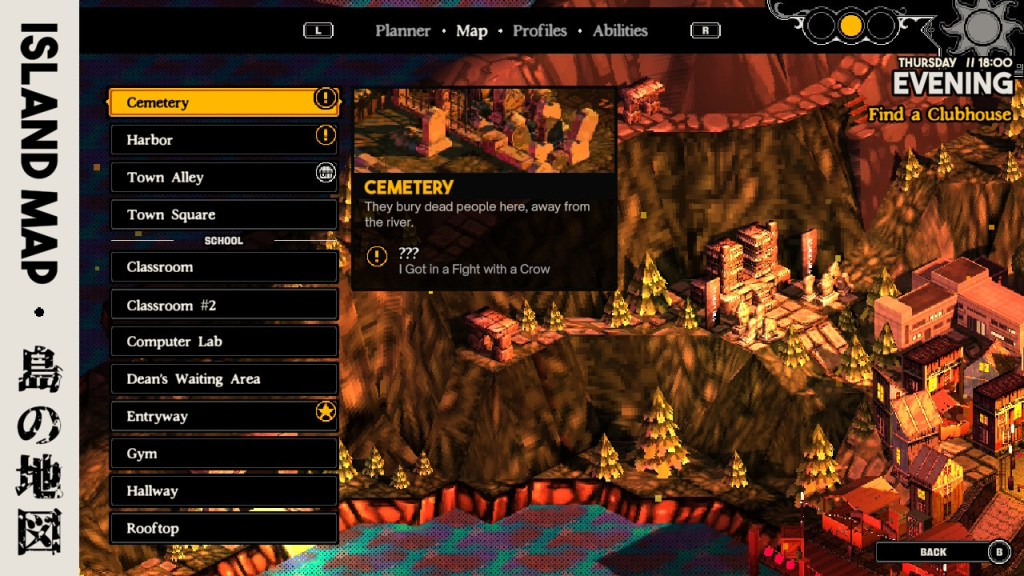
In between story battles, you can go about your business on the island each day. There’s a pretty decent amount of side quests and other routine tasks that reward you for doing them. I don’t think you have to do any of the side content, but you’d be missing out on unlockable abilities if you don’t.
There are a variety of ways to unlock new abilities, including side quests, different activities such as skipping rocks, and purchasing them from the shop once unlocked. By my count there are 66 unlockable abilities in the game; they’re mostly passive abilities such as counterattacks or changing the range of a character’s actions.
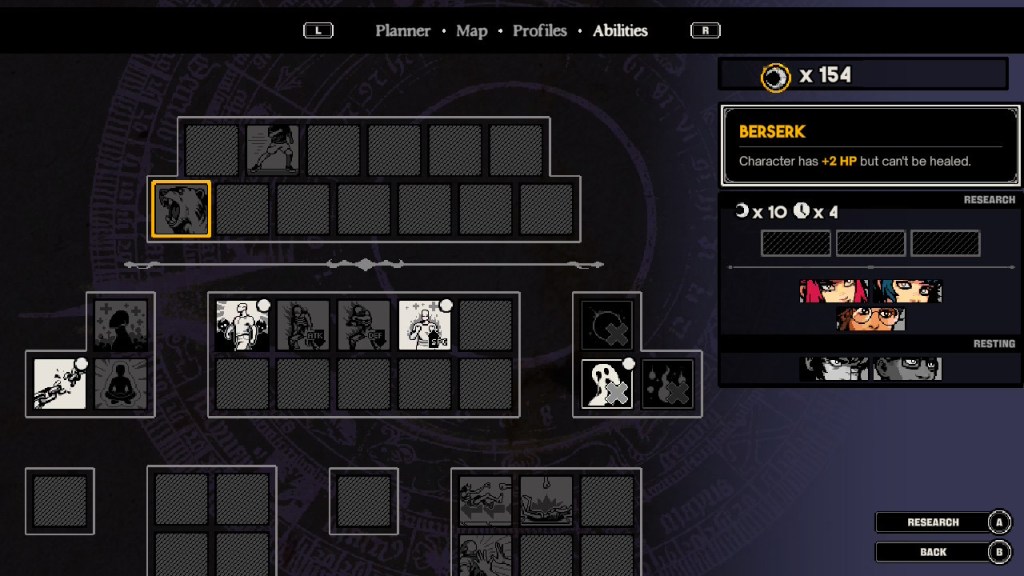
Once you’ve unlocked an ability you need to have 2-3 characters “study” it before anyone can equip it. Studying abilities also requires some of the “credits” earned for your performance in battles. While I didn’t achieve A rank very often, I still had enough credits (and time) to study every ability by the end of the game.
You don’t have to manage any equipment in this game, just the abilities. Each ability can only be equipped on one character at a time, and each character can only equip 2 techniques and 1 “Aspect Shift.”
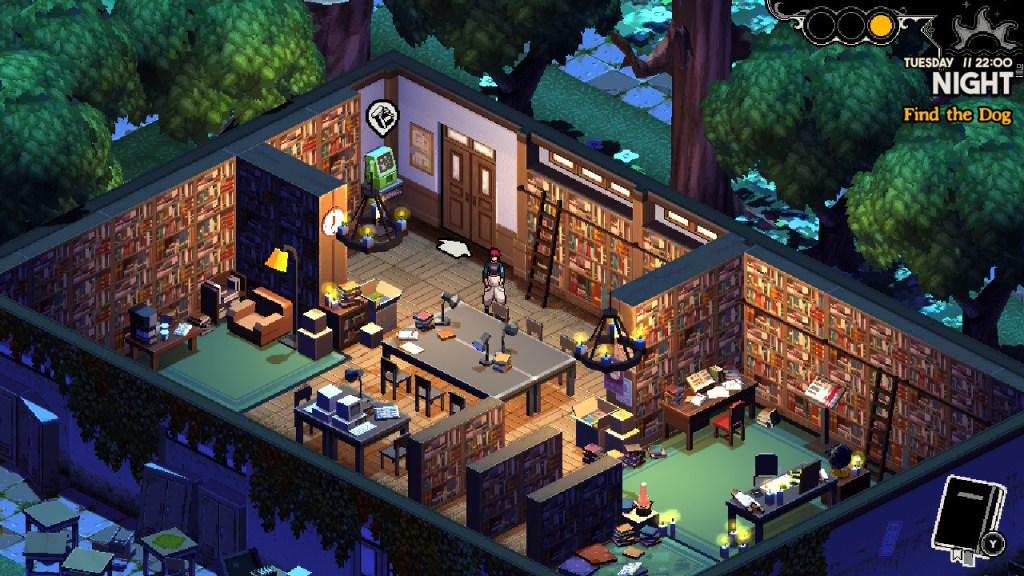
Besides abilities, you can also purchase new styles and furniture for your team’s clubhouse. Unfortunately, you can’t choose where to place items, and it seems like each item is limited to placement in a specific clubhouse style. I would’ve liked more customization options here, but still liked having this feature anyways.
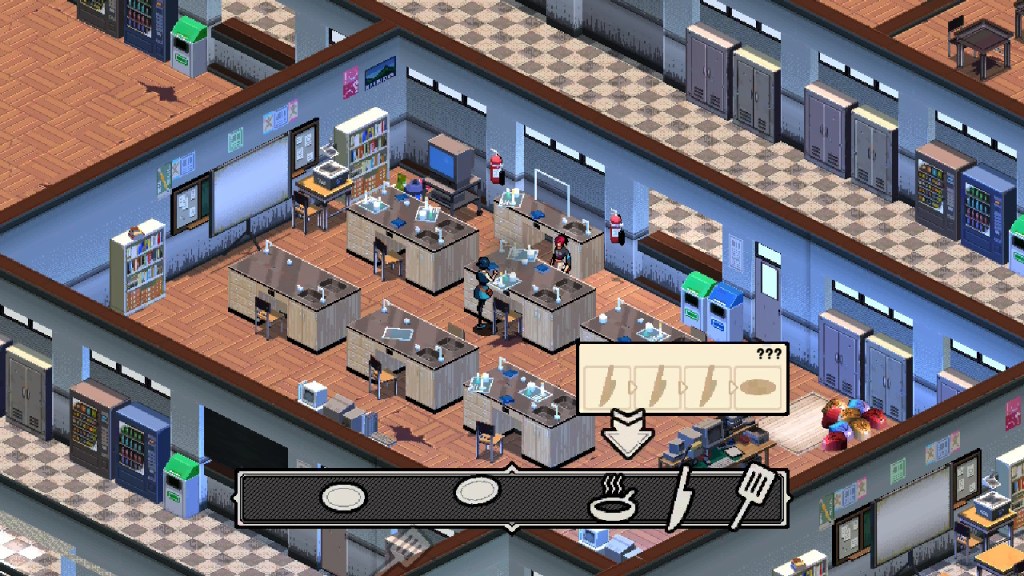
The clubhouse is just one of the many places you can talk to your party members. You can deepen your relationships by participating in mini games such as cooking or karaoke. Each mini game can only be played once a day (when available), although it seems like they let you try again if you fail.
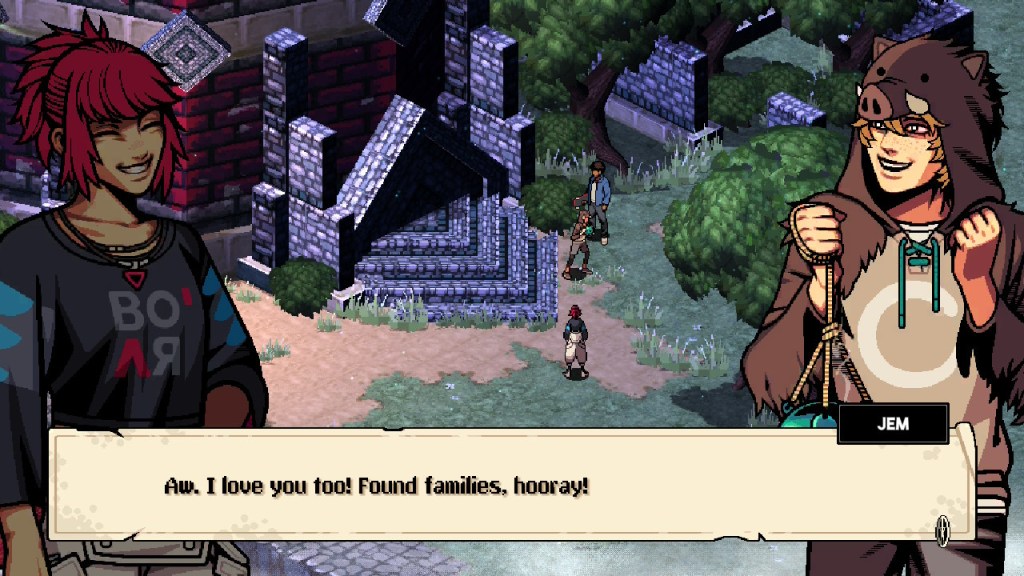
When you level up your bond with a character, you can start their next event/side quest when it becomes available. (Sometimes you can’t level up a relationship anymore – or start the next quest – until you reach a certain point in the story.)

Faye can date most of your party members (I think 9/14) regardless of gender, and there don’t seem to be any consequences for dating all of them. They created what they called “full-on shoujo manga animatics” as a reward for maxing out a relationship. (I absolutely loved these! 🌸)
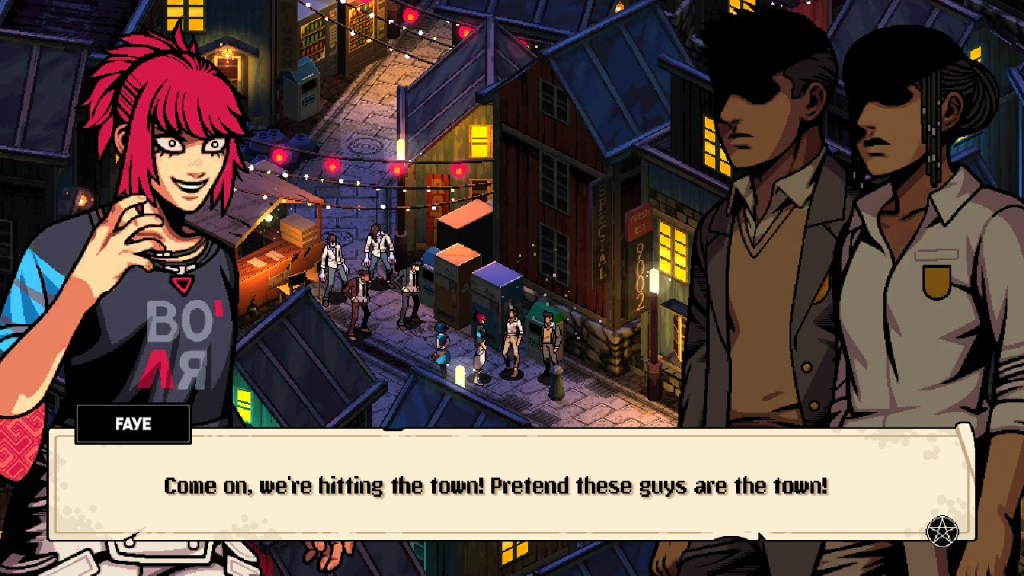
I really liked the cast in Demonschool. Faye is such a fun, confident protagonist who brings everyone together. There’s a fairly wide variety of personalities on the team, and I found a lot of their interactions quite entertaining, which helped cut the tension when things looked particularly grim in the main storyline.
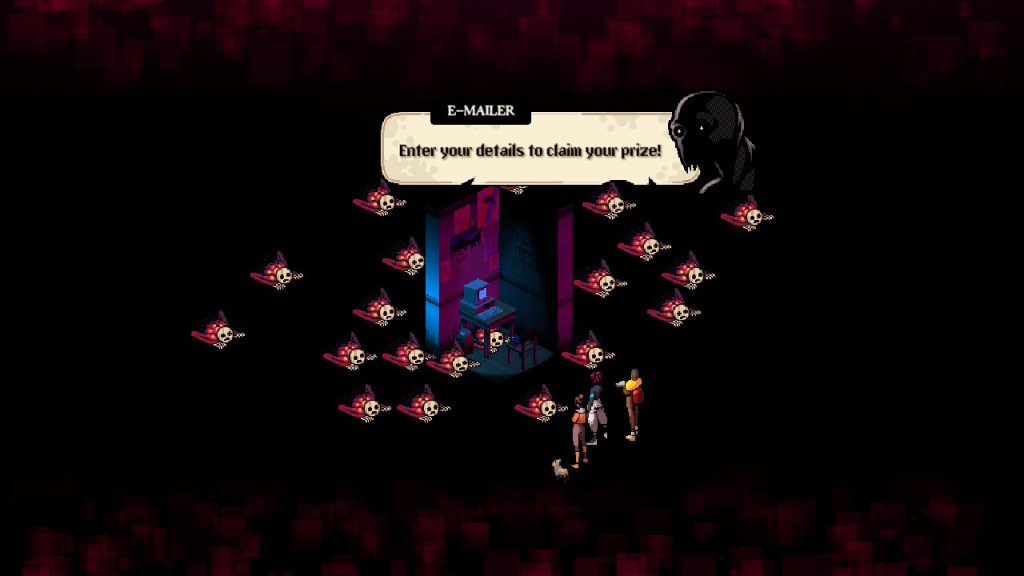
Even the NPCs provide some comic relief here and there, such as “Bad Dad” and his aptly named “Kid Who Is Leaving Town As Soon As He Turns 18.” There are also a bunch of pop culture references that made me laugh.
I will say that while I thought the dialogue was especially well-written, in my opinion the main storyline started getting weaker around halfway through. It wasn’t bad, but I thought it could have been stronger. The relationship quest storylines were also slightly shallow, but I still enjoyed them anyway.
I believe that there are 13 endings, which I assume are unlocked by maxing out relationships with your party members. Some of the endings are more on the serious side, but there are several silly ones that I found amusing. Unfortunately there isn’t a New Game+ mode, which I always like to have in games with multiple endings.
It took me over 40 hours to beat the game playing through all of the available content. They could’ve explained some aspects a bit better – perhaps with more tutorial battles? There are also a few bugs here and there.
But thankfully there’s an auto save feature, and the performance was smooth overall, with very quick and smooth loading between areas. I really liked the designs for each area of the island, and I found the character designs especially appealing. The soundtrack suited each scene quite well, and I enjoyed listening to it as I played the game.
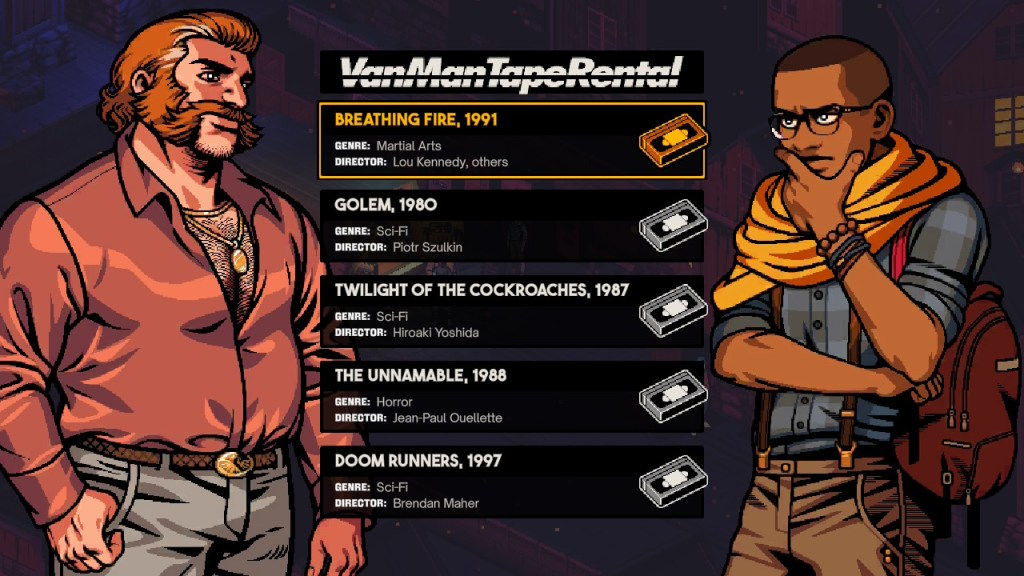
There are just a lot of nice details – such as the VHS rentals, the newspaper, and the pop culture references – that help contribute to the sense of immersion in the time period and the story itself. While the story may be set in the late nineties, the game still manages to feel modern to me.
While Demonschool has clear inspirations, it didn’t ever seem overly derivative. If you are a fan of games like Persona though, I think you will have a blast with this game. And if you enjoy tactics RPGs, this is a fresh take on the genre that offers strategic fun without much of a grind.
 Switch It On Gaming
Leave a comment