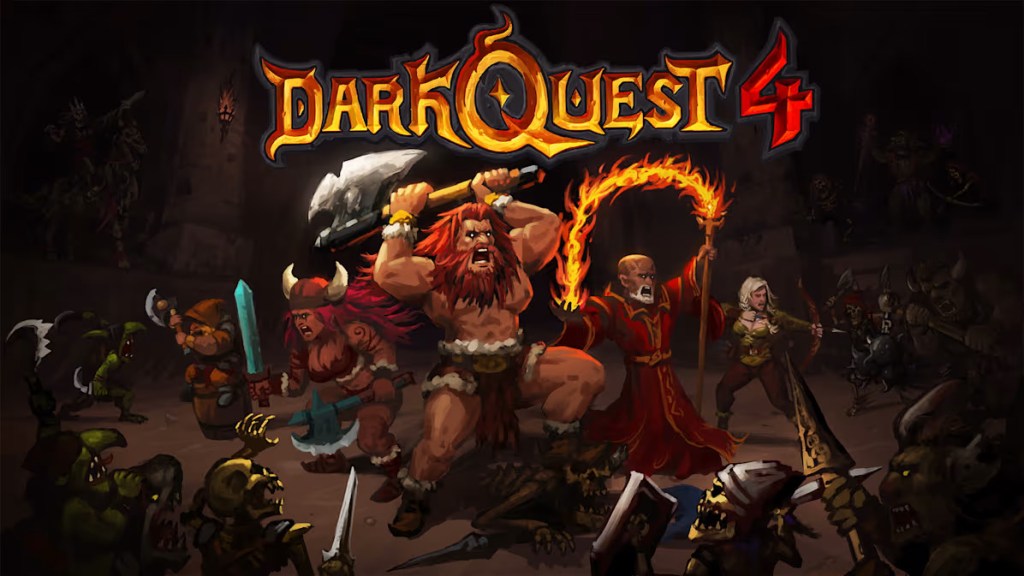
- Price: $19.99 USD (currently on sale for $17.99 until November 25th)
- Developer/Publisher: Brain Seal Entertainment
- Release Date: November 5, 2025
A review code was kindly provided by Brain Seal Entertainment. We thank them for allowing us to cover something they’ve worked so hard on.
Brain Seal has previously released Dark Quest 2 and Dark Quest 3 on Switch, and now they’ve brought us Dark Quest 4; all 3 games are based on a classic board game called HeroQuest. I’ve never played these games before, but I do tend to enjoy turn-based strategy games, so I was excited to check this out.
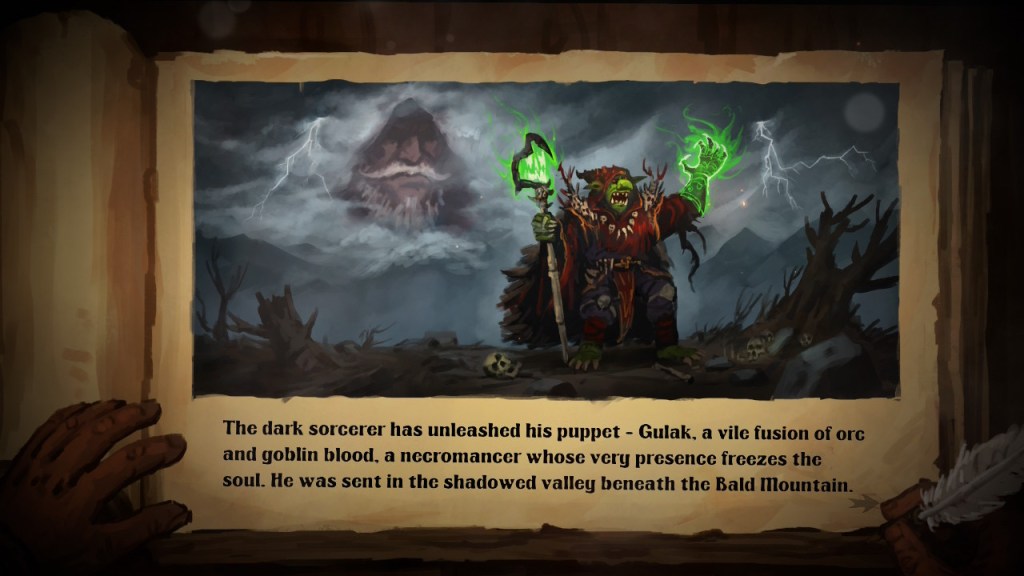
I liked the game’s opening scenes, which introduce players to the basic story with some lovely illustrations. From the very beginning the music evokes a sense of adventure; the songs felt very appropriate thematically.
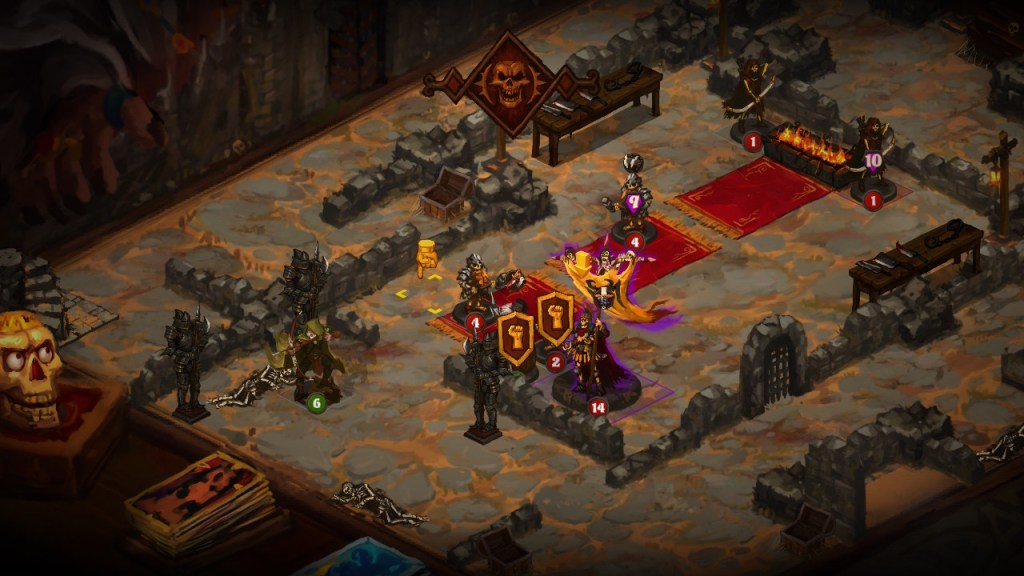
The first stage offers a tutorial for the game’s basic mechanics. You get to move 3 units across a “grid,” and your units and the enemy units will each take a turn based on the numbers displayed on their “game piece.” Apparently the lower the number, the sooner a unit acts.
I think the implementation of movement could’ve been a bit smoother, but it works overall. I did have a hard time seeing and clicking on some enemies because it doesn’t seem like we can rotate the screen to get a better view of where units are.
In each stage your team of 3 will start out in a small room, and you’ll have to click on the door to advance to the next room. Dungeons are full of traps, treasure, and enemies. There are often trap tiles in front of treasure, so you’ll have to decide if you think it’s worth a character potentially taking damage when they come with limited HP and healing opportunities. (The odds of trap damage is based on a unit’s “Save vs Traps” stat.)
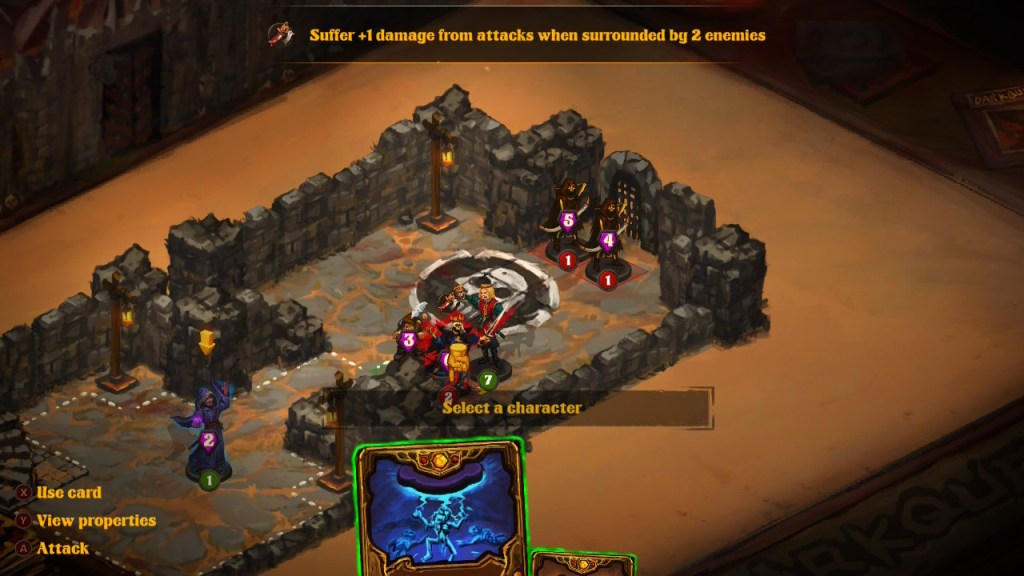
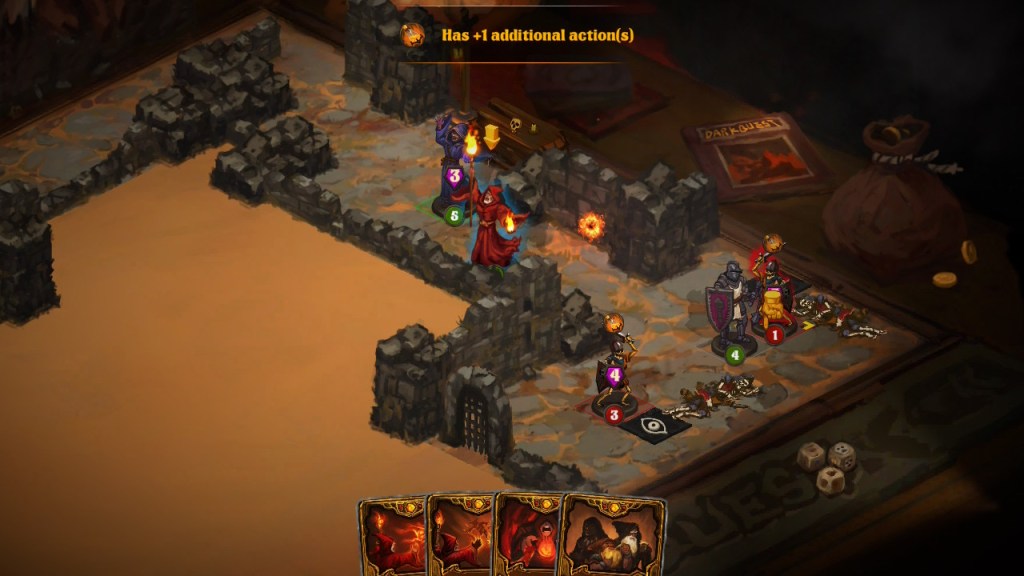
You don’t level up your characters, which makes the game more challenging when you have a few characters with 4-6 HP who are more easily killed. Combat is card-based, and each character has their own action cards based on their class. I think my favorite units were the wizard and fire mage because it was fun to watch their spell animations make their way across the screen. (I also tend to prefer to attack from a distance.)
I had a few minor complaints about the combat, which mostly involved movement and attack range. My units often couldn’t attack an enemy during their turn because they didn’t have the enemy in their line of sight, and you can’t move them to get there and attack during that turn. I also felt like enemy archers could successfully attack from farther distances than mine could.
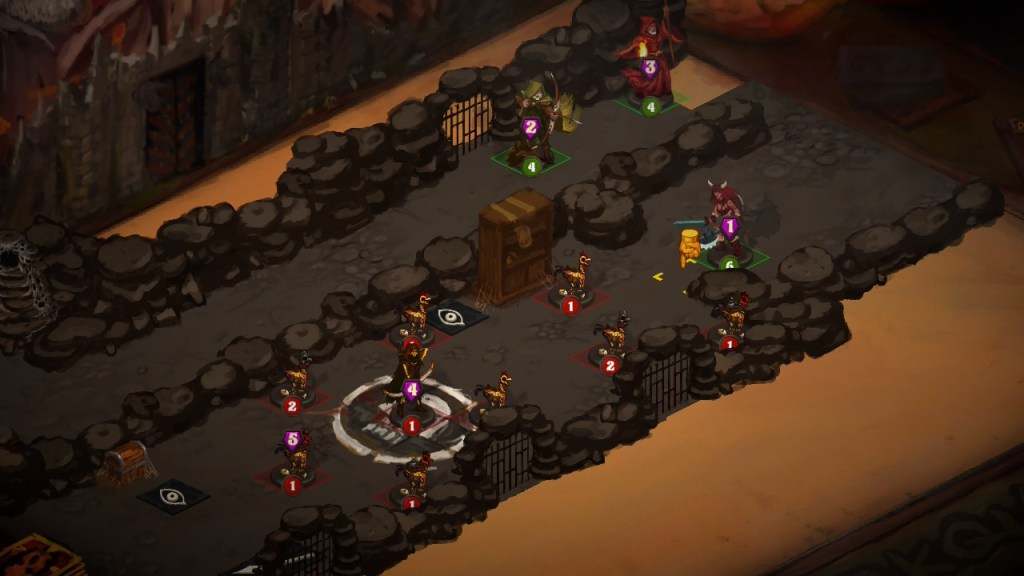
Most of the smaller enemy units at least have similar limits to their HP as yours do, though. There are also larger enemies that take up more space on the battlefield, and they have a lot more HP as well. The enemy designs aren’t necessarily the most original, as a lot of them are skeletons of some sort, but the exploding chickens were interesting (if not slightly annoying to beat safely 😭).
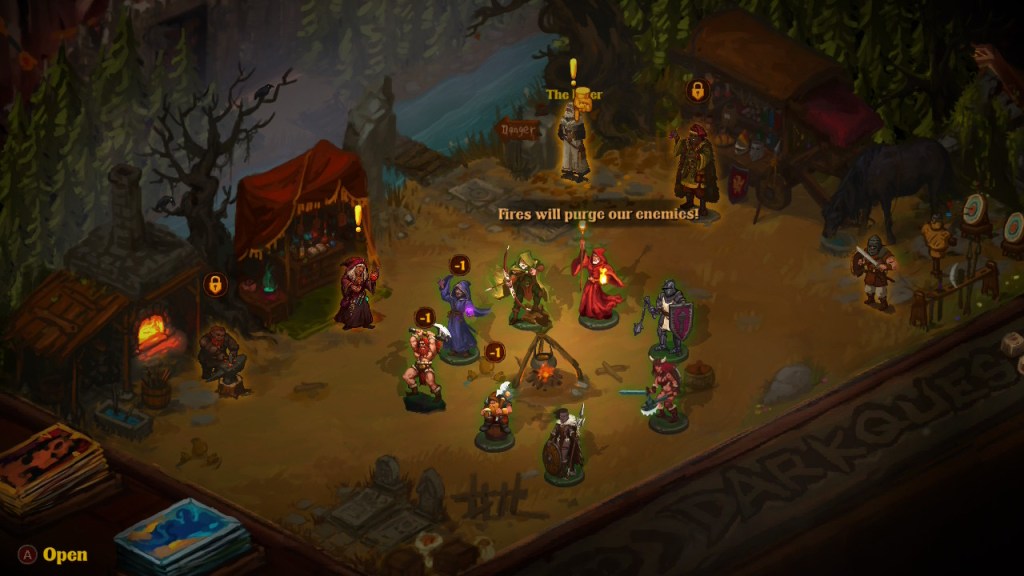
Whether you successfully manage to clear a stage or not, you’ll return to camp afterwards, where several vendors sell new cards to you. (You can also modify the game’s difficulty there). I didn’t love how we have to complete a number of quests to unlock all of the facilities at camp. I wish they all would have been available from the start.
You can replay stages, but it doesn’t seem like a repeated stage counts towards unlocking vendors. Stages are the same each time, and don’t change when you replay them.
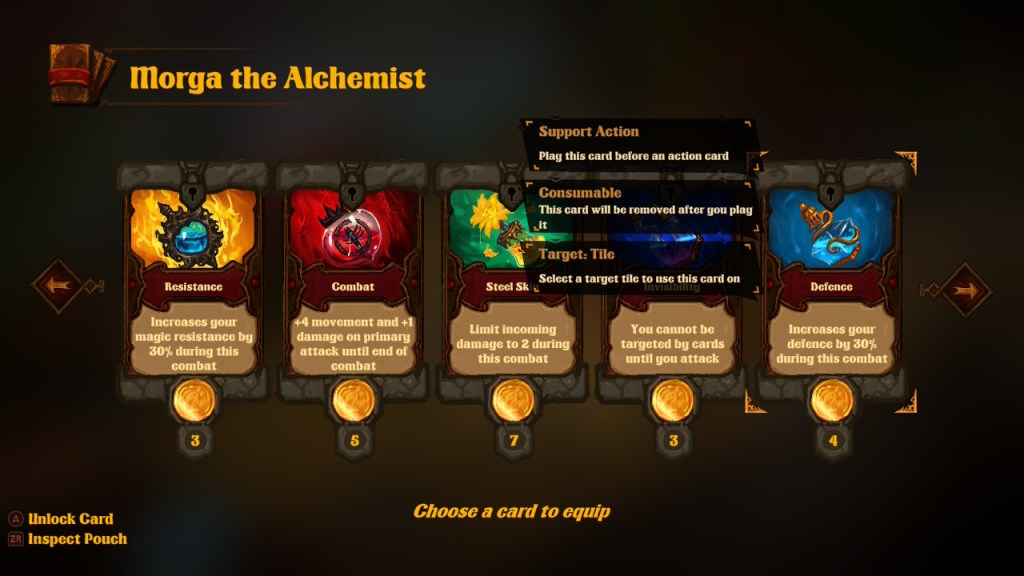
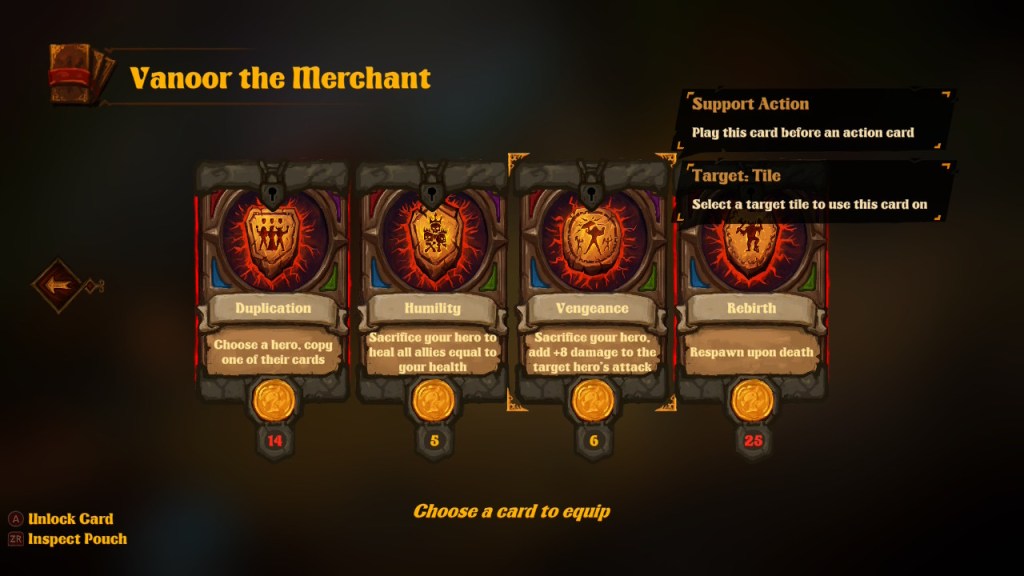
Each vendor sells a different type of card, like healing and buff cards or equipment cards. There are passive cards that give units the chance to trigger a second attack, or some other benefit. Support action cards are played before action cards for perks such as gaining another action in a turn. You have to purchase new cards using the coins you’ve obtained from the dungeons, but you can only equip each card on one unit.
There are 10 heroes to use across 30 quests, so you can swap between them as needed based on their current conditions. Characters can get fatigued, which reduces their health if you take them on the next quest, so it’s best to leave them back at camp and take someone else until that condition goes away. Conversely, a unit can also be well-rested and have more HP than usual for a time.
Hero Quest 4 is estimated to last players around 30 hours or so. The game didn’t click with me as much as I would’ve liked, but I still think it has positive qualities. It’s a fairly challenging game with a decent amount of content. If a turn-based tactical dungeon crawler inspired by tabletop gaming sounds like something you might enjoy, you may want to check it out.
 Switch It On Gaming
Leave a comment