
- Price: $29.99 USD (currently on sale for $26.99 until August 7th)
- Physical Standard & Collector’s Edition available via Serenity Forge
- Developer/Publisher: Stray Fawn Studio
- Release Date: July 17, 2025
A review code was kindly provided by Future Friends Games on behalf of Stray Fawn Studio. We thank them for allowing us to cover something they’ve worked so hard on.
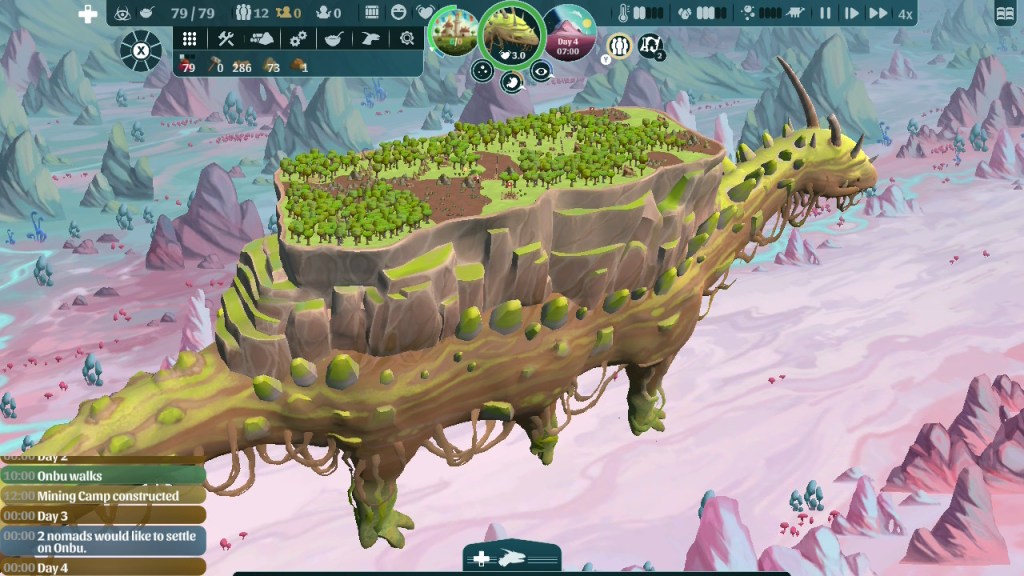
I’ve been looking forward to The Wandering Village since it was first announced; the concept seemed really unique, with players managing a village established on the back of a wandering creature known as an Onbu. Set in a post-apocalyptic world where much of the land is uninhabitable due to toxic waste, you’ll have to keep the Onbu as healthy as possible to keep your village going.
The game includes 3 different modes:
- Story Mode: discover the source of the infestation; includes an optional tutorial that makes it a good mode to start with
- Tutorial, Normal, or Hard options
- Challenge Mode: apply different combinations of hostility modifiers (i.e. Onbu gets hungrier faster) and try to survive for 1000 km and beyond
- Normal or Hard
- Sandbox Mode: play however you’d like. Options include Onbu invincibility and a lack of villager revolts
- Normal or Hard
Since the Onbu skin I liked best unlocks after completing Story Mode, I started with that one. You start out with less than a dozen villagers, who have just arrived on the Onbu. The Onbu reminds me of a cross between an ankylosaurus and the Pokémon Torterra, as it has spikes all over its body as well as trees and rocks on its back.
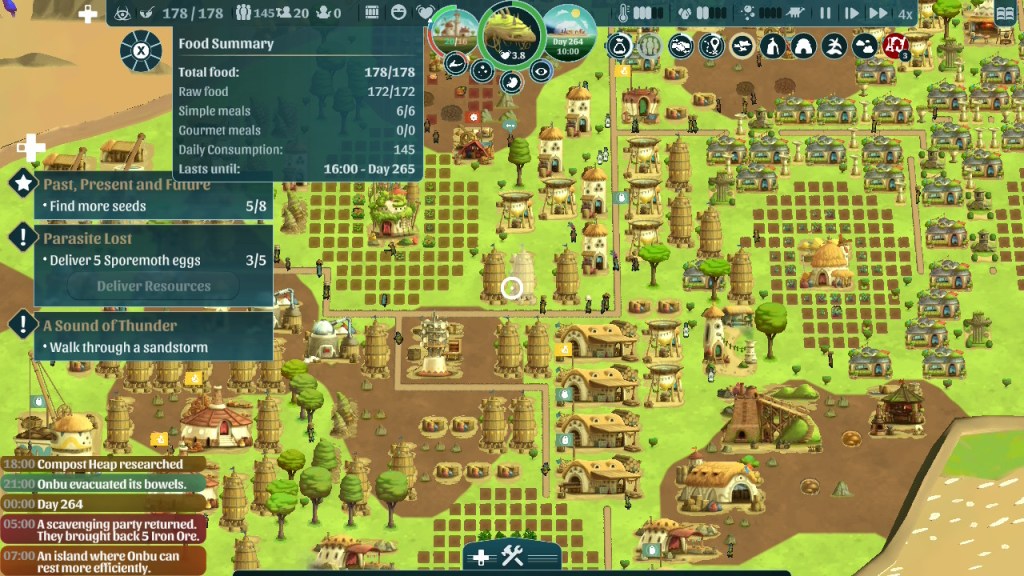
The terrain is somehow completely flat already, which is sure convenient! But you have to get your villagers to actually clear some of the land first to build basic shelters and facilities for gathering materials and food. You can only place a few types of facilities until you have your villagers research new ones.
At first it isn’t too difficult to manage everything because the village population isn’t very big, and the Onbu only travels through safe biomes for a while. It’s important to place enough facilities for growing human and Onbu food and medicine, gathering water, and storage to stockpile resources for when you start passing through biomes with more challenging conditions.
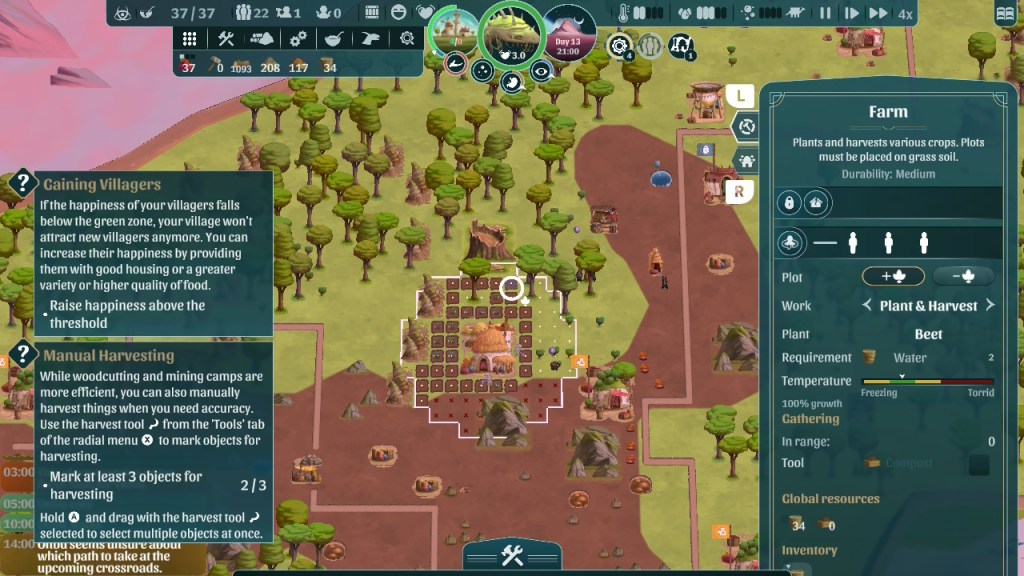
Having a moving – and sentient – village really makes things interesting. The unique temperature and humidity in each biome affects your ability to grow certain crops as well as your options for keeping the villagers hydrated. You have to pay close attention to which biome is coming up next so that you can change the crops being grown and turn facilities on or off as needed.
For example, once you arrive in the desert you’ll want to disable your air wells since the air becomes too dry to extract any water from it. Instead, you should have some of your farms switch to growing cacti to get alternative hydration until you’ve exited the desert region.
Additionally, certain types of weather can destroy your less durable facilities. Part of keeping the villagers happy is making sure that there’s enough housing for everyone; if housing units are damaged you need to rebuild them quickly before the villagers become unhappy enough to revolt (and possibly leave).
Villagers need enough food, water, housing, and even decor to be happy. New villagers will continue to arrive if you maintain a minimum level of villager happiness; considering how many facilities you’ll end up needing, it’s in your best interest to attract more people.
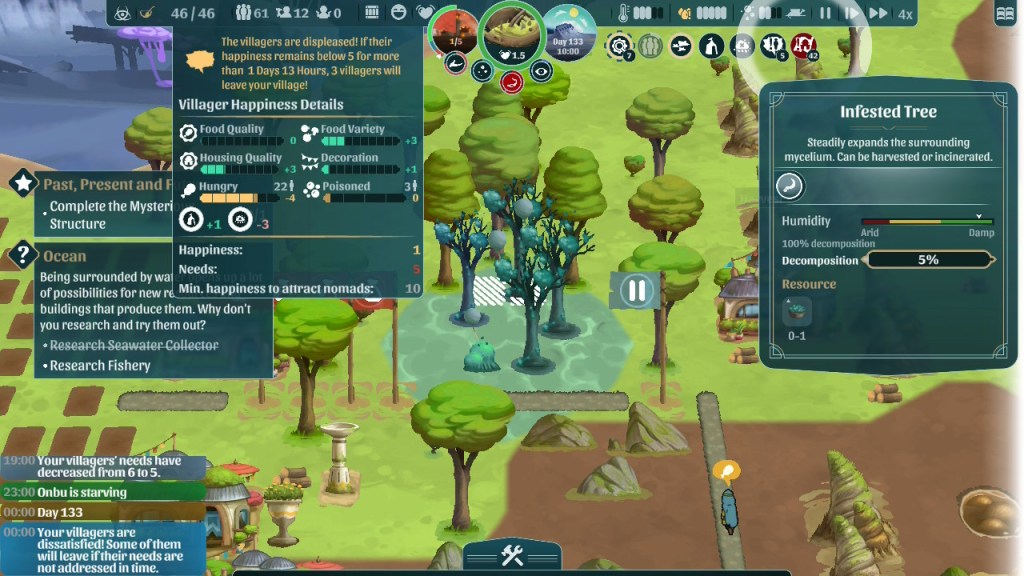
Eventually you’ll enter areas affected by poisonous, polluted air. Poisonous spores and insects will descend on the village, and you need to remove them from the Onbu before your supplies become contaminated – or at least filter out the toxins from anything that’s already been affected. Your villagers can die if you don’t, and a poisoned population is not a happy population.
So you’ll have to establish a doctor’s office and pharmacy for the humans, but the Onbu needs these services too. Manage the Onbu’s overall health meter, poison levels, hunger, and exhaustion – I believe it’s possible for the Onbu to die as well. 😱 😭
I couldn’t figure out how to view the Onbu’s trust levels, but you do have to consider how your actions will affect your relationship with the adorable creature. Removing some of its spikes to gain additional space or building (and using) certain types of facilities will decrease its trust in you.
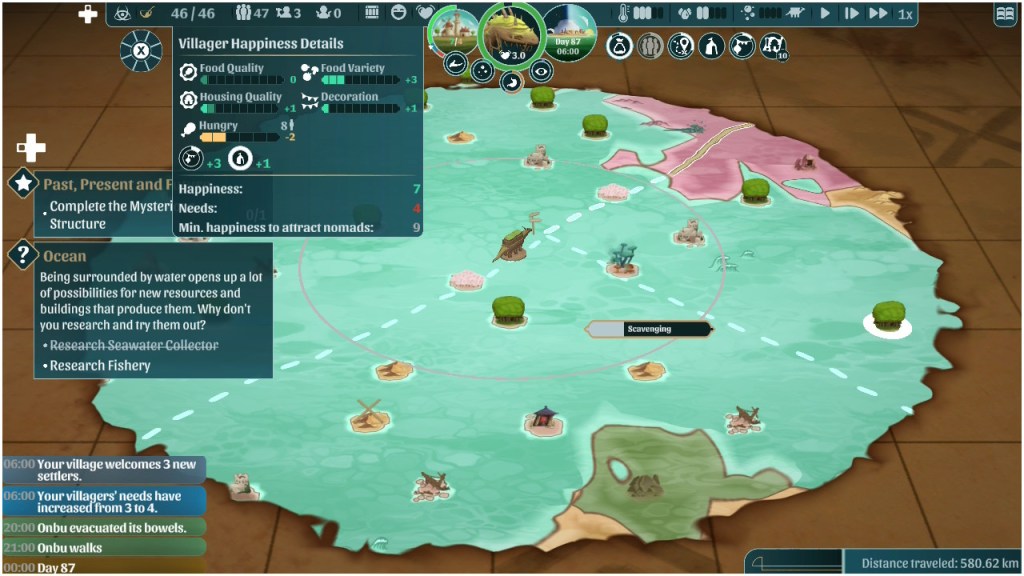
The reason that trust is so important is because you can eventually unlock the ability to suggest which way to go on the map. If the Onbu trusts you enough, they’ll listen to your suggestion to enter, for example, the ocean biome instead of the area with poison. I really liked zooming out and seeing how my village looked from above, and the world map with its different exploration nodes and weather patterns.
I ended up restarting Story Mode a few times because I made some mistakes early on, but by my third attempt I’d gotten used to the mechanics and felt more confident about managing everything. The story isn’t that deep, but it works well enough, and I liked the characters (and their designs).
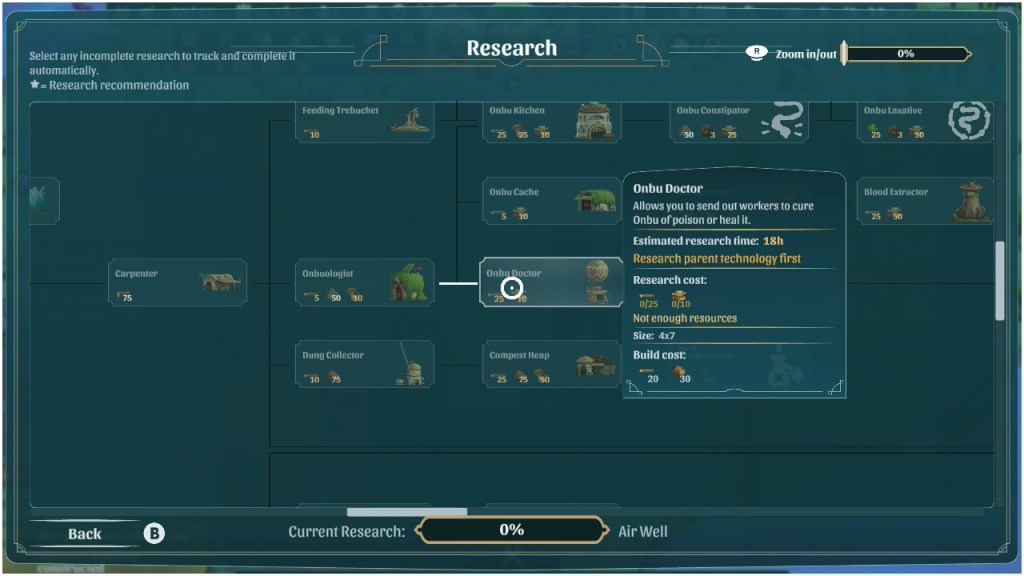
You would think that this wandering village would remain fairly isolated, but its inhabitants do have ways of contacting other people. The research tree is pretty extensive, with unlockable scavenging parties and a trading post.
Including some livestock options in the research tree could’ve been interesting, especially since we do get to build farms for crops already. The terrain on the Onbu’s back always consists of a mix of dirt and grass, and I thought they could have increased the replayability and challenge by providing us with different land options like in Stardew Valley.
And while they did include some basic villager enrichment options to increase their happiness levels, I wanted more villager enrichment as well as decorations. By the end I started having some trouble locating specific facilities because it seemed like there wasn’t enough color variation, so the ability to change building colors would’ve been appreciated.
It took me 15+ hours (playing at 4x speed) to complete Story Mode, and I enjoyed the experience overall. The gameplay did start to feel a little repetitive when I played through the Challenge and Sandbox Modes – especially since I had to unlock all the research again. But I think there’s a lot to like about The Wandering Village.
I don’t think I’ve ever seen such a dynamic village management system before; I thought it was quite impressive and creative. There are just so many factors to consider and change as the Onbu wanders around. And it gets more challenging the farther you travel; the space on the Onbu’s back is limited, so you have to be strategic about your resources and where you place them. The difficulty also continues to increase as more villagers join you.
Despite the constant activity in the village, I didn’t notice any performance issues when playing on my Switch 2. The graphics are somewhat simple yet quite charming, and the soundtrack really suited the environments and theme.


There are a couple of things I would add or change, but I think that fans of the genre will enjoy The Wandering Village. If it sounds appealing to you, be sure to check it out. And if you want some cute Onbu merchandise, take a look at the cuddly plush and fun extras that come with the physical copies!
 Switch It On Gaming
Leave a comment