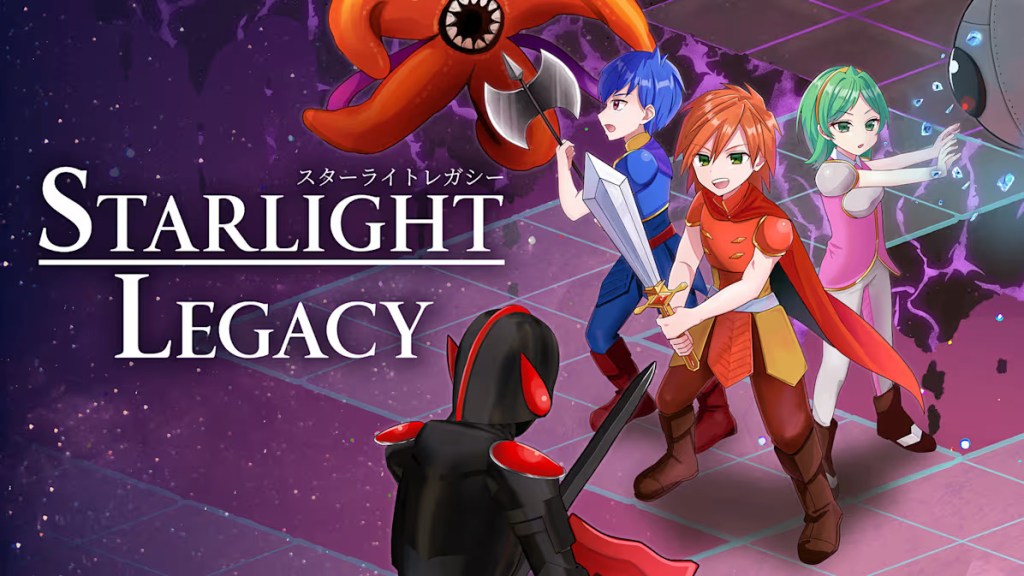
- Price: $12.99 USD
- Developer: eastasiasoft, Decafesoft
- Publisher: eastasiasoft
- Release Date: May 28, 2025
A review code was kindly provided by eastasiasoft on behalf of Decafesoft. We thank them for allowing us to cover something they’ve worked so hard on.
Content warning: rated E 10-+; anti-immigrant sentiments expressed by certain factions, desired genocide
As a longtime fan of JRPGs, I couldn’t wait to check out Starlight Legacy when I saw it announced in an eastasiasoft showcase. Described as a non-linear adventure in the style of 16-bit JRPGs, its graphics and listed features really appealed to me.
Once you start a new game, you get to choose how you want to input battle commands (A/B/X/Y vs directional buttons vs standard menu navigation). I like how they considered players’ control preferences. You can also rename each of the 3 characters in your party.
The game then opens with an introduction to the Kingdom of Evaria, which is divided into 4 provinces. After a war, a law was passed forbidding magical education in one of the provinces as punishment. The current king has kept this policy in place, causing a Separatist movement to rise up and violently take control of several towns in protest.

Some people support the Separatist cause, but others oppose them due to their tactics. One day the king complies with a Separatist demand, causing something to happen that places his entire kingdom at risk. King Lennox asks your party of 3 to go to each province and acquire the hidden Starlight Relics to fix things. He says that you shall now be known as the Starlight Warriors!
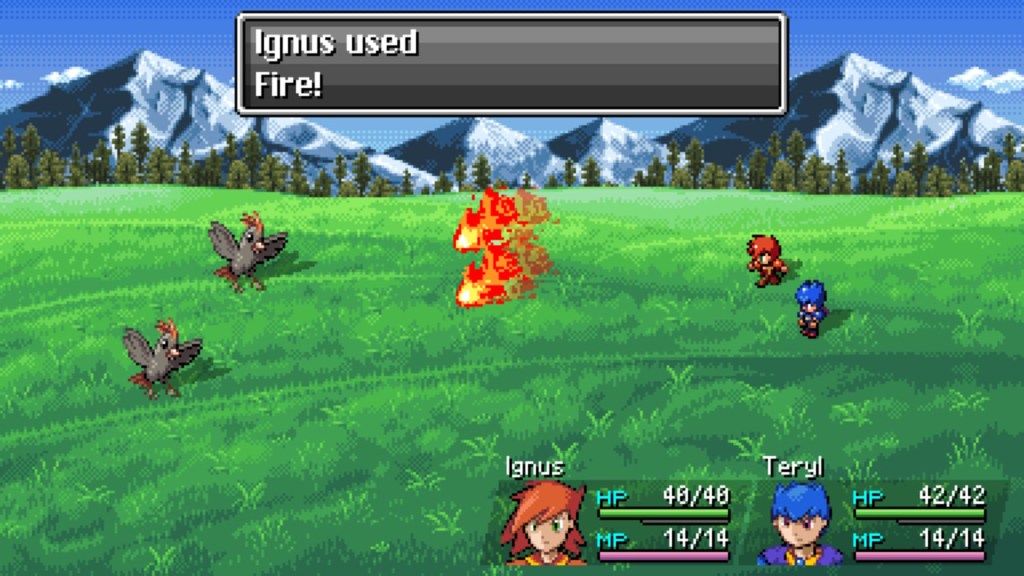
From the kingdom’s capital (hilariously named “Kingdom Capital”), you get to choose which province you’ll travel to first. I don’t think the order matters too much, as you can backtrack to previous areas. As you travel to your next destination, monsters will attack you in random encounters with turn-based battles.
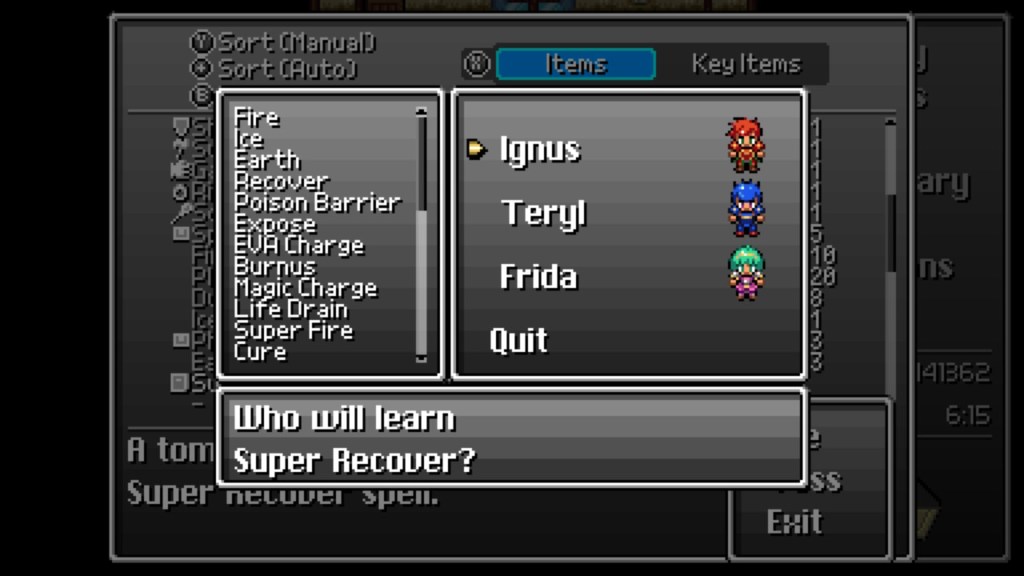
Your characters don’t learn magic as they level up; instead, you’ll have to find/purchase magic tomes to teach them new magic. There is a limit to how many spells you can teach each character, and they can only equip 4 spells each to use in battle. (However, you can still use any unequipped spells – such as healing – outside of battle.)
Enemies have elemental strengths and weaknesses, although the “elemental triangle” is quite simplistic: fire beats ice, ice beats earth, and earth beats fire. All enemies – including bosses – are susceptible to status ailments and debuffs. Due to the system’s simplicity I found myself keeping the same spells equipped for the majority of the game, and I would use the same moves over and over again.

You do eventually get higher level versions of spells, going from the base version to the Super and Hyper versions. I wish we could have had access to all levels of an equipped spell type in battle – meaning that I would want to be able to use Fire or Super Fire or Hyper Fire (and all 3 levels of the other 3 battle spells) depending on the current situation and MP levels.
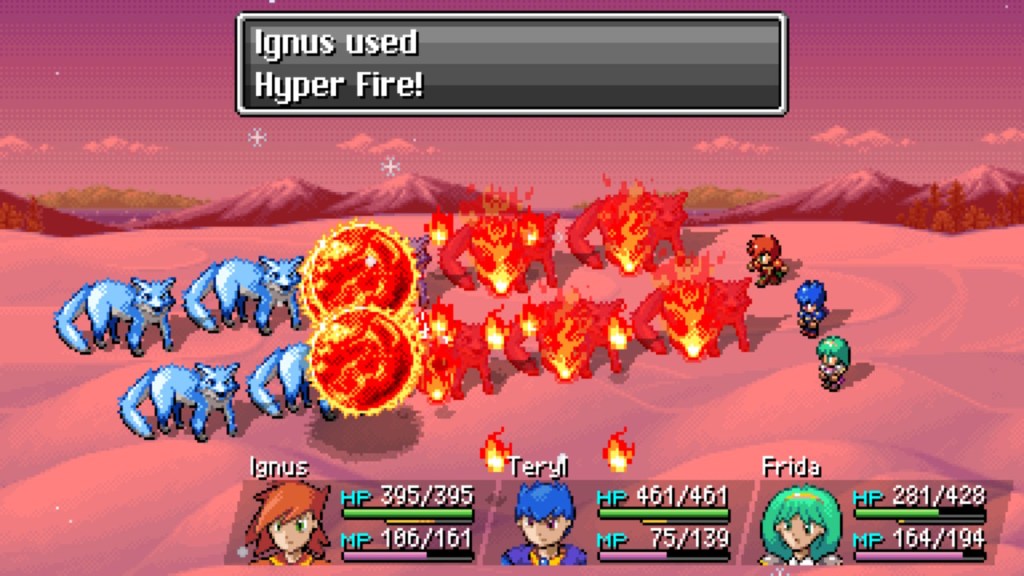
I liked how the spell animations changed between the lower and higher level spells. I also appreciated being able to quickly change a spell’s target from one enemy to all of them with the quick press of a button – and for the same amount of MP! This applies to healing spells for your allies as well, although I believe spells’ effects are weaker when divided.
They included the ability to change a character’s elemental affinity, which makes any spell from that element much stronger when they use it. It was a cool idea, although I didn’t really use it because I didn’t think the battles were hard enough to warrant it.

Each character can also equip one of the Battle Skills they’ve learned as they’ve leveled up. These skills range from attacks to guaranteed escapes to summoning a monster to help you in battle.
When it comes to weapons and armor, the game took a more minimalist approach here as well. Everyone gets to equip one item in each hand plus an accessory; you get to decide if you want to prioritize attack and equip weapons in both hands, or if you want to equip a weapon and a shield to balance your stats. Some weapon types may be faster to use – but weaker – than others.
Overall the battle system is pretty standard, and I didn’t have too much trouble with the enemies. The few times I was defeated I was sent back to the last resting point I’d used; I was extremely happy about that because some other games just send you to a “Game Over” screen and cause you to lose progress.
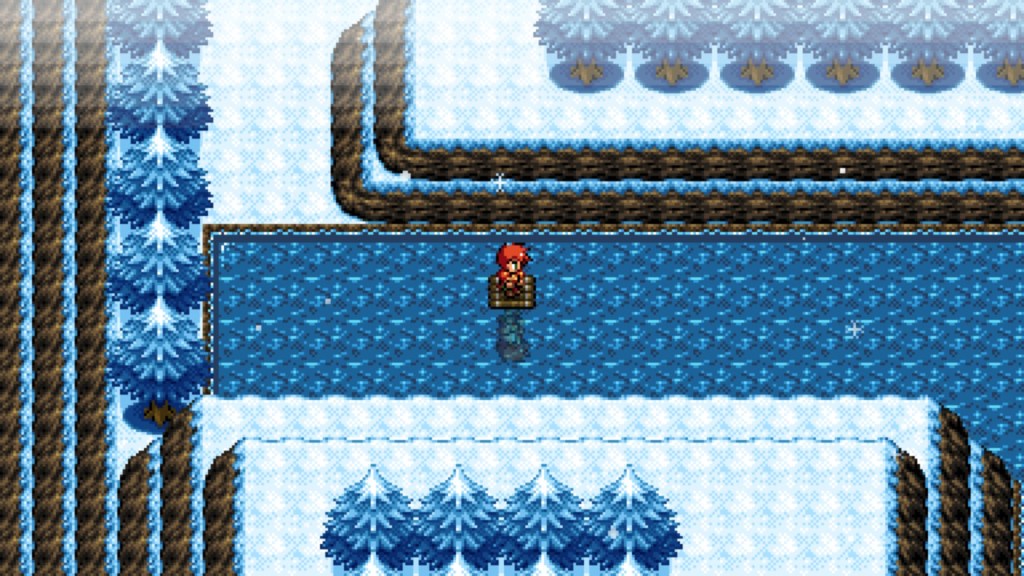

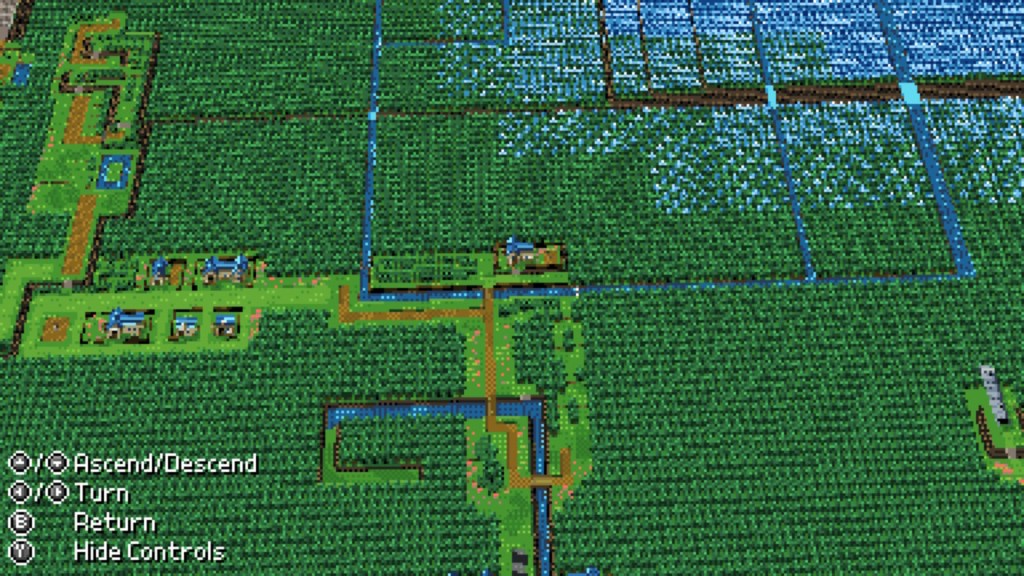
The exploration between battles is where Starlight Legacy shines for me. There are many parts of the maps that seem very much inspired by Pokémon games, from the map of the kingdom to the ledges you can hop over. You gradually unlock items like a raft or flying carpet, which allow you to access previously inaccessible areas in provinces you’ve already visited.

I think they really incentivize returning to the other provinces once you’ve obtained one of those items. There are regular treasure chests that you can finally reach as well as some that you wouldn’t have been able to open yet when you first encountered them. (I believe that the numbers on those chests correspond with the number of Starlight Relics you’ve obtained?)
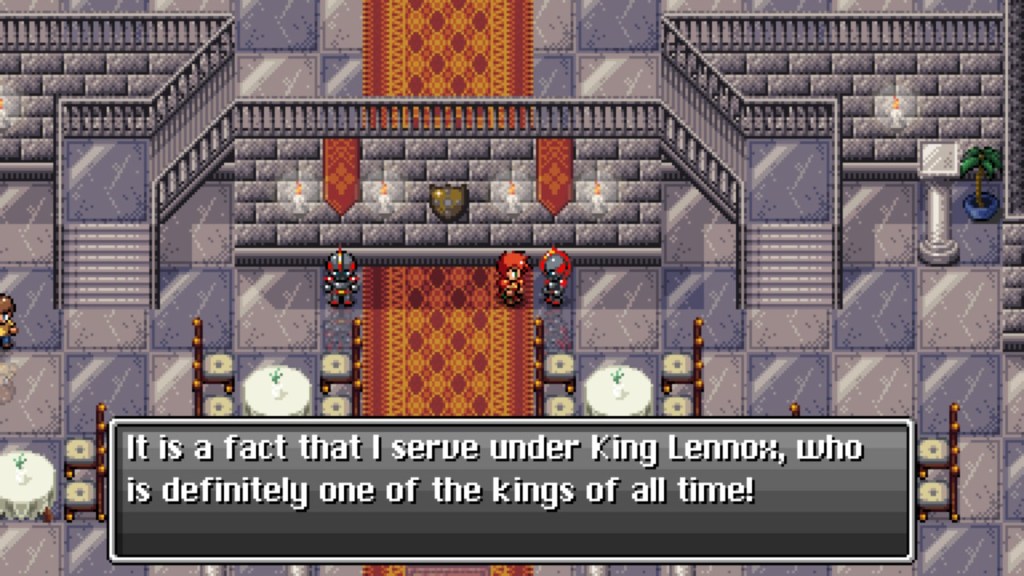
Unfortunately there isn’t much story content as you move between provinces, and the story overall is pretty basic. Between the gameplay and the story, Starlight Legacy is fairly simple and straightforward, which isn’t necessarily a bad thing. And the writing can be pretty amusing sometimes.
I wanted them to do more with the plot points related to a character named Ryuna. But at the end of the game there’s a scene that heavily implies there will be a sequel. And sure enough, the developer has indicated that they are working on it! It’s apparently called Starlight Legacy: Ryuna Rising, which I’m excited about since I already wanted to know more about her!
While the story in this first game could’ve been stronger, the game still provides a decent JRPG experience between the combat and exploration. I quite liked the graphics style and the soundtrack. I think all of these factors will evoke a sense of nostalgia in longtime fans of the genre, and with a shorter yet still respectable play time of 10+ hours it can appeal to both the busy adult and the busy adolescent just getting into the genre.
 Switch It On Gaming
Leave a comment