
- Price: $29.99 USD (digital & physical)
- Developer: 7QUARK
- Publisher: Game Source Entertainment
- Release Date: May 14, 2025
A review code was kindly provided by Renaissance PR on behalf of 7QUARK and Game Source Entertainment. We thank them for allowing us to cover something they’ve worked so hard on.
Yasha: Legends of the Demon Blade is an action RPG roguelite set in Edo; it really caught my eye with its focus on Japanese folklore. There are 3 playable characters with their own weapons and fighting styles.
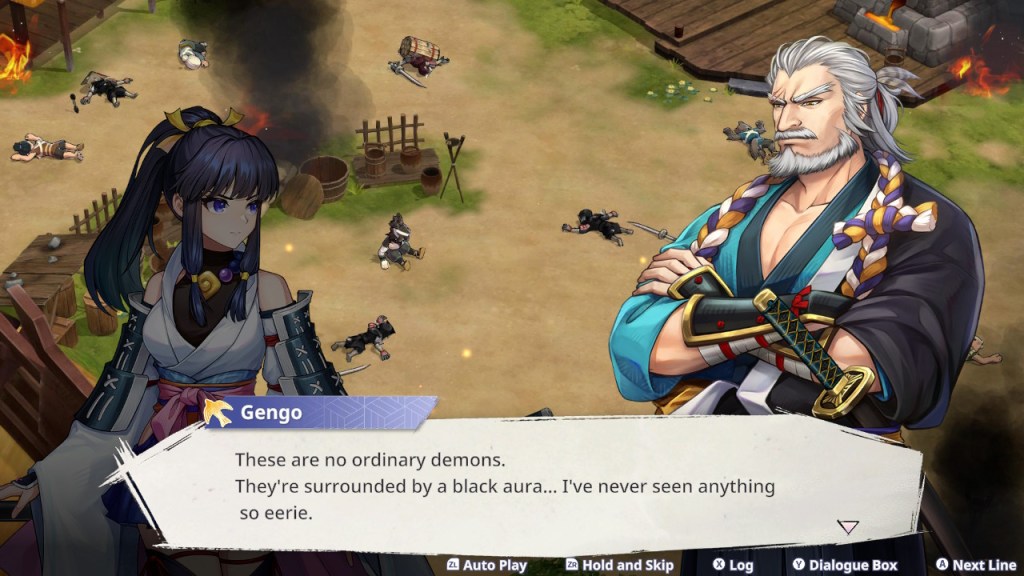
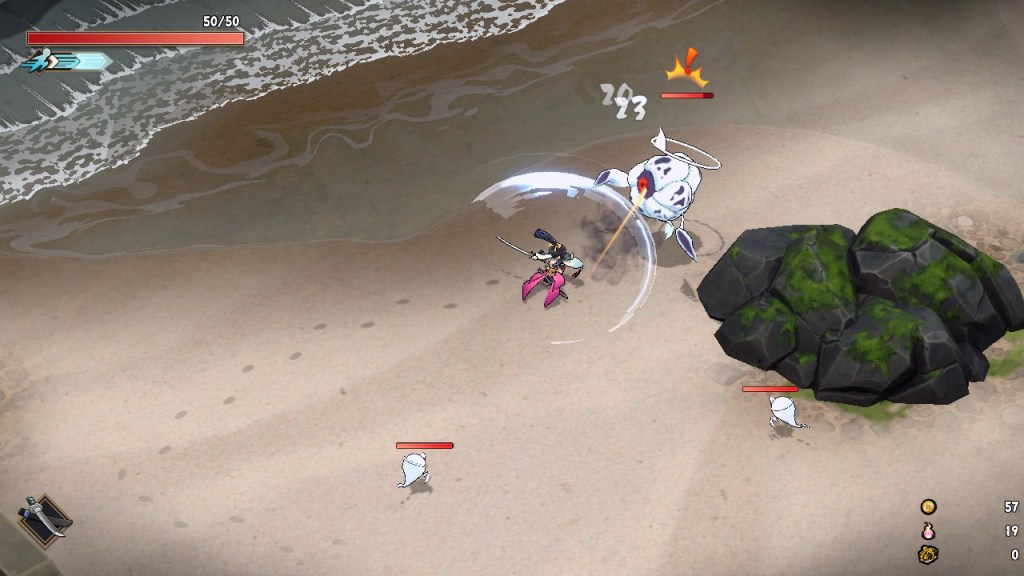
You play through one character’s story at a time. I started with Shigure, a young woman who lives in a ninja village and trains to learn the way of the sword. The Nine-Tailed Fox attacks her village one day and takes all of the demon blades. Months later, Shigure’s master goes missing, and he possesses the only demon blade left in the village. She must find him and secure the blade to ensure the village’s protection once more.
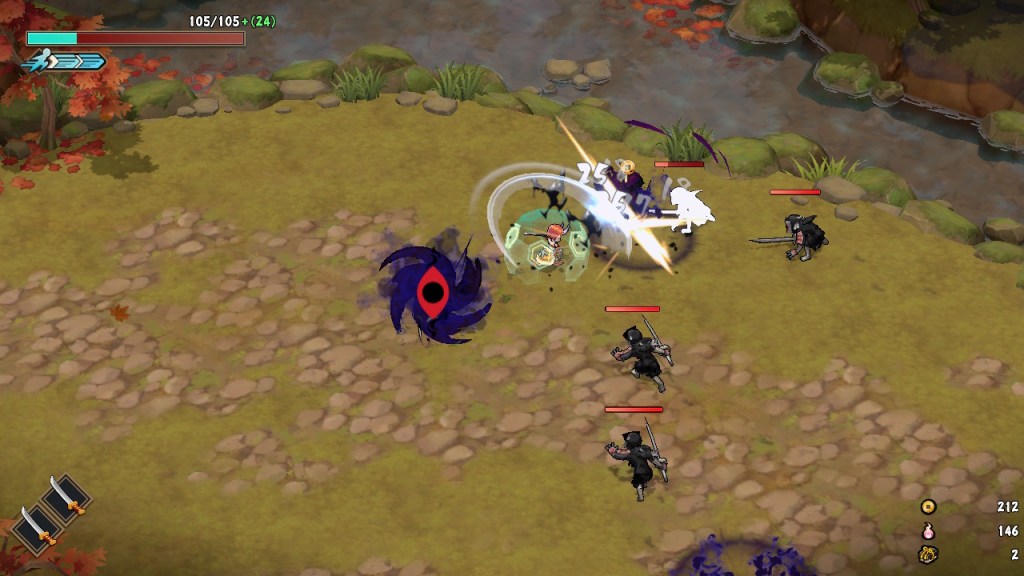
Next up is Sara, an Oni who works as an Emissary under King Yama in the Inferno. Wielding dual blades, her job usually involves dragging sinners to the Inferno, but she’s banished to the Mortal Realm for not doing something that would have changed the balance between realms in King Yama’s favor.
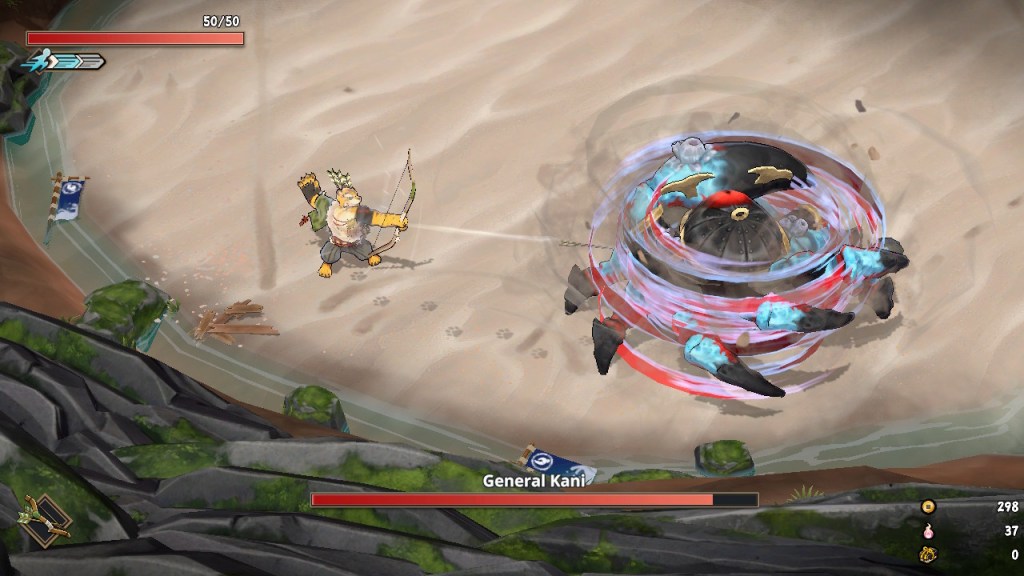
Taketora is a fierce (yet somehow still adorable) tiger demon who protects his Lord and the Princess. He’s capable of using melee attacks and attacking from a distance with his bow and arrow.
Regardless of who you choose to play as first, the gameplay remains the same. Leaving your “home base,” you’ll go through a few screens with waves of minor enemies. Shigure and Sara can switch between light and heavy attacks, while Taketora stands out with his ability to attack from different distances instead.
Naturally you’re able to dodge, although that ability has a cooldown period. There are also ways for you to gain a shield effect that takes hits for you and prevents your actual HP from being affected. As you get further in the story, some enemies will get this advantage as well, requiring you to whittle down their shield meter before you can damage them.
In addition to dodging and shielding, you can parry enemy attacks and then use special Mystic Arts to follow up. I wasn’t very good at parrying (particularly in large groups of enemies), so I would’ve liked an auto parry option. You can deflect some enemy attacks just by attacking with your weapon, which is fun. I quite liked seeing kunai ricochet off of my weapon and hit the enemy.
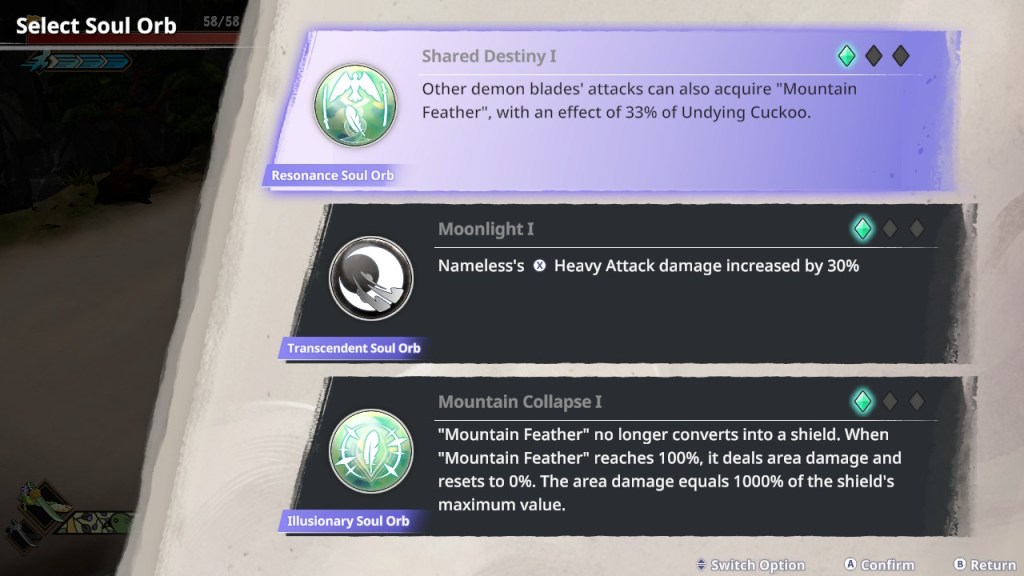
After using these strategies to defeat all of the enemies in an area, a Soul Orb will appear, which lets you choose one of three options that will improve your weapon’s abilities (i.e. increasing light damage by X%). Then you can check the Neko Shrine on that screen and see if you’ll get more than a standard blessing to aid you in battle. If an Amulet appears, you can choose the Blessing option or the Forbidden, which both helps and hurts you. There’s no leveling up, so you must rely on upgrades to get stronger.
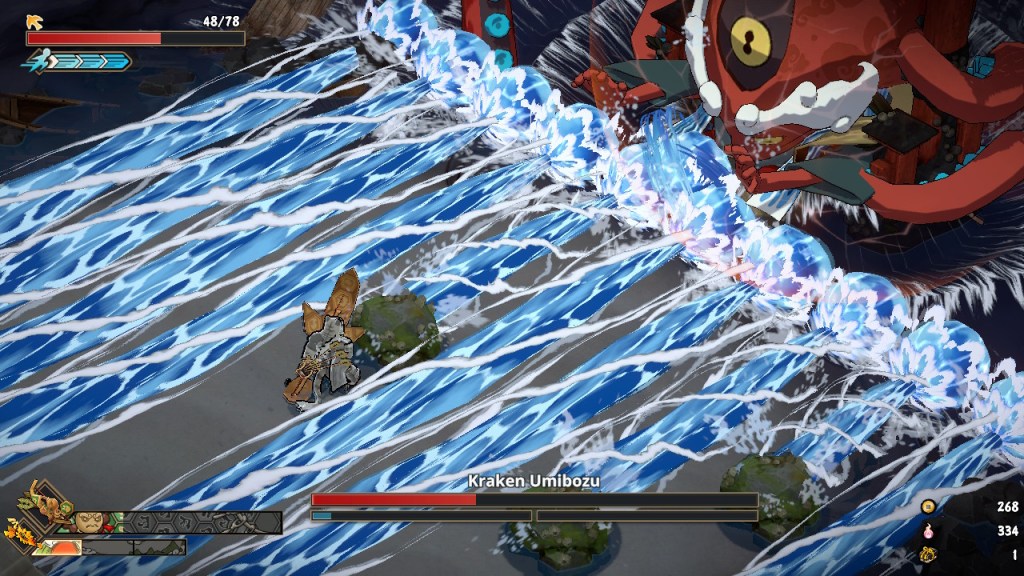
You’ll encounter a Boss after every 2 screens or so of minor enemies. I really liked the boss designs inspired by Japanese folklore, and they have some neat attacks. (The Kraken using ink to slow you down is fun, and you can strategically get the water attacks to land on the oil spills to remove them.) While each boss has several different attacks, only a few boss battles have more than one phase.
There are 6-7 bosses, depending on the chapter. Unfortunately, regardless of which route or chapter you’re in, all of the bosses are exactly the same (although the battles seemed to take a bit longer in the next chapters). They put the bosses in the exact same order in every run as well.
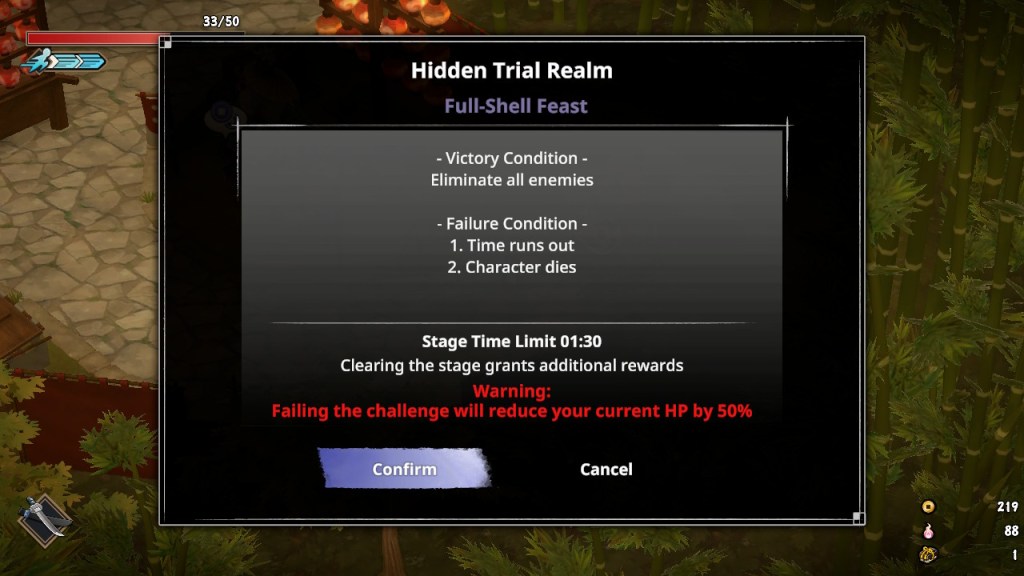
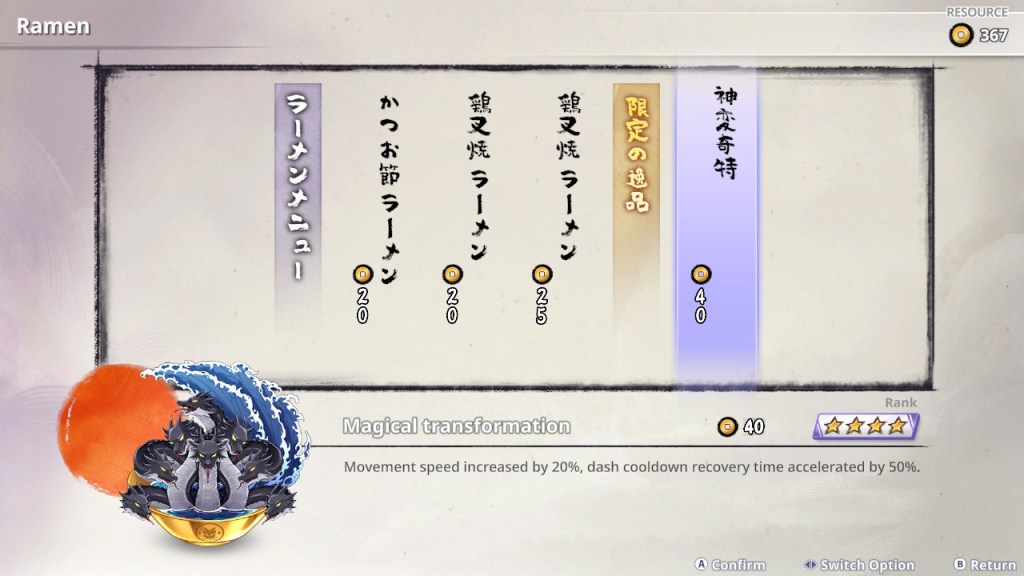
Perhaps just randomizing the boss order could have made things less repetitive and more interesting. After each boss battle you enter an area where you can heal, purchase upgrades, and participate in an optional challenge to earn an Amulet. (I loved the ramen stand.) If you could face a harder boss earlier on, it may have been more challenging if you hadn’t had the chance to get a lot of upgrades yet.
I think that even changing the bosses’ color palettes and creating slight variations in their abilities could’ve made up for the repetitiveness, too. For example, the Kraken has an attack pattern where it drops stones and you must hide behind them to avoid its water attack. If they just changed it up a little and made them lava stones or something for a Fire Kraken, that could’ve helped matters.
In my first playthrough with Shigure I found myself dying a lot more as I got used to everything. You can unlock the ability to revive once per run (up to 2 times for a much more expensive unlock), so if you’re defeated one time you won’t lose all of the progress you’ve made.
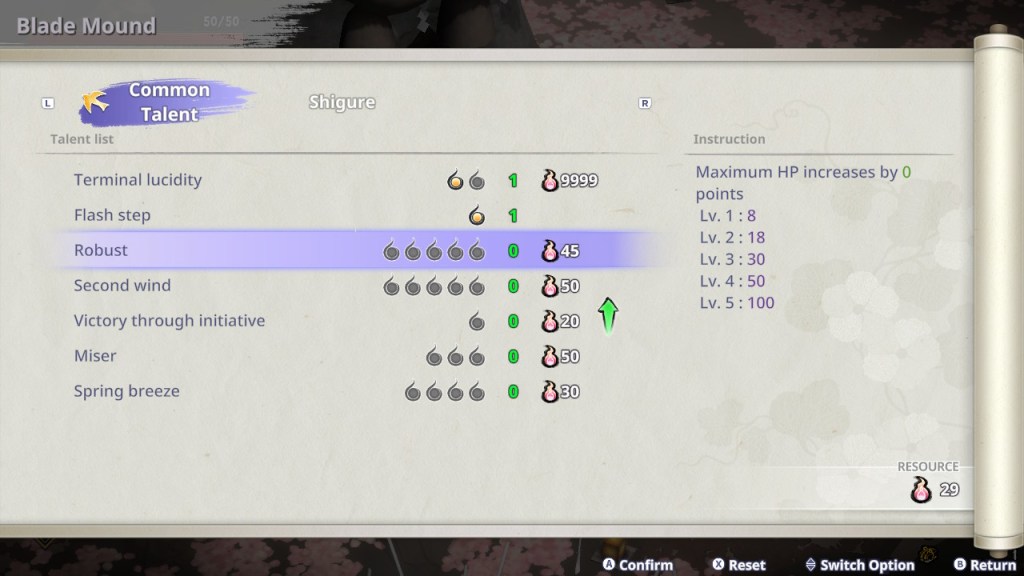
Once you die you end up at a shrine where you can permanently upgrade a character’s abilities. This includes revival, attack damage, HP, HP recovery per stage, currency acquisition, and more. You lose all of the weapon ability upgrades and buffs you had in a run, but you’ll always keep the upgrades from the shrine. (Losing also means you must go through all of the same battles – including bosses – again.)
I was a little confused because some of the shrine upgrades are listed under “Common Talents,” which I mistakenly assumed meant that if you’d unlocked them for one character they’d be available in another playthrough for the others. I kind of wish this was the case, because it can take a decent amount of time to gain the amount of upgrade currency you need.
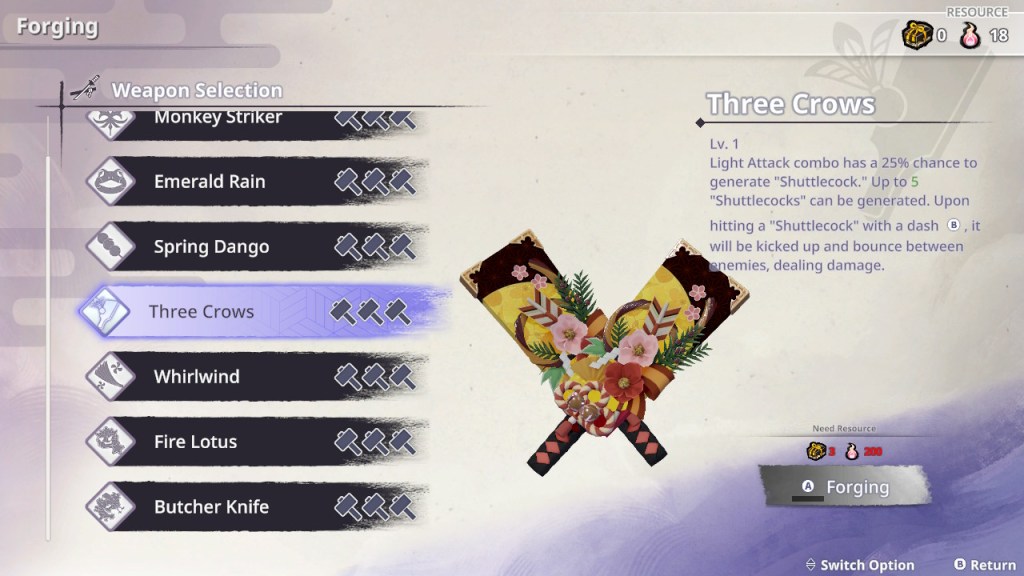
You also get to keep the new weapons you’ve unlocked at the blacksmith. Once you forge and/or upgrade them, you can equip 2 of them to use in your next attempts at clearing the current chapter. Each weapon has a unique ability with their own Soul Orb options, and you can switch between the 2 in battle.
Besides the shrine and blacksmith, there isn’t really anything to do in the village base. You can only talk to each person once, and you can’t enter any buildings. I think the story segments, which take place before and after boss battles, make up for this though.
Each character’s storyline is separate from the others, but they share some similarities as far as the characters and setting. Shigure is a common thread between all 3 stories, but her role differs in each one. I appreciated their use of flashbacks to give us more background on the story.

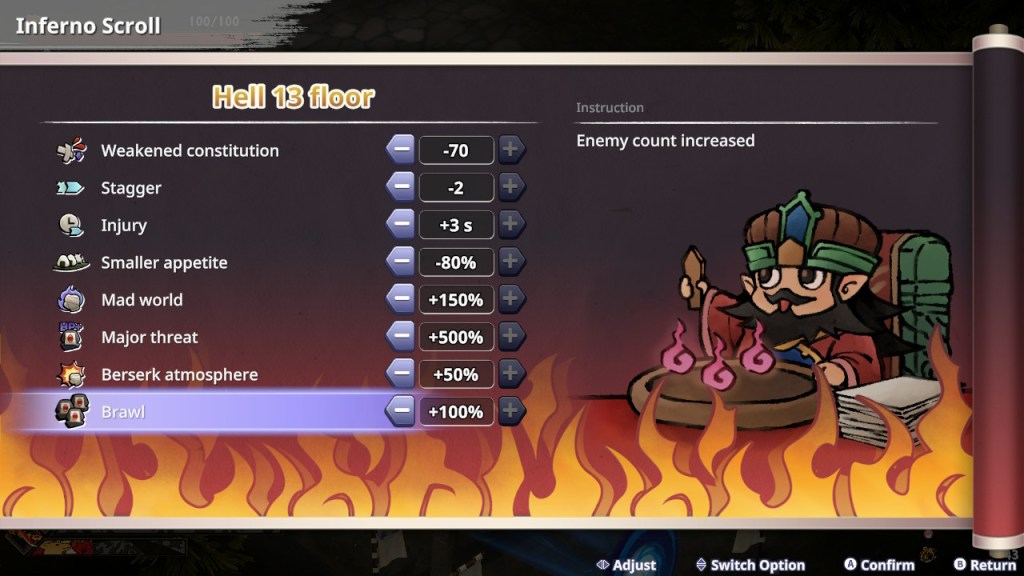
I feel like the stories are all rather bittersweet in a way. There were still some happy moments – I especially enjoyed Sara’s storyline, as hers was the most entertaining. Everyone gets 3 chapters and an epilogue, and after completing a character’s storyline you can attempt “Inferno Scroll Challenges” by choosing to increase different difficulty options such as increasing the number of enemies, reducing your HP, etc. As you increase the difficulty you’ll get better rewards.
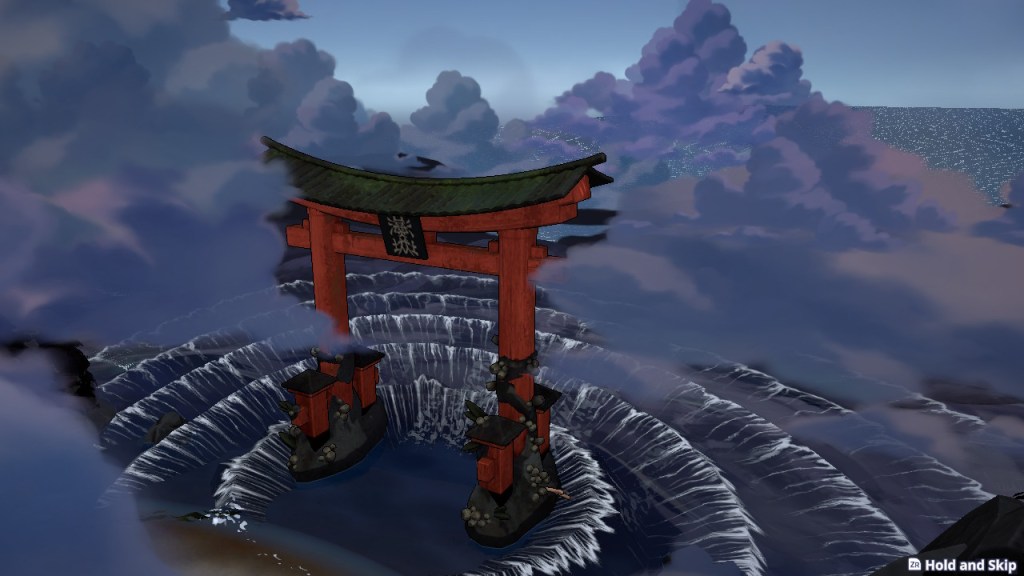
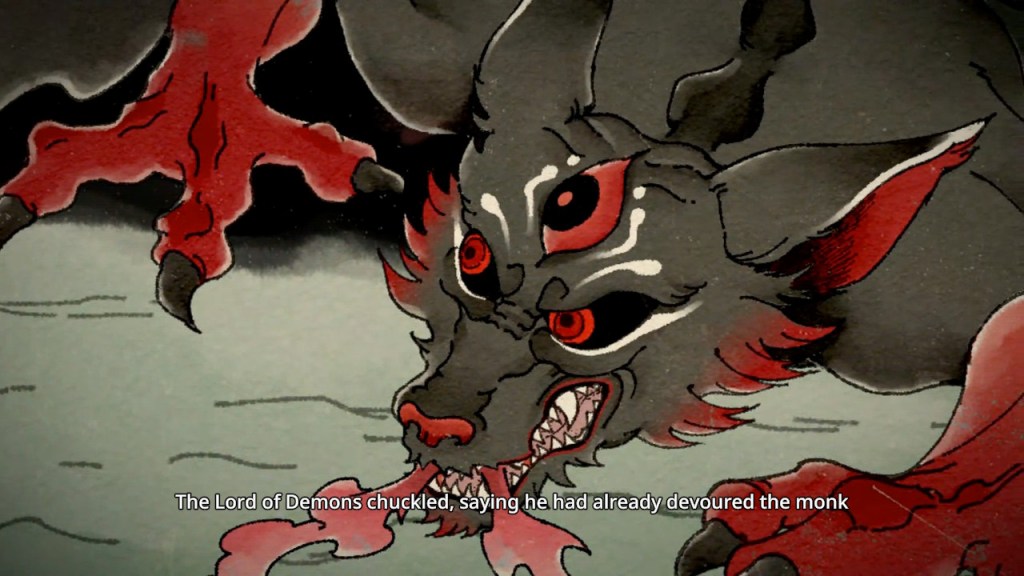
Yasha: Legends of the Demon Blade is a beautifully crafted game with fantastic character designs, event CGs, and environments. The soundtrack complements the setting well. The game’s main fault is the extreme lack of enemy variety as you continue to play.
That being said, some players won’t mind so much because the same enemies do become more powerful as you advance through the game. I did think they gave us a fun, challenging experience that will last you more than 20 hours. The developers are hard at work on additional features – such as new weapons and Boss Rush mode – that will bring even more content to the game to keep things…sharp. ⚔️ 😉
 Switch It On Gaming
Leave a comment