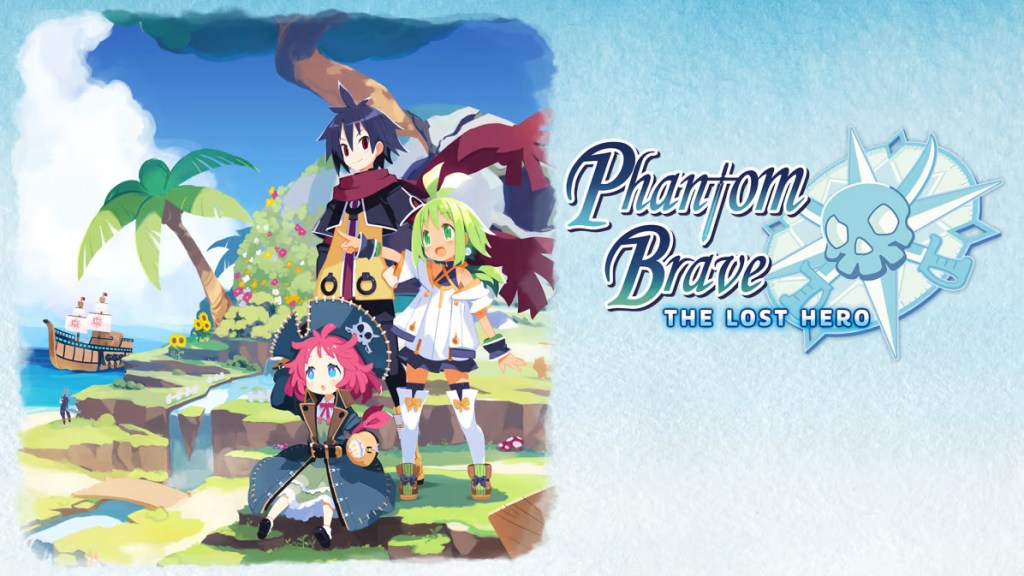
- Price: $59.99 USD (digital & physical)
- Digital Deluxe Edition: $109.99
- Individual DLC stories & Season Pass available
- Developer: Nippon Ichi Software
- Publisher: NIS America
- Release Date: January 30, 2025
A review code was kindly provided by NIS America on behalf of Nippon Ichi Software. We thank them for allowing us to cover something they’ve worked so hard on.
Content warning: Rated T. Discussion of death and the afterlife, kidnapping, child death, minor limited swearing
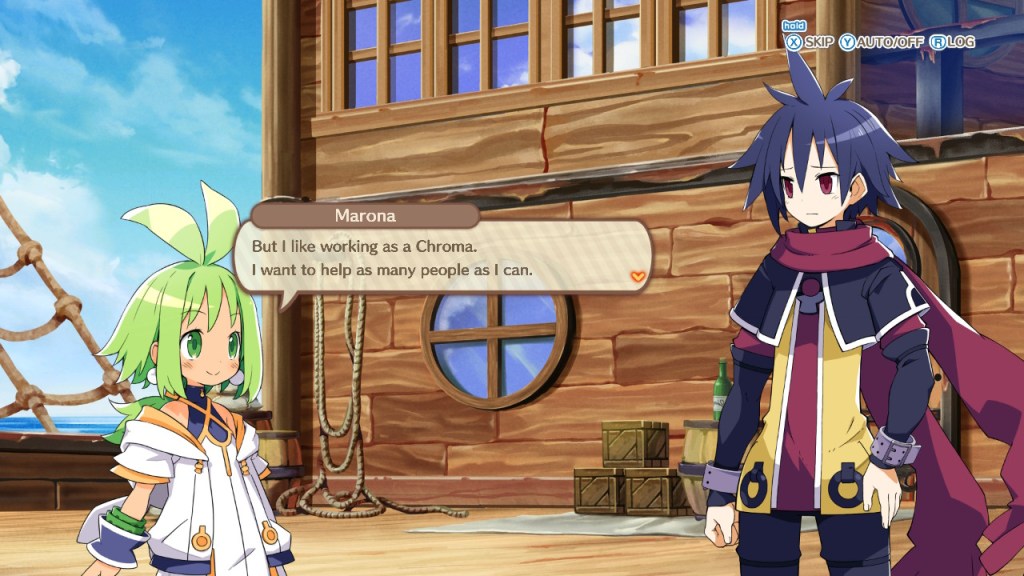
In celebration of the recent Steam release of Phantom Brave: The Lost Hero, we checked out the Switch version! While the story takes place several months after the events of Phantom Brave, this “Play-It-Your-Way” strategy RPG can be played without knowledge of the first game.
We learn that a girl named Marona is capable of interacting with Phantoms. Previously ostracized for her abilities, she and her Phantom friend Ash are now recognized as heroes for defeating “Sulphur, Lord of Terror” and banishing him to another world.
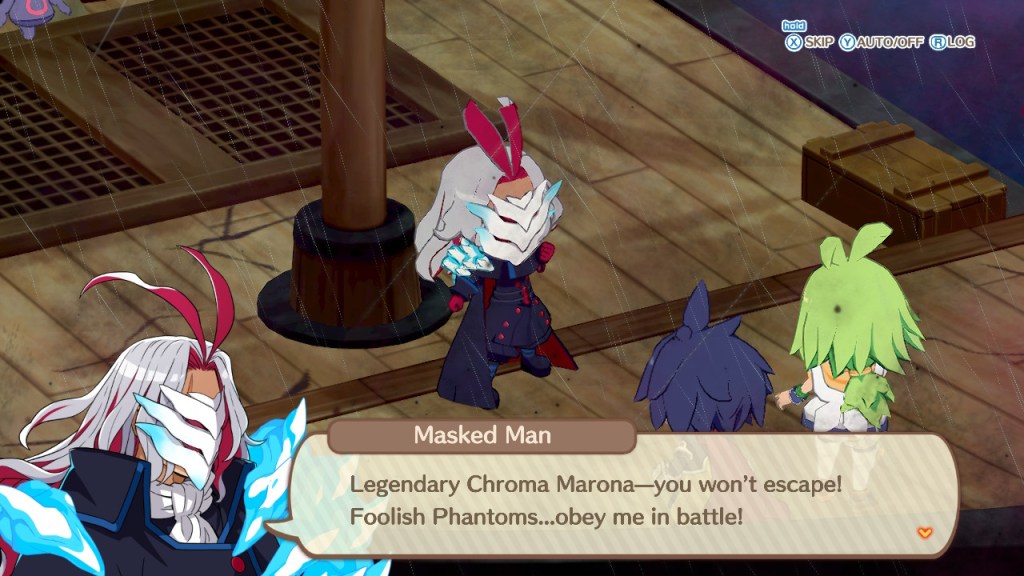
One day they’re on a ship, and it’s suddenly attacked by the dreaded Ghost Ships. The so-called “King of Phantoms” wants Marona’s powers, and Ash helps her get away at his expense by tossing her overboard.
She wakes up to pirates staring down at her, and they demand that she joins their crew as punishment for “trespassing.” Initially she’s on board until she realizes that they’re going to raid a village. Weakened by her encounter with the King of Phantoms, Marona lucks out by running into Apricot, the Phantom daughter of the former captain of that pirate crew.

Marona is capable of temporarily giving Phantoms a physical form by using her Confine ability, which allows them to possess an inanimate object on the battlefield. With the help of Apricot, she’s able to stop the pirate attack and take control of the crew.
Their objective is to help people and get them to agree to join their crew’s territory; the more territories (and power) they have, the less likely other pirate crews will interfere in their quest to find the Ghost Ships and therefore Ash as well. The story kind of gives me some cutesy One Piece vibes, what with the philanthropic pirate angle!

You’ll face pirate crews and berserk Phantoms in tactical battles as you reach new territories. There are 3 difficulty levels to choose from, and you can decrease the difficulty at any time. Battles always start with Marona alone on the battlefield, and you must use her Confine ability to bring Phantom allies to the field.
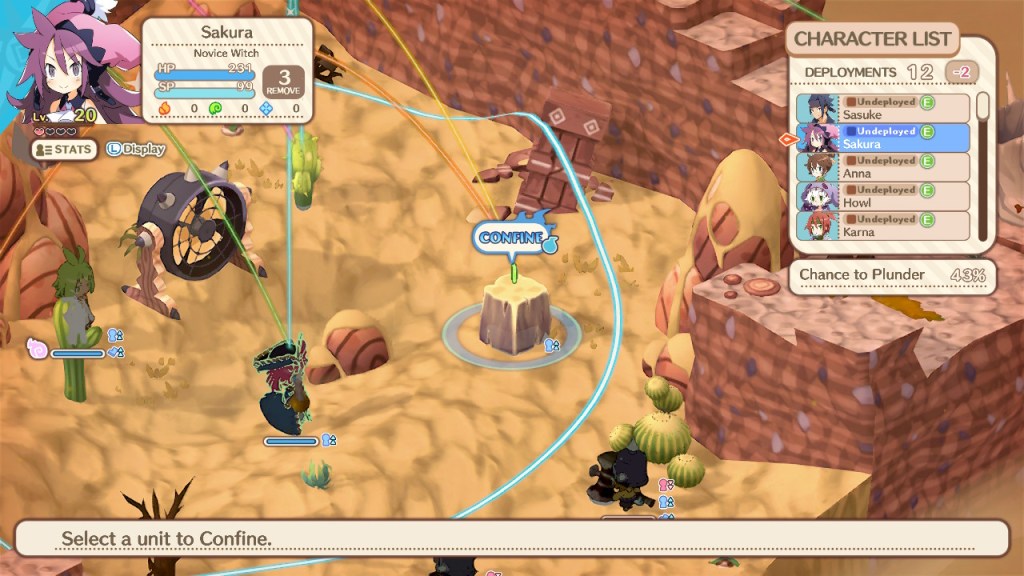
I like how we can Confine a bunch of Phantoms in a single turn instead of having to wait and summon them one at a time. The only limits are based on the maximum number of deployment slots and the number of items in range that can be possessed.
You don’t have to manage a lot of equipment in this game, as every unit only has one equipment slot. It seems like you can equip any type of weapon on a unit regardless of class, and their weapon affects the skills they can use. Units with equipment take up more deployment slots than those without, which was kind of weird because I found the Phantoms without equipment pretty useless anyway.
Phantoms have a “Remove” stat, which indicates how many turns they can remain in battle. You can’t Confine the same Phantom again in the same battle; once they leave the field it opens up their deployment slots for another Phantom to take their place.
If a unit is defeated their body remains on the map, and you can revive them unless enemies damage them, causing them to disappear. Their deployment slots remain in use until they’re removed from the field – dead or alive. I didn’t love how units would drop their weapons when defeated, as weapons can be destroyed as well, meaning they won’t be able to use that weapon’s abilities for the rest of battle.
However, there are some nifty mechanics with lifting and throwing weapons/items and your units. You can pick up objects dropped by defeated enemies and use their weapons as a temporary fix.
Movement is pretty free range in this, as there aren’t any squares on a traditional grid. Instead you have your units walk around the map until you’ve decided on a destination. It took me a while to realize that I could jump to navigate the height differences on the map (Apricot saying “boing” is so cute!).


Hilariously, you can pick up other units and throw them across the map to help them go further. It’s such a fun mechanic, and I enjoyed watching enemies get tossed in the air when I used certain abilities. You can also hit enemies from further away using Gadgets such as cannons; units can either use them as-is or possess the Gadget.
There are times you’ll really need to use a combination of these mechanics to hit further-away objects or enemies. As you get further along, enemies will have protection effects linked to objects on the field that decrease the damage they take – or even reduce to it zero!
I thought the protection effects were a unique mechanic; you have to either destroy the items or throw them out of bounds. Occasionally you’ll find that the items protecting an enemy have their own protection effect, so you need to destroy a chain of items before you can start to really damage that enemy.
A few maps even have items with protection effects that prevent you from using them to Confine your Phantoms. You can only Confine a few units on those maps, and have to wait until you’ve defeated some enemies to use their weapons to bring more allies to the field.
It took me a while to really get into the game, but once I got used to its systems I was impressed! I think it’s got a lot going on, and it gets pretty complicated and fun. The main damage dealers would probably be the Phantoms, but that’s not to say that Marona doesn’t play her part in battle.
Due to her affinity with Phantoms, she has several abilities that support them in battle beyond Confining them. In a way, Marona reminds me a little bit of the dancer units from Fire Emblem, as she can speed up a unit’s turn so they can act right away. She can also add another turn to their Remove count, allowing them to remain on the field for an extra turn.

Marona can Confine multiple units, toss one across the battlefield, and use an ability in the same turn. Additionally, you unlock the ability to “Confriend” early on, or fuse Marona and a Phantom once the “Matey Meter” is full. Merging boosts stats, lets you use a powerful special ability, and you can also trigger extra turns depending on Marona’s relationship with that Phantom.
Eventually I established a routine of strategies that really made battles go smoothly. I could make a single turn into multiple turns for Marona and another unit. I didn’t lose very often, but when I did it was nice to still get some experience points. Win or lose, you’ll end up back on your island base after battle. And there’s a lot to do there as well!
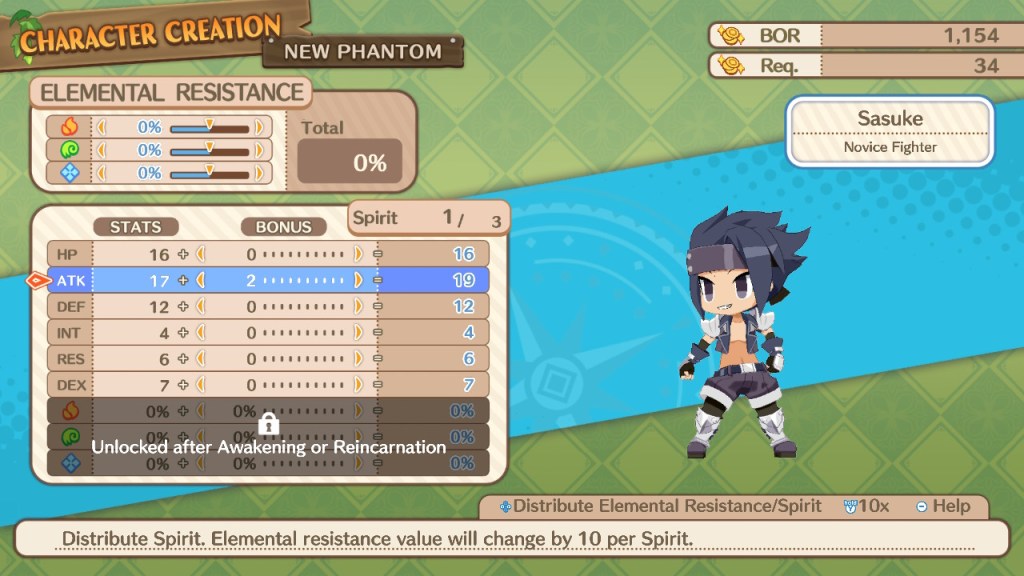
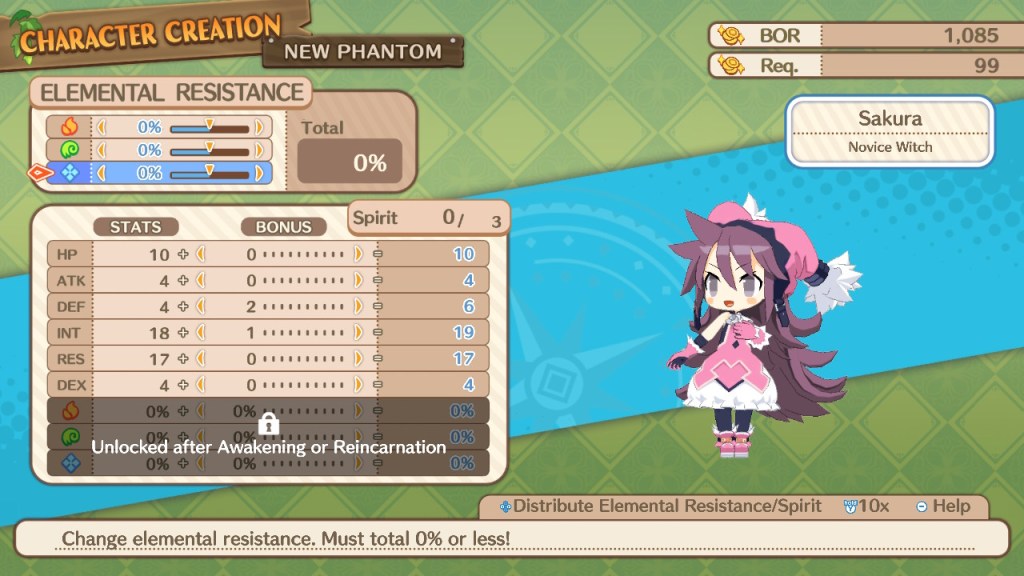
You get more Phantoms by creating them and distributing their stats; you unlock more and more classes as you complete chapters. Creating Phantoms with specific jobs then unlocks new facilities at your base, such as the Merchant unlocking the shop for you.
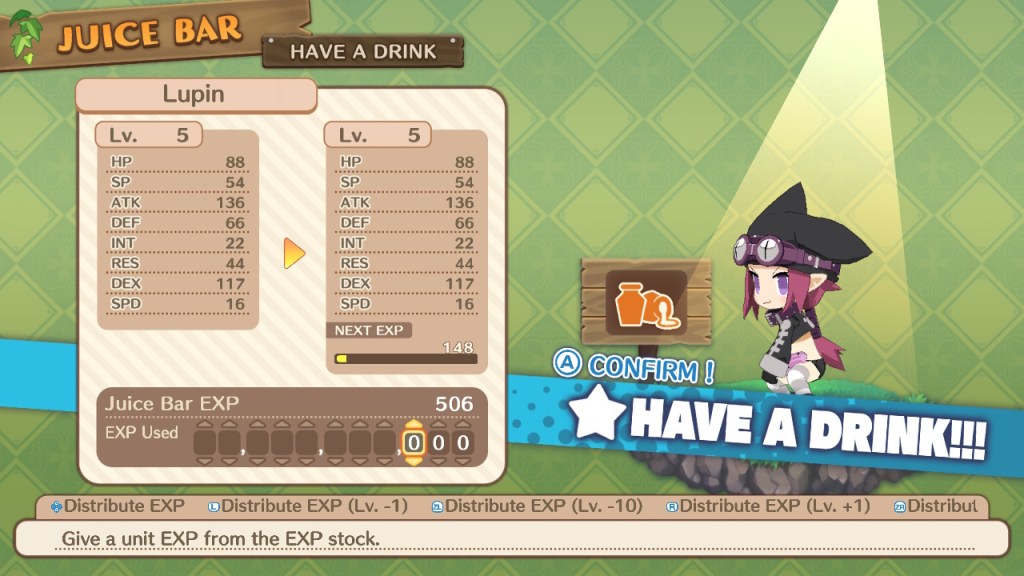
One of my favorite facilities was the Chef’s Juice Bar, which allows you to split the experience points between the units who participated in battle and those who didn’t. You can modify the balance of percentages that go to each group, and upgrading the facility increases the distribution.
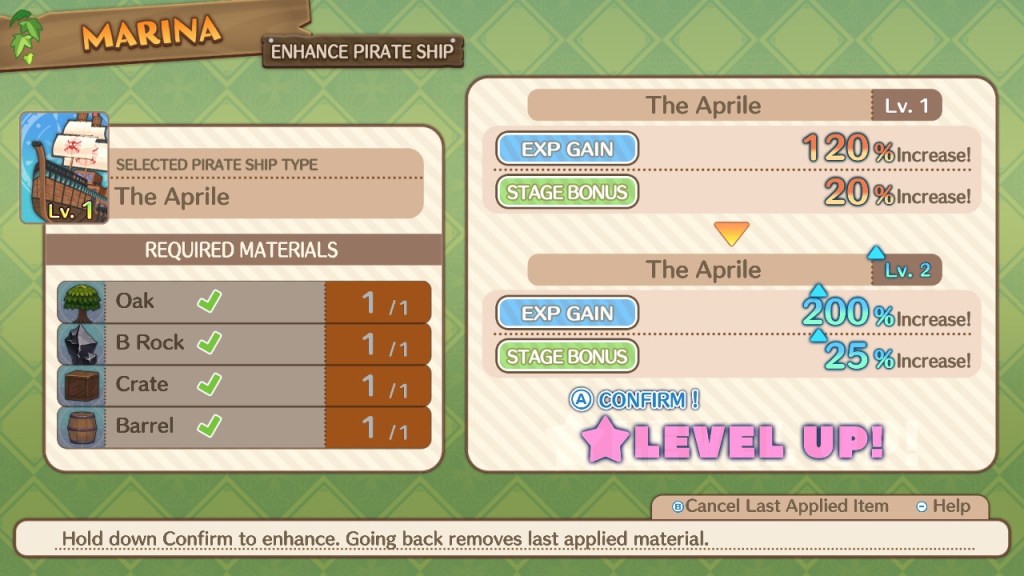
Strengthening your pirate ship at the Marina increases your party’s stats as well as aspects like earned experience points or jumping and throwing distance in battle. For some reason your units don’t automatically learn the abilities they unlock at specific levels; instead you have to go to the learning facility to teach them those skills plus those available via scrolls.
You can also use maps earned from battle to unlock dungeons, which you can use for additional grinding on top of replaying previous battles. Participating in battles not only levels up your units, but also their weapons. Fusing objects together at your base is another way to strengthen your characters.
There really are a lot of different ways to play this game because of the amount of choices you can make – both in battle and at your base. I think it’s an enjoyable strategy RPG due to the depth of its systems.
The game does have a few issues. While I chose performance mode over graphics, I still noticed slight lag in the transitions between turns in battle. I also experienced about a dozen crashes on the Switch version.

I’d say that the story is somewhat predictable, which is a shame. But it is a very cute and wholesome game, and despite the predictability they still manage to show character growth. Some parts of the story are a little sad due to the nature of Phantoms, but I think it still ends on an upbeat note.
I liked the characters well enough – especially Rouen! There are some humorous moments to balance out the sad elements in the story. The puns they sprinkled in here and there made me very happy!
It took me about 40 hours to get through the main story. You can exceed level 100, and there is post-game content plus DLC content to check out. It may have some issues, but Phantom Brave: The Lost Hero is a fun, customizable experience with a lot of neat features and content for both returning players and newcomers to the series.
 Switch It On Gaming
Leave a comment