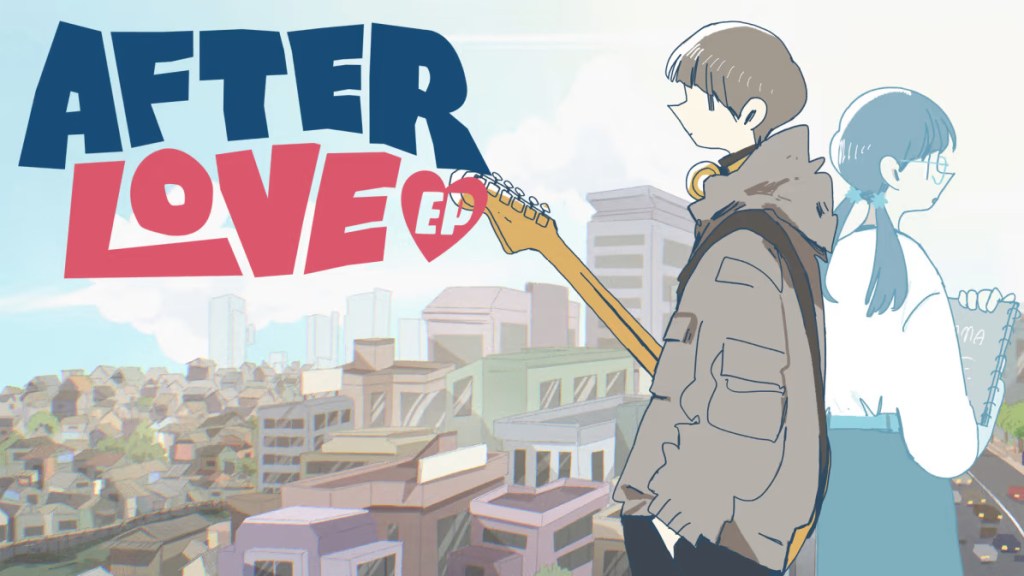
- Price: $19.99 USD (currently on sale for $17.99 until February 28th)
- Developer: Pikselnesia
- Publisher: Fellow Traveller
- Release Date: February 14, 2025
A review code was kindly provided by Fellow Traveller on behalf of Pikselnesia. We thank them for allowing us to cover something they’ve worked so hard on.
Content warning: Rated T. Grieving, mental health as a theme. Homophobia/transphobia in one character’s storyline.
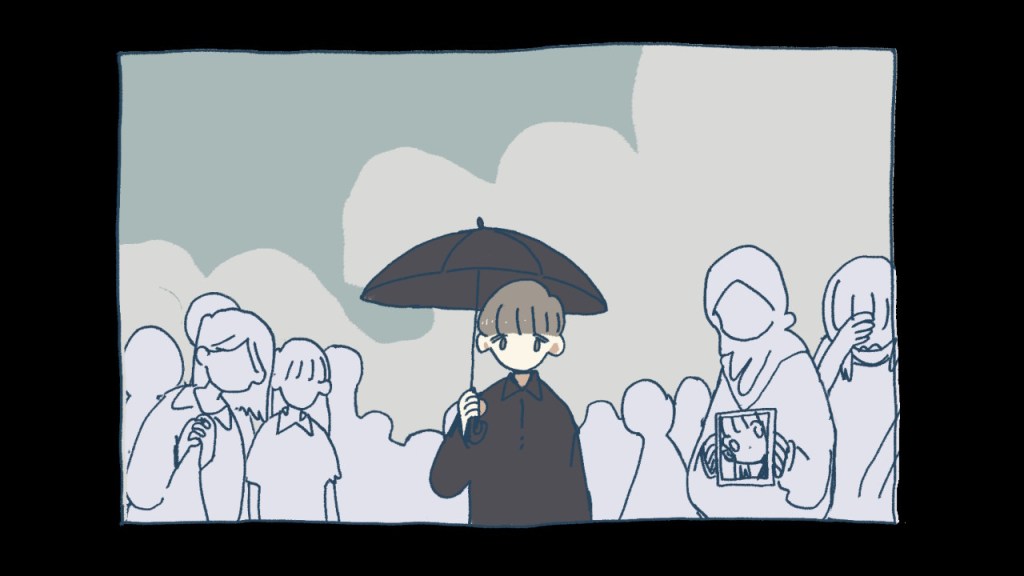
As a fan of the late Fahmi’s work – which includes the Coffee Talk series as well as What Comes After – I’ve been looking forward to Afterlove EP for years now. Combining visual novel and rhythm game elements, it tells the story of Rama, a young musician who has isolated himself in his grief for more than a year after his girlfriend Cinta died.
Now he finally feels ready to put himself back out there, and he contacts his bandmates to start playing together again. But because Rama ignored them for so long as he mourned, they aren’t so sure that the band should stay together.
They manage to land a gig opening for a popular band called L’alphalpha, and Rama has 30 days to convince Adit and Tasya that he’s still committed to the band – otherwise they’ll part ways after this final show.
The problem is that Rama is still grieving his girlfriend – to the extent that he is hearing her in his head and responding to her…out loud. This gives others the impression that he’s not paying attention to them, making them feel like he’s not serious about the band’s comeback or even their friendships.

His friends can tell that he’s not doing well, and suggest that he give therapy another try. Choosing where to go is a major part of the game; Rama can attend a therapy session once a week if that’s what you decide to do. He can also meet with 3 characters who have their own routes.
You get to pick one event to view during the day, and another one to attend at night. Options include interacting with new friends, weekly therapy and/or band practice, busking, or reminiscing about Cinta in certain locations.
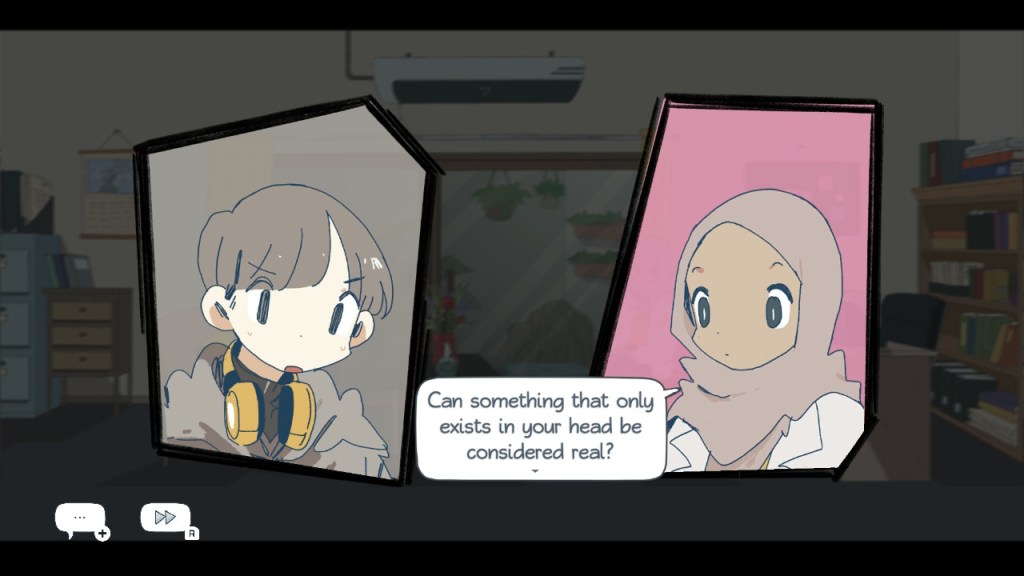
I liked Rama’s therapist, a voice of reason to counter his distorted thinking – which isn’t helped by the Cinta in his mind. This “Cinta” is the only voiced character in the game, which I think is appropriate because of how much influence she has on Rama. To him, it’s like her opinion is the only one that matters.
“Cinta” feeds into Rama’s belief that he’s suffered the most from her death, and that everyone else is being unreasonable. She doesn’t like him going to therapy or talking about her “existence.” I did not particularly care for this version of Cinta.
I wasn’t entirely clear on how long “Cinta” had been with Rama, but I’m assuming that she was all he had during his year of isolation. So he would have been stuck in an echo chamber of grief and depression.
He apparently tried therapy before, but didn’t follow through with it. In other words, he still hasn’t processed his grief, and may not be in the best headspace for attempting something as big as a comeback for the band.
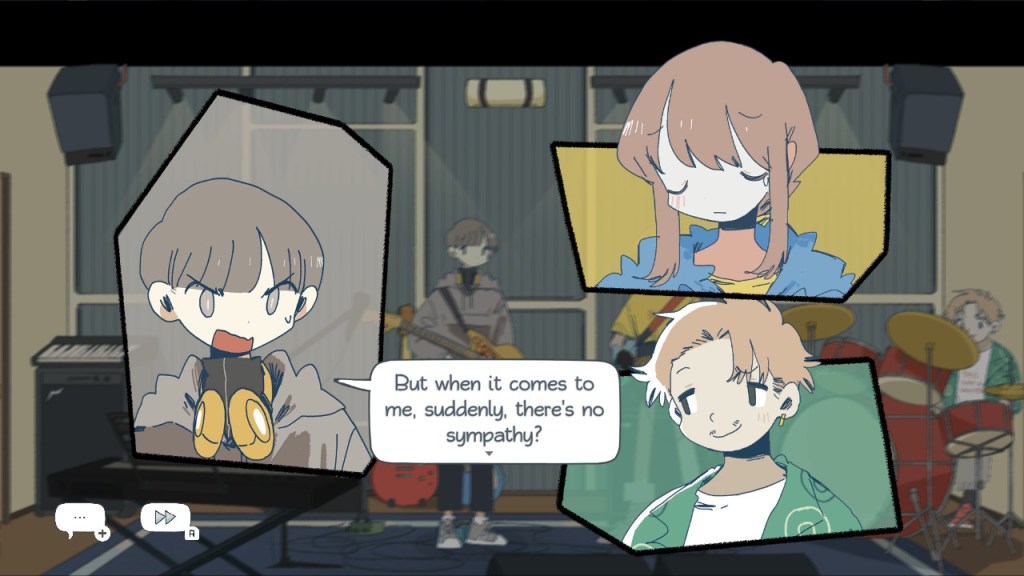
As a result, Rama tends to lash out a lot; he comes off as very self-centered, not considering other people’s feelings and minimizing their grief over Cinta when compared to his own. To me, it felt like all of Rama’s relationships – old or new – are rife with conflict of some sort.
While I sympathize with Rama, I didn’t particularly like this version of him because of the way he treated his friends. He’s appropriately depicted in muted colors, and people around him certainly pick up on his state of mind, calling him a “sad boy,” “emo,” or the “Lonely King of Strings.”
I did really appreciate the focus on mental health, as it can be a difficult subject to tackle. It might have been better if the game lasted for more than 30 days though, as it almost felt like Rama was speedrunning his recovery after a year of inactivity.
Recovery isn’t linear, so Rama does revert to his old ways a lot when he talks to people. Three of the routes involve potential romantic relationships, which I don’t think is necessarily a good idea when he’s in such a precarious mental state.
I only managed to complete the routes for Regina and Satria so far. Regina’s route was super awkward because she used to date Rama’s fellow band member Adit. But if Rama had to date someone, I think Satria was probably the best choice.
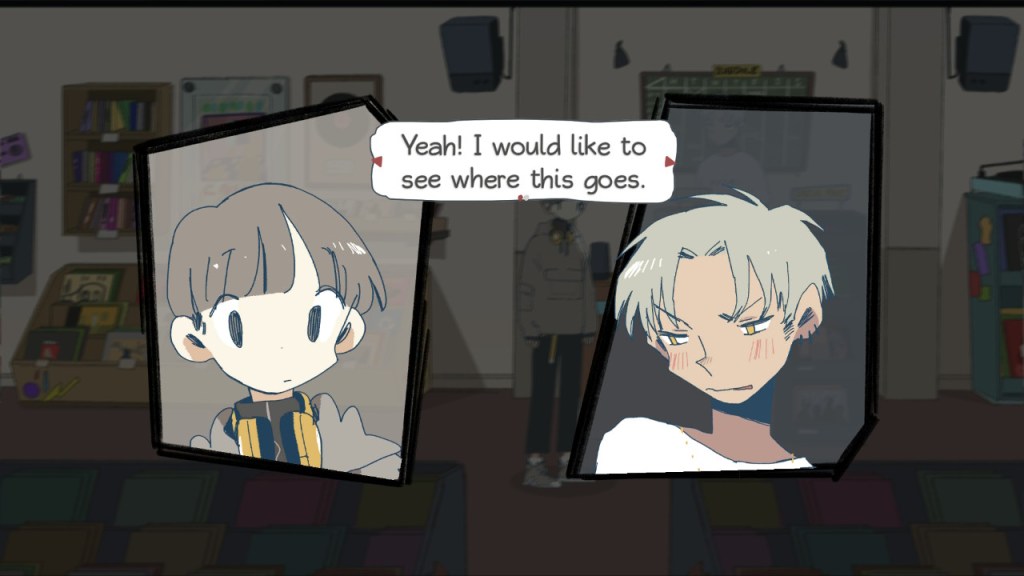
Two out of three romance options are female, and it was nice to have a male option for Rama, too. Satria has similar interests to Rama, and I liked him a lot. It was interesting – and sometimes a little sad – to get a small glimpse of the LGBT+ community in Jakarta.
The fact that this takes place in Indonesia is exciting. (I wrote an article about Indonesian Switch games before!) They don’t give much explicit information about Jakarta, but certain background details provide some insight. While the culture isn’t the focus of the game, I did wish they would’ve provided a glossary that explained the food people mentioned, or holidays like “Kartini Day.”

I did like seeing Rama’s memories with Cinta as I walked the streets of Jakarta. Indonesian manga artist Soyatu did a great job with the comic strip panels depicting key moments in their relationship while Cinta was still alive.
The music from L’alphalpha (linked further above) was also fantastic. I’ve listened to music in Spanish, Mandarin, Japanese, and Korean before, but I’ve never heard anything in Bahasa Indonesia until now. And I really enjoyed what I heard!
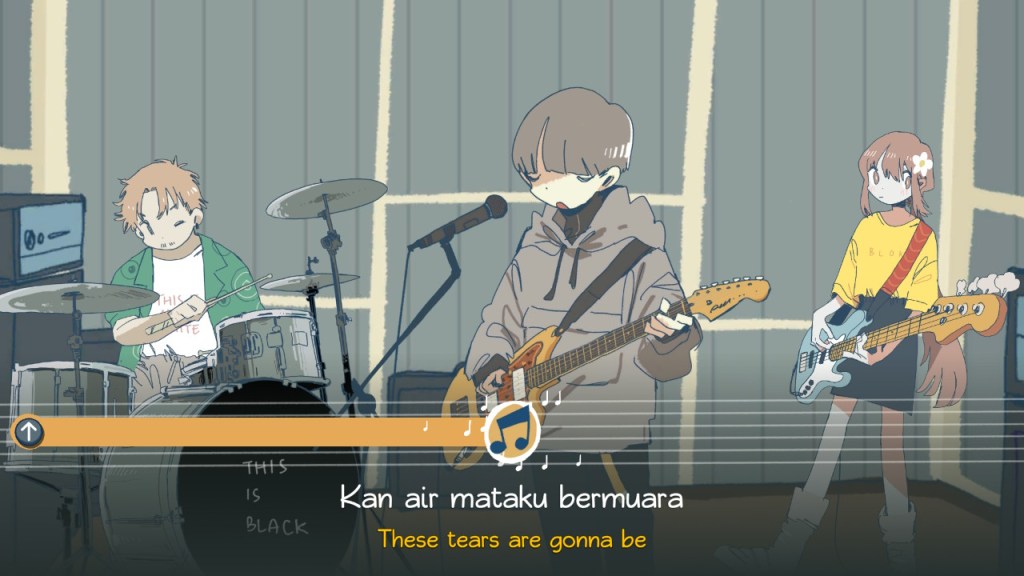
You get to play through a few rhythm game sections – some with the lyrics and some that are just instrumental. There are 2 difficulty options: normal or auto. Normal didn’t feel too difficult, and there aren’t any scores at the end. Auto mode allows players to sit back and enjoy the music while the rhythm game is completed for you, and it’s a fabulous way to increase accessibility!
There are a lot of great features in the game. Having achievements is neat, and a few of them have to do with experiencing each route. The endings seem to be divided into 2 parts based on Rama’s relationship and his performance with the band.
Afterlove EP has 4 character routes – one for each potential love interest (x3) and one for Rama. The love interest routes are then divided into perfect, normal, break up, and bad options (presumably based on your dialogue choices throughout that playthrough).
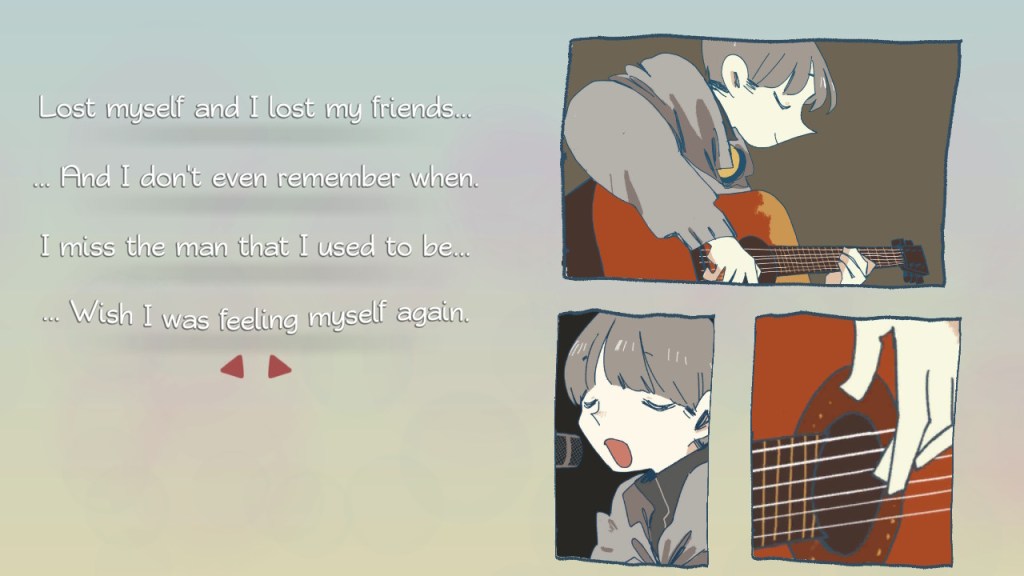
I’m not sure how to get Rama’s route yet (I’m working on that right now). I’d assume that you would have to attend all therapy sessions, view all of the Cinta memories, and perhaps complete the busking sessions with lyric choices?
I’m a big fan of games with visual novel elements, and the ones with a focus on music. I just think that overall I would have liked a bit more of each genre in the game. The story and relationships felt too rushed to me due to the 30 day time constraint, and because the music was so good I wanted more segments dedicated to it.
There was also just too much conflict for my tastes; I had kind of hoped that the grieving process would have happened in a more uplifting way, with the band coming together. But I acknowledge that everyone handles grief differently, and real life doesn’t always resemble a “feel-good” movie.
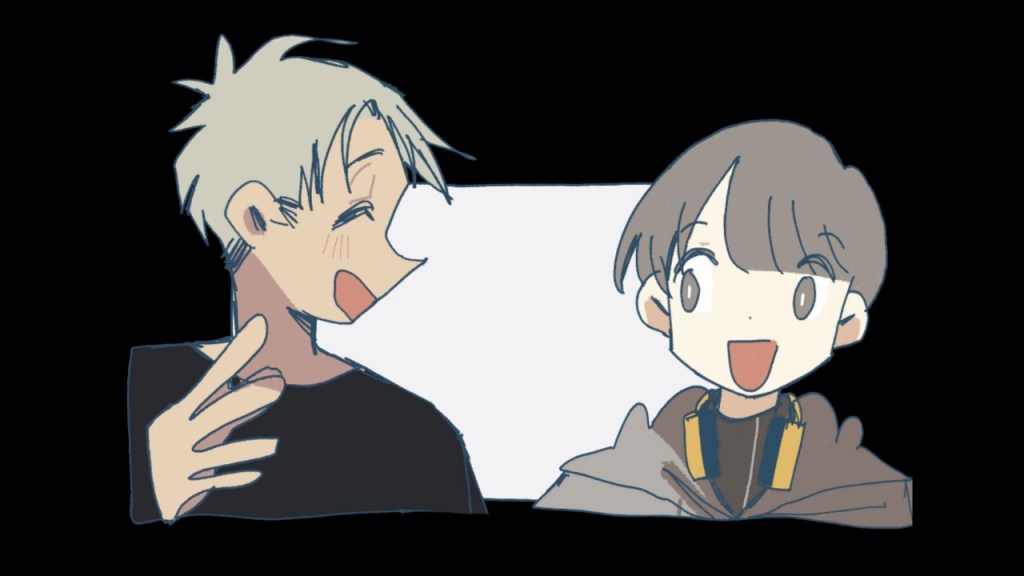
They did do a lot right between the art and music, and I liked how they added some fun to the game by making subtle references to other games like What Comes After, or coming up with silly parody brand names. Most of the game leans towards the dramatic side, but it was nice to have some levity here and there.
Afterlove EP is an emotional experience that doesn’t shy away from difficult topics. You might need to be in the right headspace to play it because of its emphasis on grief and mental health. If you think you can handle it, you might want to consider giving it a try.
 Switch It On Gaming
Leave a comment