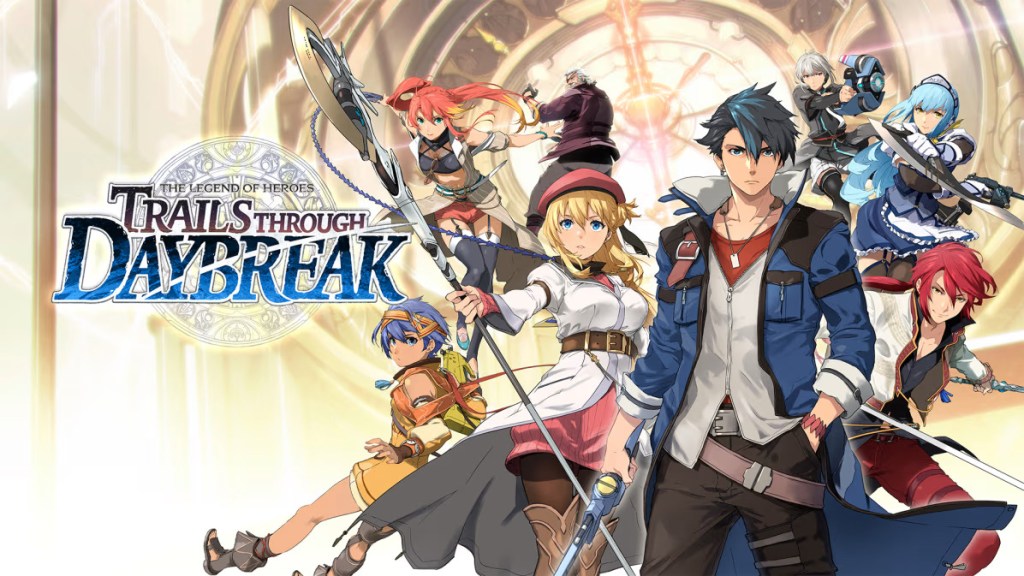
- Price: $59.99 USD (physical & digital; currently on sale for $47.99 on the eShop until January 6th)
- Developer: Falcom
- Publisher: NIS America
- Release Date: July 5, 2024
Content warnings: organized crime, mention of drugs, stalking, suicide attempt, blackmail, kidnapping, hostage situation, murder, torture. Implication of sex work, some suggestive language.
As I’ve no doubt mentioned many times before, the Trails series is my favorite video game series of all time. We currently have 11 Trails games localized in the West, with Trails through Daybreak II debuting as the twelfth entry on Valentine’s Day 2025!
While the series is split into multiple interconnected arcs set in different regions on the same continent, Trails through Daybreak introduces a brand new cast in the Republic of Calvard. Players new to the series won’t have some of the context behind the complicated political situation on the continent of Zemuria, and they might not recognize the returning characters from previous arcs who make an appearance in Calvard.
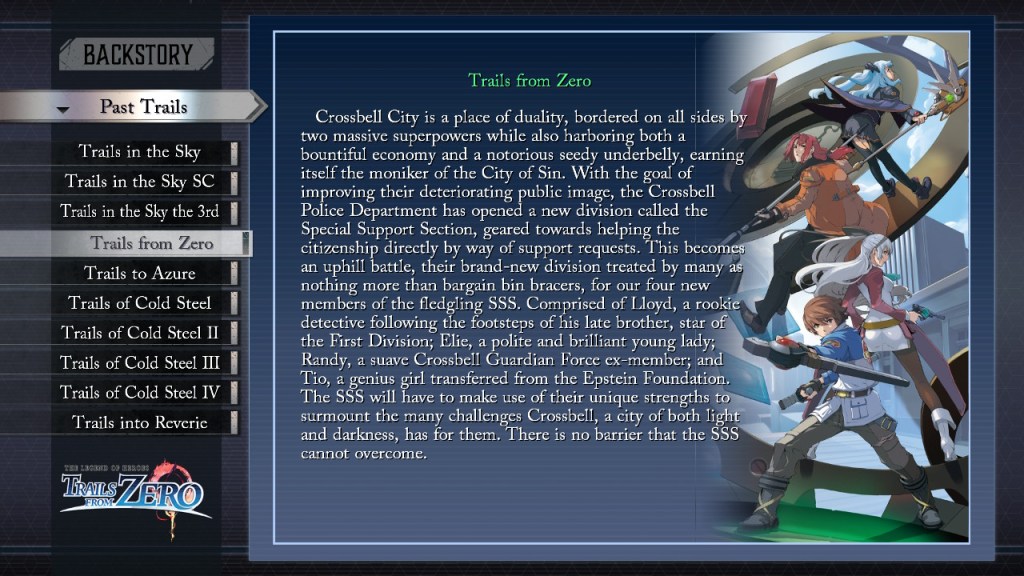
That being said, I think that Daybreak explains enough that newbies won’t be overly confused. They even provide a brief backstory section on the main menu, as well as explanations of key factions and concepts introduced in prior arcs. I do highly recommend that new fans play the previous games, but it’s not necessarily a requirement to enjoy Daybreak.
A New Beginning

The Calvard arc opens with a young woman named Agnès coming to Arkride Solutions to meet the business’ namesake, Van Arkride. Van is a Spriggan, or a “fixer,” who will take the shadier jobs that can’t be taken to the police or bracer guild. Agnès needs his help to locate some incredibly important artifacts.
It’s interesting to see how Van differs as the main character compared to Estelle and Joshua, Lloyd, and Rean. They each start their arcs at ages 16, 18, and 17, respectively. Meanwhile, Van is the oldest main character at 24 years old. I think this is reflected in the type of situations he gets involved in, as well as the way he handles them.
Similar to the Crossbell arc, we see the influence of organized crime groups on Calvard. Perhaps due to Van’s older age, the environments and subject matter he deals with seem a bit darker sometimes compared to what Lloyd experiences as a police officer.
Despite this, Agnès still insists on joining Van on his rounds around the city of Edith. And sure enough, they run into trouble right away in the prologue. Fortunately, Agnès is capable of defending herself to some degree.
Exploring Edith
Each chapter contains segments where you explore an area and complete requests (some mandatory tasks with optional side quests sprinkled in). Without any clues to help direct their search for Agnès’ artifacts, they’ll spend some time checking local bulletin boards for Spriggan requests.
The world-building in Trails games is fantastic, so it’s a real treat to walk around the city and learn more about its people and their problems. It was exciting – and immersive – to see movie trailers on billboards, and hear radio broadcasts and passersby talking to each other as I explored. (They even made it so that cars would stop and honk at you if you stop in the middle of the road.)
Some requests are more serious than others, with Van solving blackmail problems, recovering stolen goods from the black market, or even just tracking down a lost pet. They made these quests even more intriguing by implementing an alignment system.

Certain requests will increase one or more values in the Law, Gray, and/or Chaos alignments. But depending on the request, you can also make decisions that will further increase your alignment in one direction. It’s really cool because you see the effects of the alignment system in many ways, but especially in Chapter 5.
Calvard Connections
For me one of the best parts of the series is the way that they make even the most minor characters memorable. I think it’s the only series where I actually end up remembering very minor NPC’s names after interacting with them and completing their request(s)!
Of course, the major NPCs do their parts to support Van and his new employees. Flirty Bermotti is definitely one of my favorites, reminding me a little bit of Olivier. You can view connection events with NPCs (sadly excluding Bermotti) as well as your party members.
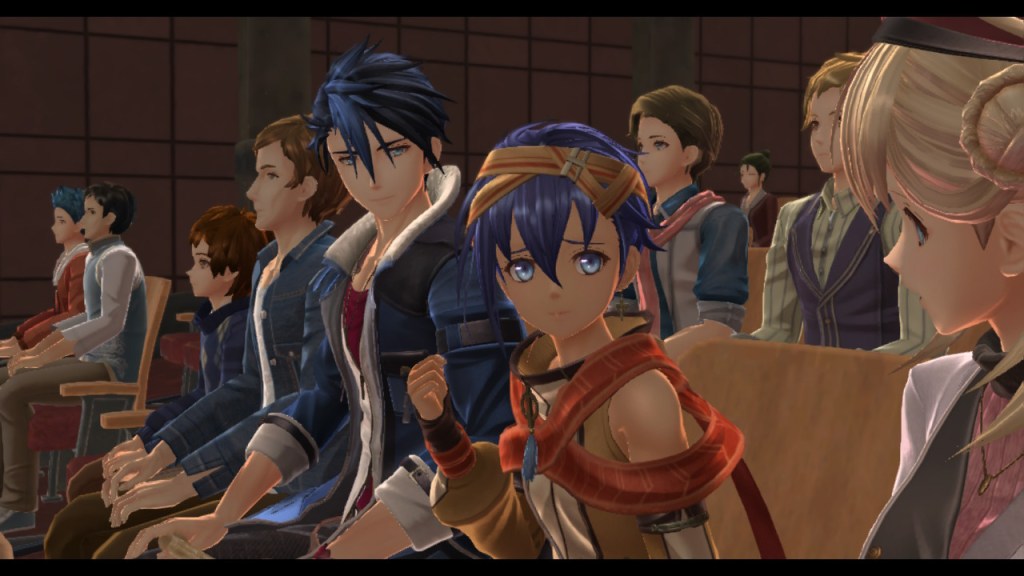
Giving gifts found in stores will increase your connection level with a character. And during your free time you can even go see a movie with friends and increase their connection level that way as well.
Usually they have you collect a series of books as an easy-to-miss hidden objective in Trails games, so it was really refreshing to collect movie brochures instead! It seemed like it would be pretty difficult to miss the brochures – and the side quests – in Daybreak compared to hidden aspects in previous games.
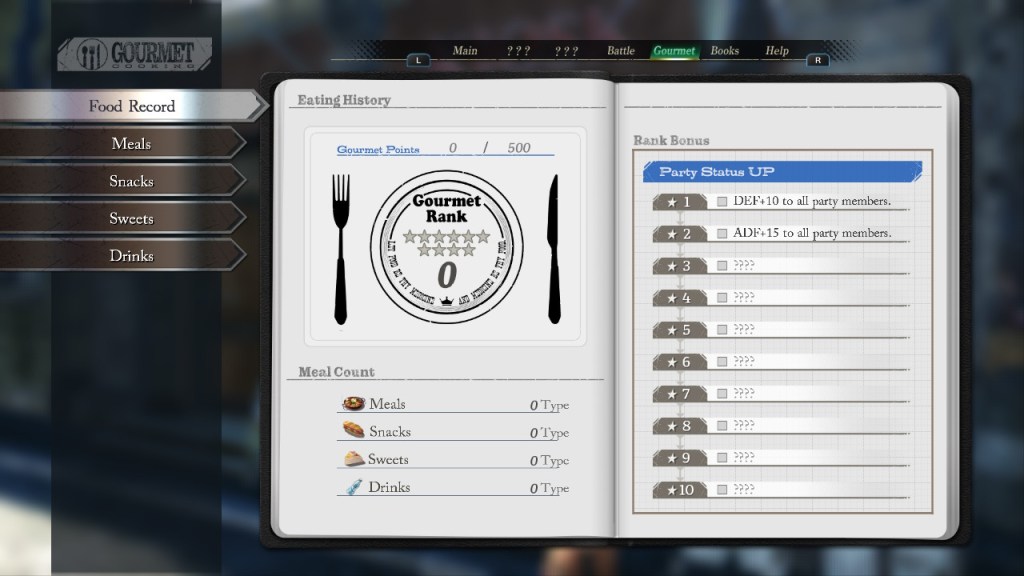
I believe that Daybreak is the first game in the series to exclude fishing as an activity; even Reverie included it. I’m not sure how I feel about that. However, they did keep cooking in the game, and even expanded on it with the Gourmet Points system, which provides your party with stat increases as you try new dishes for the first time.
Arts & (S) Crafts
They also decided to switch things up for the combat system in Daybreak. While previous Trails games were completely turn-based, here they kept the turn-based aspects with Command battles, but they also added an action mode with its Field battles.
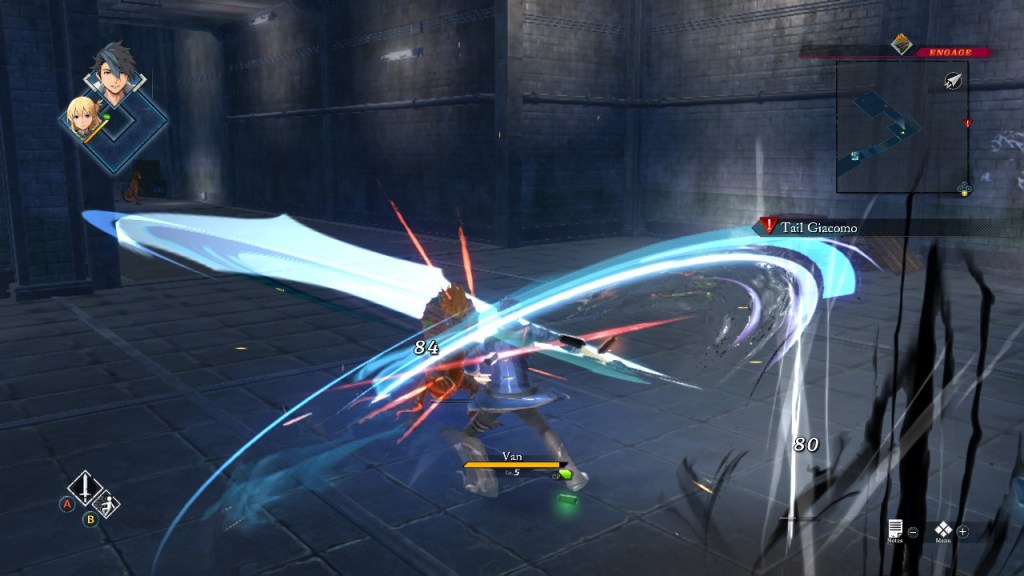
When you run into an enemy, you can choose to attack them in Field battle mode and stay that way until you defeat those enemies. (I was a little disappointed that we can’t use any Arts in the action mode.) Alternatively, you can start in Field mode and stun them with your charge attack, then enter Command mode with an advantage in the turn-based battle.
I do think that they could have taken Field battles further. You can’t fight bosses in that mode, either; I probably would’ve stayed in turn-based mode (Command) anyway if given the choice, but that might disappoint some players.

They also added some new elements to the Command mode. We still use the combat orbment system, inserting different quartz in order to equip Arts (spells). But we can also unlock new passive “Shard Skills” depending on the combination of quartz.
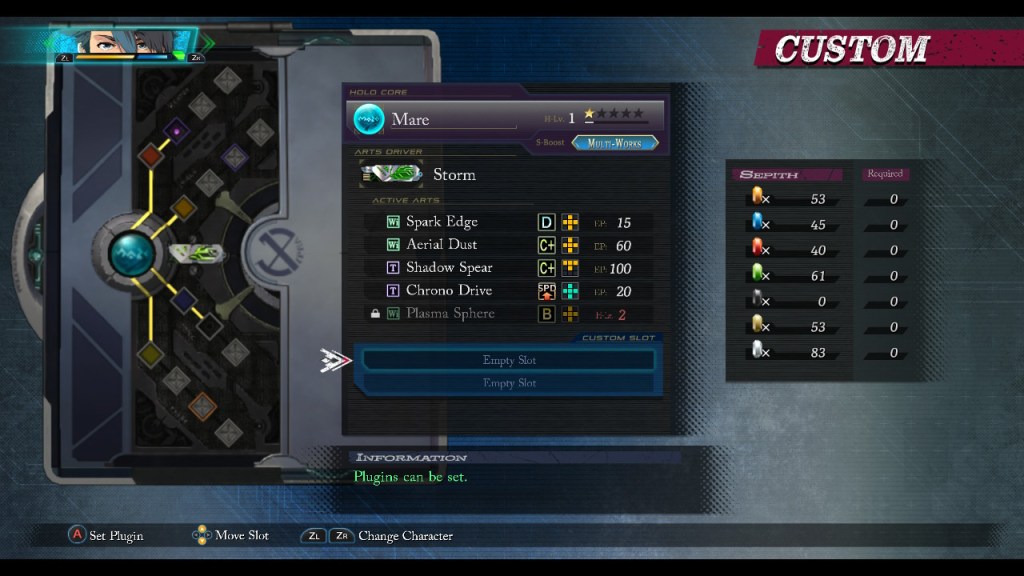
Shard Skills have a chance of activating in battle, with effects such as adding an elemental affinity to attacks, or resisting ailments. Additionally, you can install “arts drivers” with preset arts onto each party member’s Xipha device, as well as some “arts plugins” to add more arts to your arsenal.
Expanding on the Shard mechanics, each character has their own “Shard, Circular, Linked Metafield,” or SCLM for short. By moving your party members close to each other and overlapping their “metafields,” you can trigger follow-up attacks and buffs. You can also activate “Shard Boosts,” which increase the chances of triggering shard skills (and have extra effects depending on your Xipha device’s core).
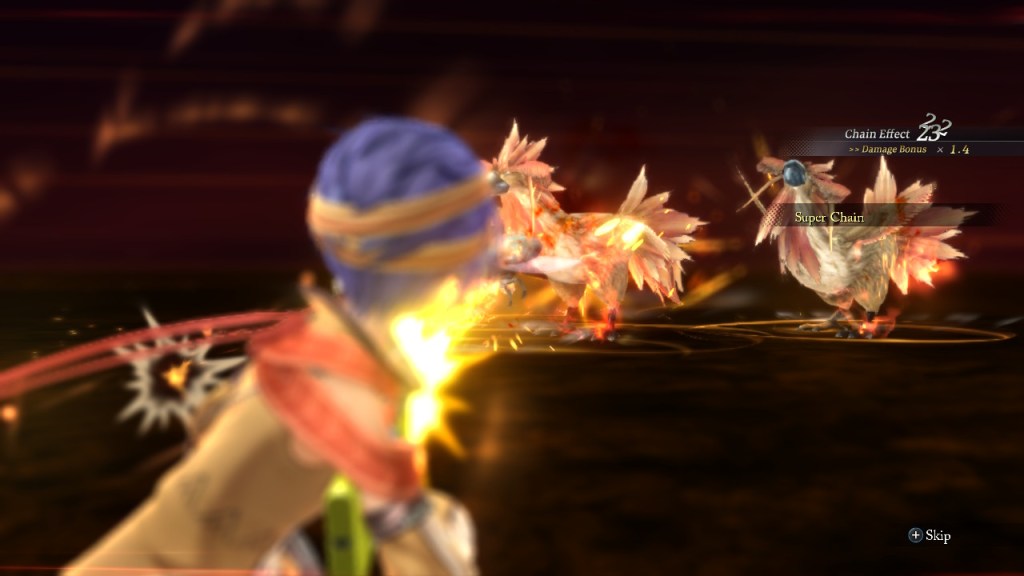
Finally, character-specific crafts and S-crafts return in Daybreak. (I always enjoy watching the animations!) But the more powerful S-crafts now require the Shard Boost meter to have a minimum value to activate them. Overall, I really like the new features added to the combat system.
There are 5 difficulty levels for the Command battles, but only 3 for Field battles. I played on Easy for both modes, so naturally I didn’t find battles overly challenging, and I didn’t have to grind much at all. I might try a harder difficulty in New Game+, but in my first playthrough I prefer to focus on the story.
Criminal Mischief
Another thing the Trails series tends to do well is creating compelling antagonists. While most of their actions are morally reprehensible, the “villain” characters often possess some characteristic(s) that you can’t help but appreciate.

Melchior absolutely stole the show for me out of all the antagonists in Daybreak; he’s not a likable character in the slightest, but his voice actor (Kyle McCarley) did an amazing job of conveying his cruel, melodramatic, and flamboyant nature.
I couldn’t help but sympathize with Olympia, but she was the only one who seemed capable of any redemption in the organization. Everyone else seemed irredeemable to me. While the extreme levels of cruelty were expected, I was surprised by the organization’s true objectives – and the tools they used to complete them.

As a returning fan, I was ecstatic to see how some characters’ backgrounds connected to previous arcs. Both returning and new characters shared connections with the main storylines from Liberl, Crossbell, and Erebonia. Certain subplots in Daybreak even continue from the “Daydream Episodes” in Reverie, which was really neat.
I did want a little more detail on my party members’ backgrounds (but I assume we’ll get that with the sequel in February). It was also somewhat disappointing that we didn’t get some kind of festival tickets in the final chapter to use like in the Cold Steel games.
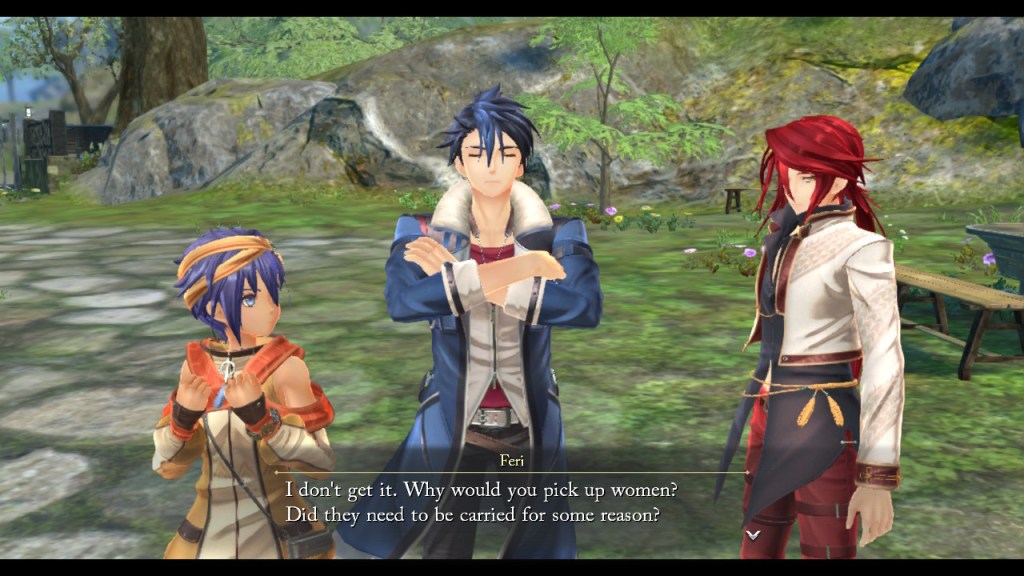
The character interactions I did see were extremely entertaining, though. The Van-Aaron and Van-Judith dynamics often made me laugh, as did Feri’s inability to understand certain expressions. I was also especially fond of Yumé.
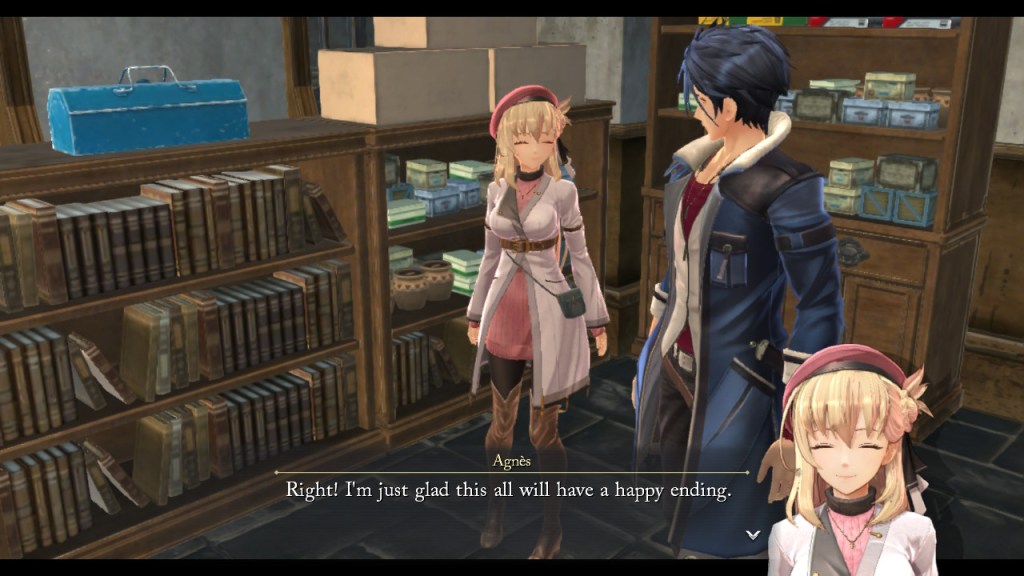
There are just a lot of cute, funny, and/or touching scenes that help to balance out the serious ones, and I was very happy with my experience with Daybreak. I’m really looking forward to the next chapter in the lives of the Arkride Solutions team family (as well as the Trails in the Sky remake in Fall 2025).

 Switch It On Gaming
Leave a comment