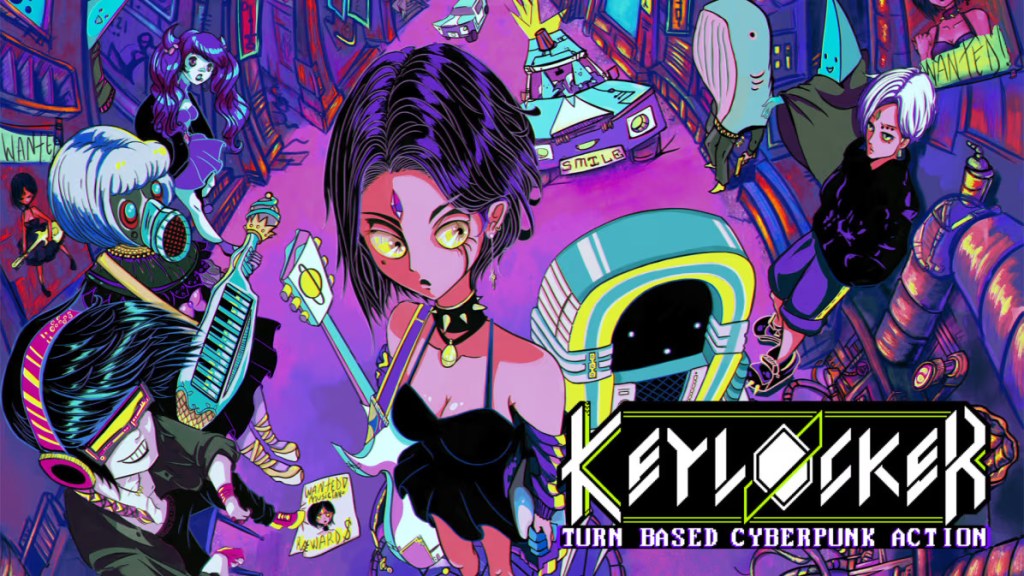
- Price: $19.99 USD (currently on sale for $17.99 until October 9th)
- Developer: Moonana
- Publisher: Serenity Forge
- Release Date: September 18, 2024
A review code was kindly provided by Tinsley PR on behalf of Moonana and Serenity Forge. We thank them for allowing us to cover something they’ve worked so hard on.
Content warning: Depicts scenes of brutality at the hands of law enforcement figures; dystopian society.
Keylocker has been on my radar for a while now, so I’m very excited to finally play it. It’s a “Cyberpunk tactical rhythm JRPG” inspired by the Mario & Luigi RPG series as well as Chrono Trigger. The game takes place on the planet Saturn, where music has been banned for almost 150 years now. 😱
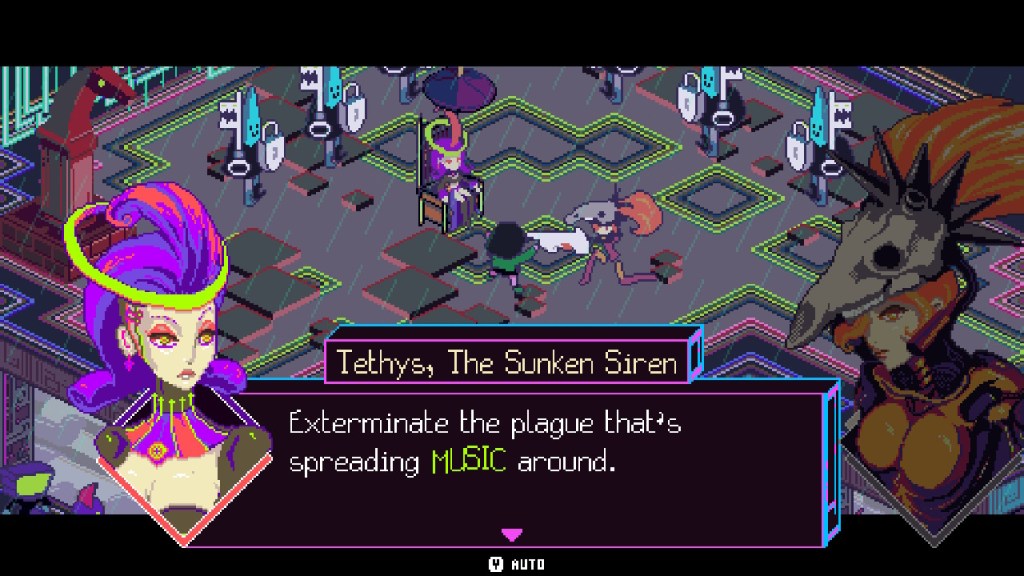
The Satellite Government banned music because it can produce electricity, which the government controls and distributes. Those who live in the lower Zones of Saturn – like main character B0B0 – have it the worst under this system.
As a singer and songwriter, B0B0 wants to use the “power” of music to overthrow the system. Breaking out of prison to escape punishment for her musical crimes, she wants to bring her band back together and “disconcert” the authorities. 😉 🎶
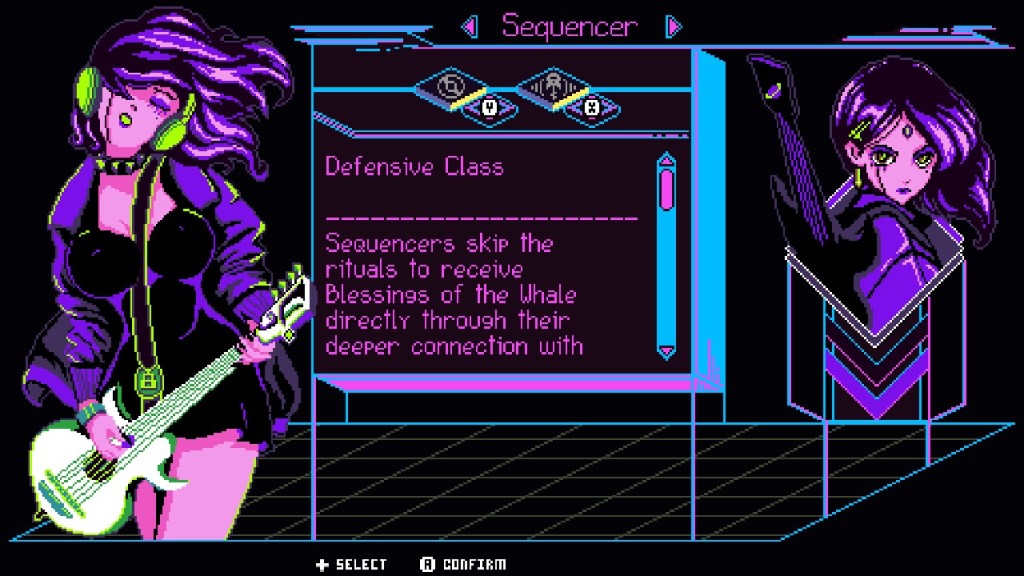
There are 3 difficulty levels (with a fourth unlocked in New Game+), and as you break out of jail in the prologue you get to choose from one of four classes. Apparently your choice of class “will lead to alternate story paths,” and more options become available later on. I really like how they included information on each class, like if it’s more offensive, defensive, or balanced.
Enemies appear on the map, with no random encounters. The turn-based battles take place on a grid, and you have 4 different types of offensive and defensive abilities to use. There are Life and Electric Attacks, which damage enemies’ Life Points (LP) and Electric Points (EP) respectively.
Targeting an enemy’s EP with Electric Attacks transfers EP to you and it can also damage their LP once their EP reaches zero. You can also generate more EP for yourself by using Electric Defense moves. Life Defense abilities, on the other hand, transform EP into Armor Points (AP) to reduce damage.
I found all of the terms a little confusing at first, but there are tutorials provided in various formats throughout the game. I particularly enjoyed the hilarious Rules of Conduct on Saturn, which tell you that something is illegal (with the implication being that you should do those things to do well in battle).
You can also find tutorial items as you explore; however, when I went to access them (or anything else) in the menu, the font and text size make them a bit hard to read. I managed to read them and figure things out, but it might be problematic for those with vision issues.
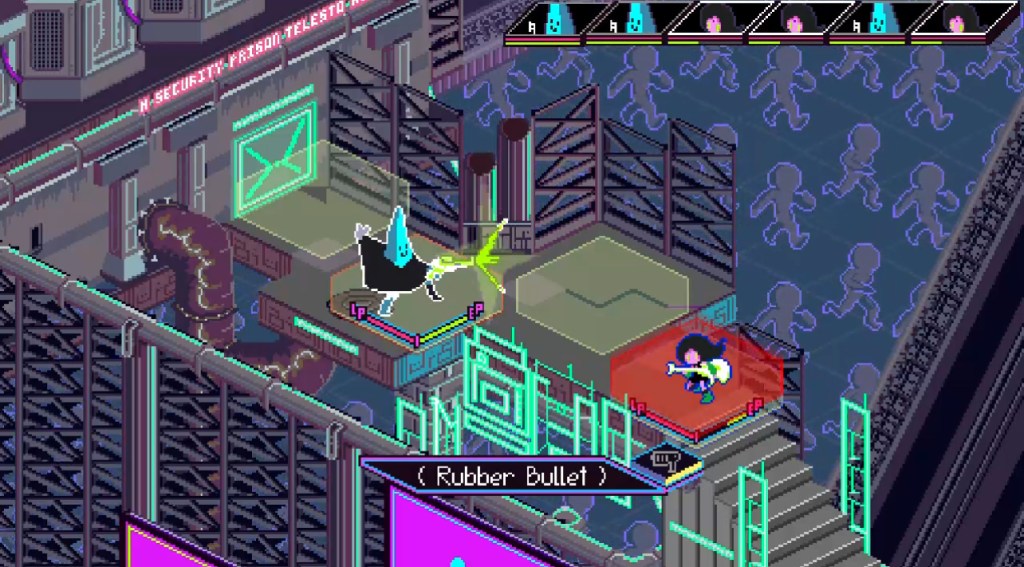
Anyways, whether you attack or defend, you need to pay close attention to the Timed-Hit Prompts (as well as the direction your party members are facing). When an enemy attacks you, there’s a point where their outline will very briefly flash white – that’s when you need to quickly press the A button.
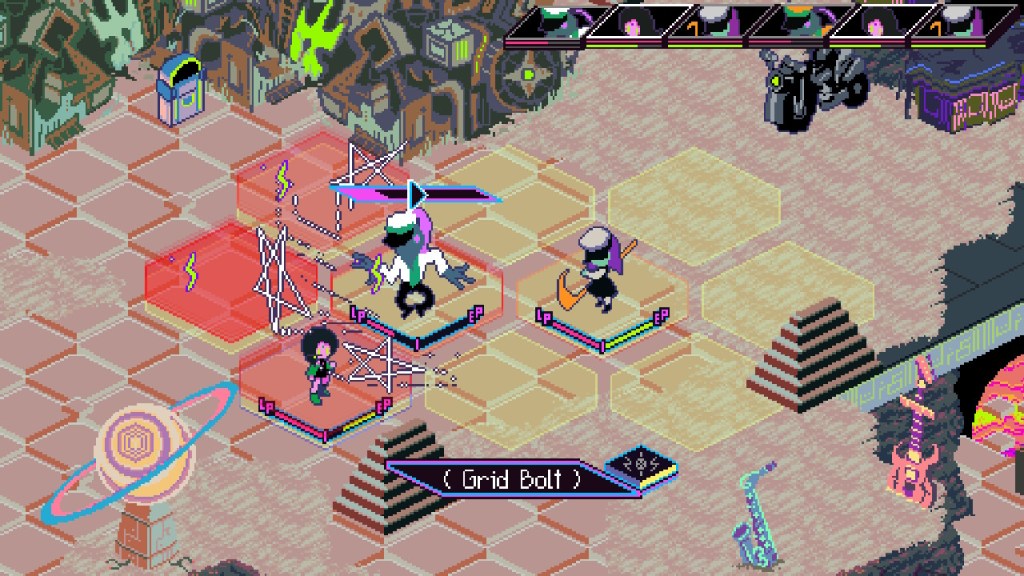
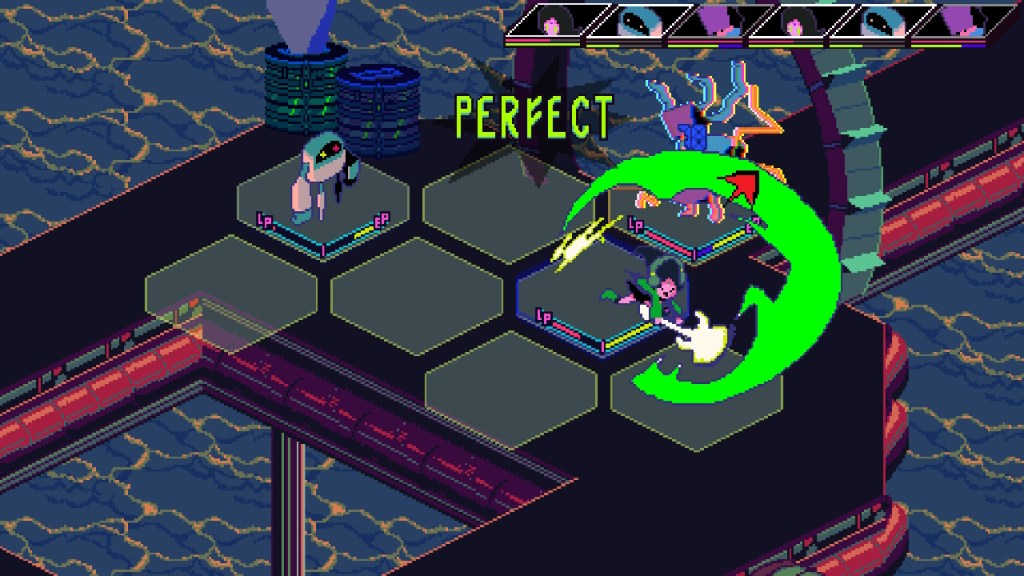
Other enemy abilities require you to press directional buttons or stop the cursor right in the center of a bar. Some enemies can counter your attacks, so you have to be ready to defend against their counterattacks as well. When you attack, you need to watch for the white outline on your characters, and some defensive abilities have you complete short rhythm game segments.
I decided to play on the normal difficulty at first (before changing to the lowest in Chapter 2), and it took me a few hours to get used to the Timed-Hit Prompts in combat. Thankfully, they give you some practice battles as you break out of jail, and if you are defeated at any point you can just restart the battle.
Being able to restart battles was a huge plus for me – especially for some of the boss battles. For a handful of boss battles they introduce an “Orbital Resonance” tether system that connects 2 bosses together. It prevents you from damaging them unless you deliberately put one of your characters in harm’s way on a tile with the tether.
I really liked the battle mechanics once I got the hang of things, but the fights can be challenging. If you hit the wrong button or fail to react in time, you might want to restart. Due to the higher level of difficulty, an auto feature for the Timed-Hit Prompts might have been nice for accessibility.
As far as I could tell, we can’t run from battles; I didn’t love that because when the Danger meter is high, it seems almost impossible to cross an area without constant battles. Additionally, some environments have objects that partially obscure enemies, which makes it harder to see the white outlines.
On the plus side, I really appreciated the integration of music into the battle system. It’s nice that we get to kind of confirm actions before doing anything, and I was extremely happy that using items doesn’t cost you a turn. In fact, you can use healing items on multiple characters in a single turn before using an ability! Healing items can be used on party members from any distance on the grid, too.
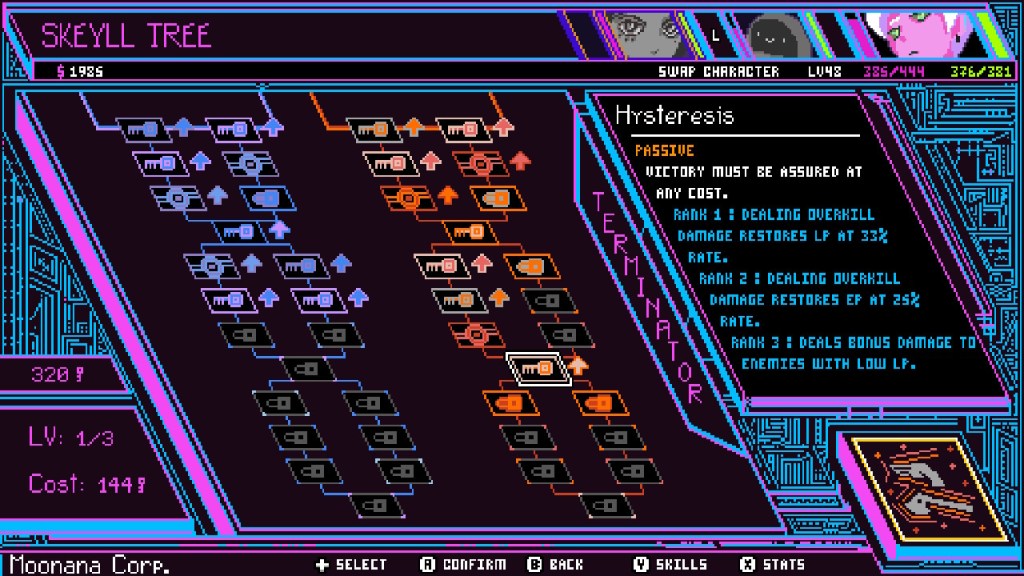
When you emerge victorious from battle, you earn Macros (currency) and keys (for skill trees) for winning each battle. Every non-guest character on your team has their own “Skeyll Tree”; spend keys to unlock offensive and defensive abilities as well as Skill Programs that can be applied to either type of skill as a passive enhancement.
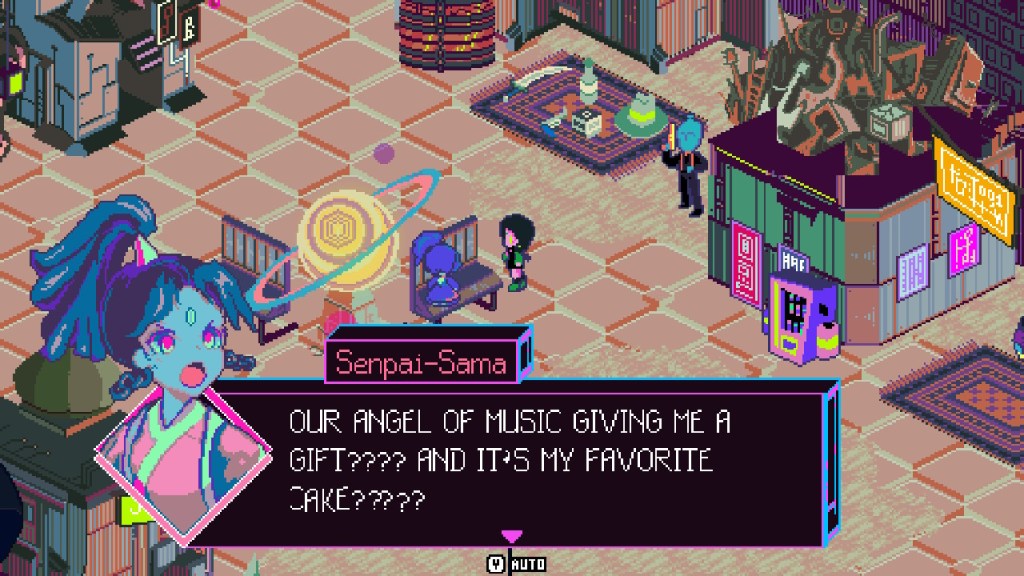
You can spend your hard-earned Macros on consumable items at vending machines, or on “hardware” you can equip. There are also gift items that you can purchase and give to certain characters, which I didn’t realize until I was further into the game. The friendship/romance system is said to be inspired by Stardew Valley, which is neat.
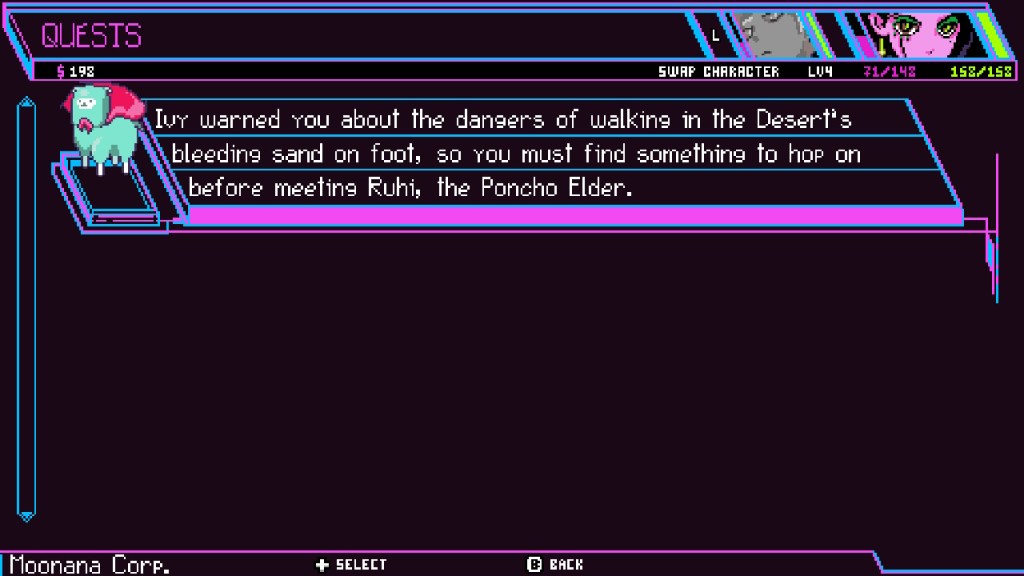
Besides the main quest lines, you can also complete some side quests for people. The game keeps track of them for you, but it seemed like it stopped doing so for me after Chapter 3? And speaking of keeping track of things, I found it difficult to advance the story sometimes (particularly in Chapter 4) for a few reasons.
Some environments felt a little cluttered to me; you have to pay close attention to the button prompts to figure out where to jump or climb. There isn’t a mini map, so it’s easy to get lost and confused about where you’ve already been.
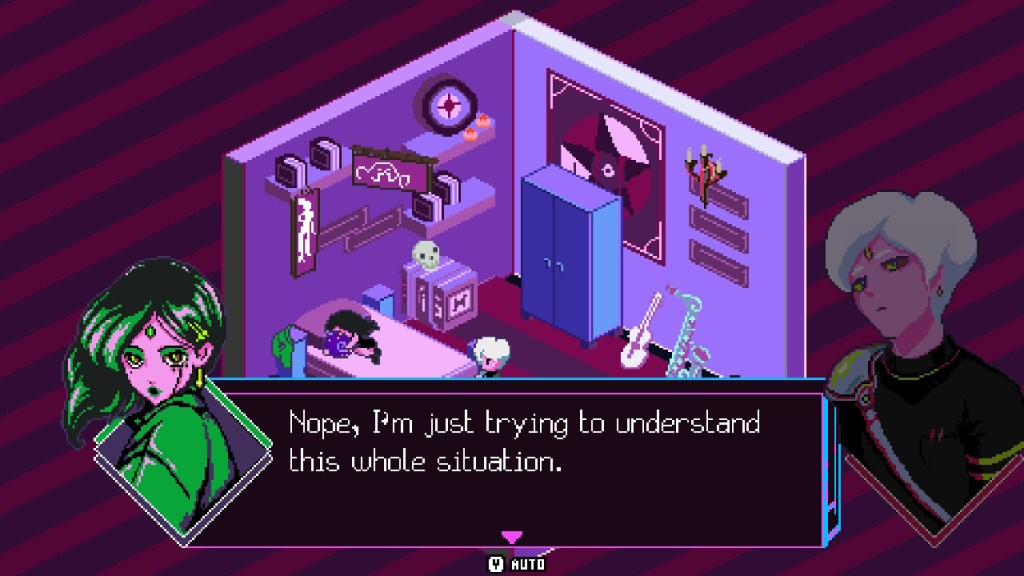
They also don’t give super clear direction on where you’re supposed to go (or what you’re supposed to do next). Even when the quest log was working I felt like I needed more explicit instructions sometimes.
The quests give some guidelines on what you can do, but whenever I thought I’d finished everything in a location it wouldn’t clear the quest. I often found myself wandering around in circles, retracing my steps and trying to figure out what to do.
I was impressed by the amount of objects we can interact with in each area. When you examine those items there’s a decent amount of cultural background and occasional sass. There’s a lot of (fun) weirdness on this version of planet Saturn – especially when it comes to the various types of sentient beings – but it’s all really interesting to experience.
As the main character, B0B0 has an unusual perspective in that she refuses to remain passive in the face of governmental oppression. She frequently comments on the economic and sociopolitical issues on Saturn, such as the caste system. The writing even delves into the planet’s religious practices, which also appear to be connected to the government.
I don’t know if I’d say I understood every part of the plot and setting, but I still really appreciated the creativity that went into developing everything. Even the slang and “swearing” relates to music (“jam it”), and I do love some good wordplay!
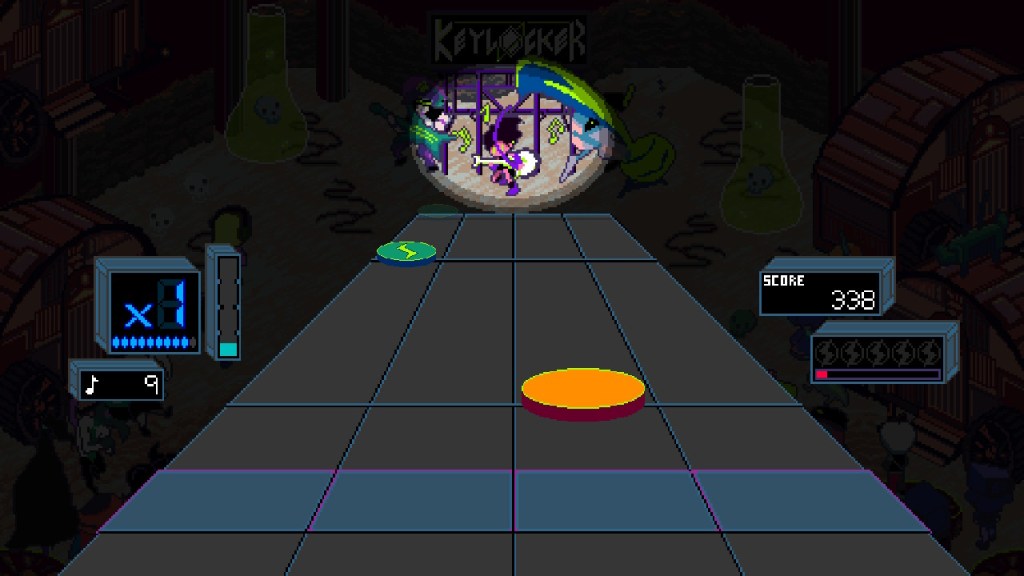
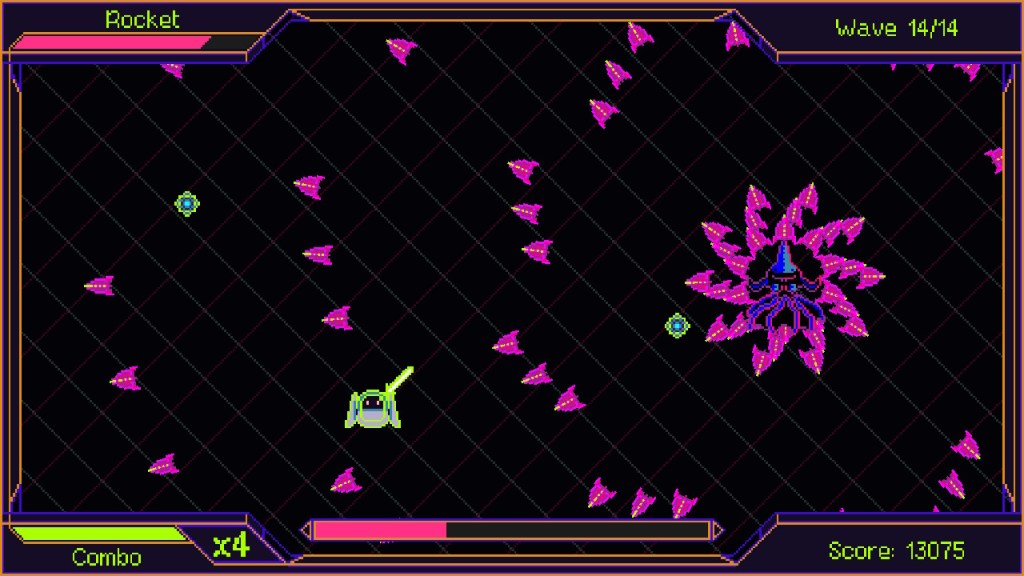
You have to complete some mini games related to music as part of the storyline. There’s a hacking mini game where your robot friend literally “hacks” enemies to pieces, but then you also have rhythm game sections to play. I found the rhythm game portions quite challenging even on easy; you get scored between 1-5 Volts, which I assume might have something to do with the ending you get?
I got Dissonance Ending A, which wasn’t really a happy ending. I’m not sure how many endings there are, but I’d be interested in seeing what happens when you make different decisions in other playthroughs.
It took me about 25 hours to beat the game on my first playthrough. There are seven chapters (plus the prologue and an interlude). I was excited to see that we can use our clear data for New Game+. That’s one of my favorite features in a game.
In New Game+, you get to keep your money and all your hardware. Initially it seemed like I started at level one again, but after the first tutorial battle my level went back to what it was at the end of my first playthrough. Your keys for the Skeyll tree are refunded to use on new class trees, and it appears that affection is also carried over.
There’s definitely a lot to like about Keylocker. I think my biggest issue with the game was confusion about what was going on and what I needed to do next. Accessibility could also be improved in some areas, although the ability to restart battles is a mitigating factor. Other than that, I think there were some frame rate issues around Chapter 6 or 7, but for the most part the performance was good.
As a game about music, the game definitely lives up to its potential there. I thought the soundtrack was fantastic. And I also loved the character portraits and CGs, as well as the character models on the overworld, with delightfully wacky NPCs.
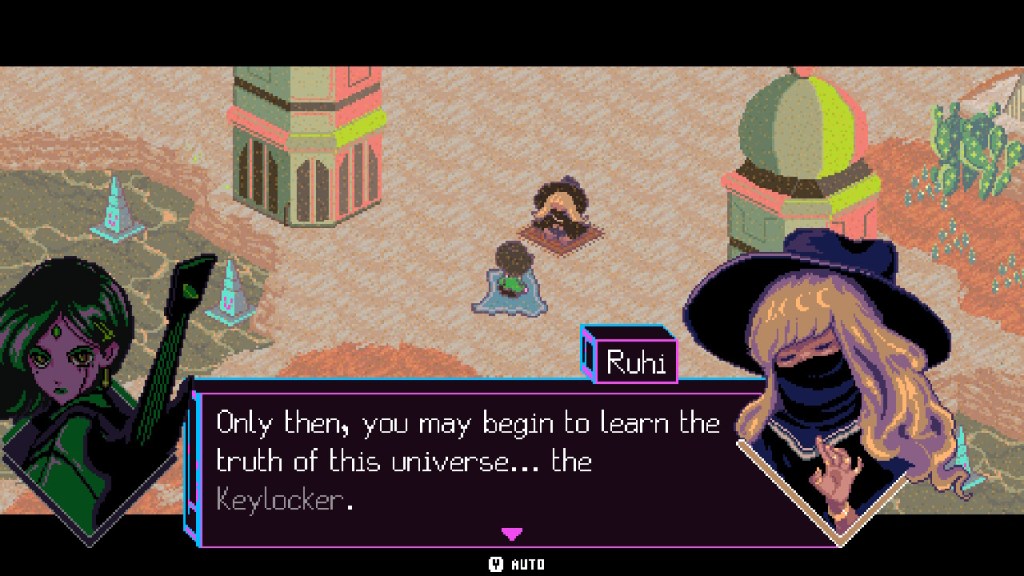
Keylocker has a great concept with an engaging battle system. If challenging battles and mini games appeal to you, you might want to check this out. With multiple classes and endings to experience, it seems like it’s a game with a decent amount of replay value at a low price.
 Switch It On Gaming
Leave a comment