
- Price: $19.99 USD
- Developer: sunset visitor 斜陽過客
- Publisher: Fellow Traveller
- Release Date: May 9, 2024
A review code was kindly provided by Fellow Traveller on behalf of sunset visitor 斜陽過客. We thank them for allowing us to cover something they’ve worked so hard on.
Content warnings: Rated M. “This game may contain content not appropriate for all ages: Cursing and Crude Language, Generational Trauma, Acts of Violence and Terrorism, Disease Outbreak, Mention of Suicide, Mention of Animal Cruelty/Pet Death, Blood, Body Horror, Emotional Abuse, Bullying, Dead Bodies, Vomit, Drowning, Fire, Gore, Needles, Racism and General Mature Content.”
1000xRESIST is a “sci-fi narrative thriller” that combines third person adventure, visual novel, and first person walking simulator elements. It looks and sounds like a really unique experience, with inspirations such as NieR: Automata, 13 Sentinels: Aegis Rim, and SIGNALIS.
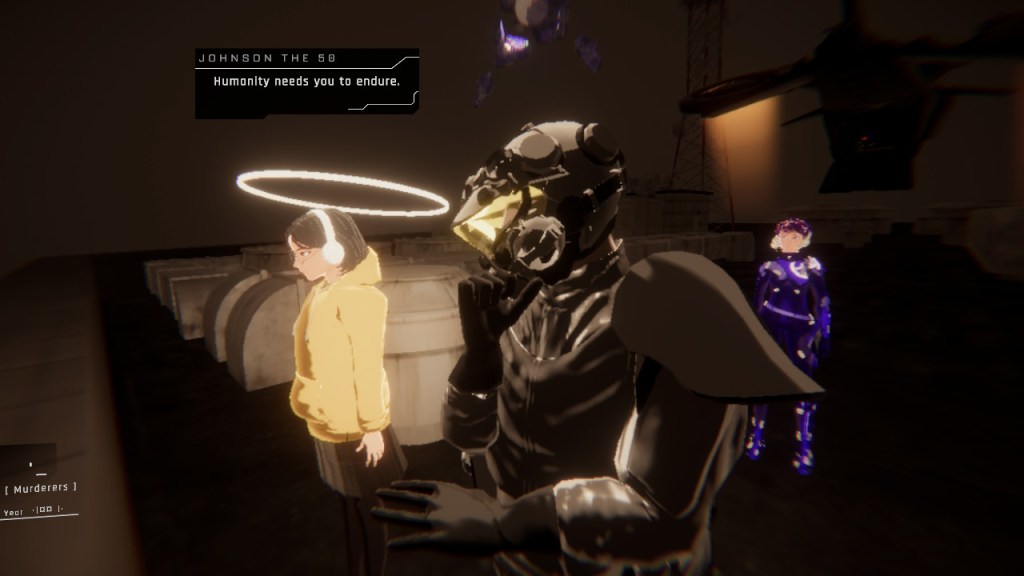
The story goes that in the future, an alien race known as the Occupants inadvertently brings an infectious disease to Earth when they land. In a few short months, that disease kills all of humanity, with the exception of Iris, a teenage girl who is immune to the disease for some reason.
After 1,000 years, Iris is still alive due to some sort of immortality. It would be awfully lonely as the last human in existence, so she created a new society by cloning herself. She’s known as the “ALLMOTHER,” while her clones are called “Sisters.” Sisters do not share her immunity to the disease; it seems like they’re not perfect clones of Iris.
They’re now at war with the Occupants. The Sisters all have roles to play in Iris’ society, and as the “Watcher” Sister, you get to witness past events by diving into the ALLMOTHER’s memories through Communion. In doing so, you’ll discover the truth behind the creation of this society.
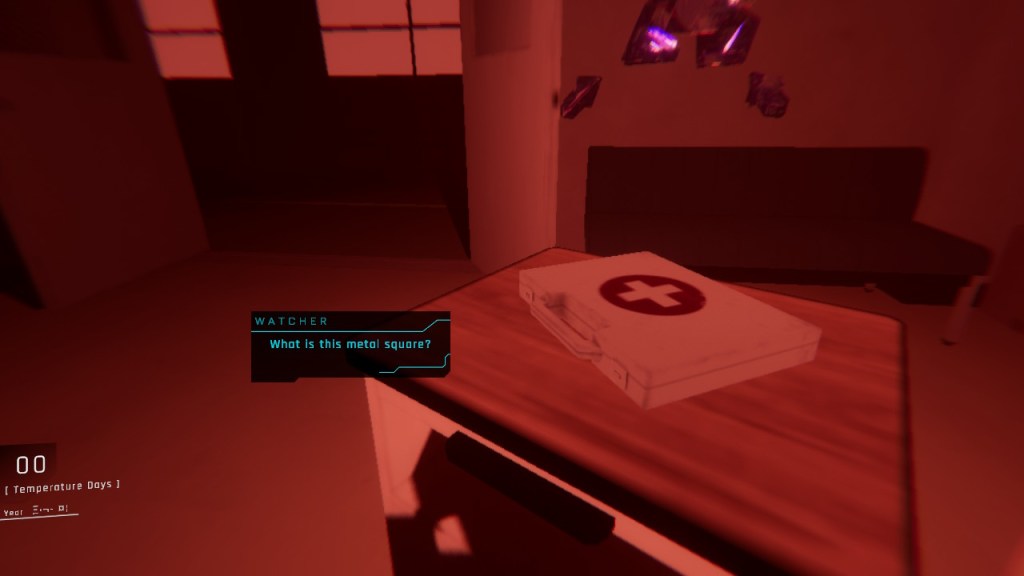
As you walk around and interact with the ALLMOTHER’s memories, people will talk to you as if you are Iris. This makes for some interesting conversation given the differences in societal norms between now and then. Watcher is followed by a floating AI companion named Secretary, who explains obsolete items and concepts to you.
I really liked how they played sound effects to alert you to the items or people that you can investigate as you walk past them; I’m not always great at noticing these things, so this was a helpful feature. You’re provided with objectives while in Iris’ memories. If you can’t find the person or place you need to get to, you might need to switch the memory’s time period.
They use a lot of different techniques to tell the story in 1000xRESIST, and the time travel component is one of my favorites. You’re not actually time traveling, but changing the time period for the memory in your current location. Your next destination may be blocked off, but if you change the time period you can access that area and then switch back to the initial time period to continue.

The “zipping” mechanic is another vehicle they use to “move” things along. Occasionally you’ll find yourself in a place with icons in the air; you target them and release, and fly through the air towards that point. Then you must quickly suspend yourself in the air to find the next zip point and continue on that path until you’ve reached a destination on the ground again. It’s such a strange experience, but I think it represents the physical and mental disorientation one might feel in these memories.

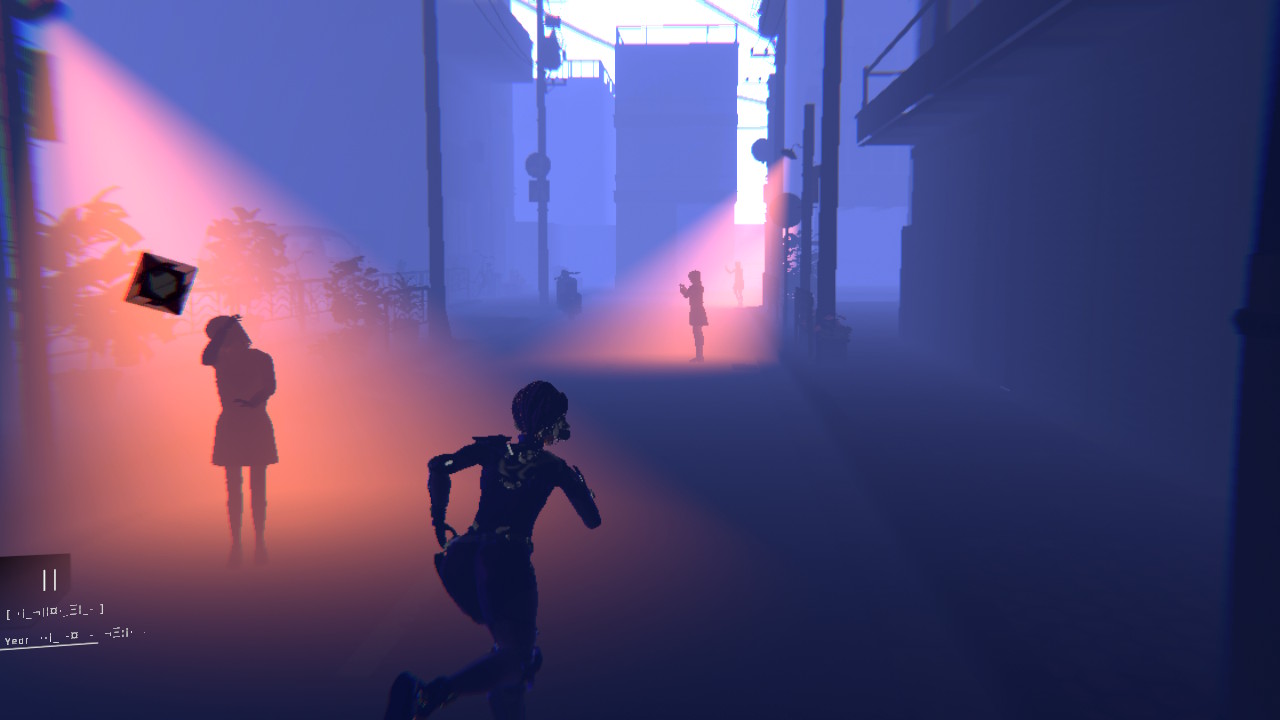
While you can interact with the people in Iris’ memories, there are some points where you don’t seem to be in a memory, but in some kind of eerie “in-between” where several versions of a person await you. There are also some flashbacks we see that don’t seem to require Watcher’s presence.
Your perspective during Communions shifts between fixed camera, first person, top-down, side-scrolling, and over-the-shoulder third person. Personally I’ve never cared for first person perspective, but the shifts – while jarring – certainly felt like an appropriate choice for the twists and turns in the narrative.
Communing with Iris’ memories is a large part of the game, but you do get to interact with the other Sisters in the current world in between Communions. They live in “the Orchard” together, which also happens to be a confusing maze of a place. (Thankfully a map was added to the game later on, but I still found myself getting lost. 😅 A fast travel option may have been helpful.)
From the very beginning I had some concerns about this society, from the cult-like phrases (“Grace to the ALLMOTHER,” “hair to hair,” etc.) to the lack of real names for the sisters. I was reminded of how the clones in Star Wars were given designations like CC-2224 instead of proper names. Refusing to allow someone an individual name is dehumanizing; I wondered why Iris chose to classify the Sisters based on their roles.
When the “top” Sister in a role needs to be replaced for some reason, the Sister who replaces her is given the same exact designation. If Watcher ever ends up being replaced, the next Sister would still be called Watcher without any numbers or anything to indicate that they’re different people. Was this done maliciously to deny individuality, or did Iris do this to minimize the pain she feels when a Sister dies? 🤔
Getting to know the Sisters in the Orchard is a fascinating glimpse into the inner workings of Iris’ society. They don’t have individual names, but they do have different hair styles/colors and uniforms. After 1,000 years, there’s naturally a lot of differences between the worldview Iris grew up with and the culture in this society of Sisters.
The Sisters never lived in a world with multiple cultures, languages, or religions. Their society is more monotheistic based on “worship” of the ALLMOTHER. It’s all they’ve ever known, so when they discover an obsolete concept from the past such as multiple religions, they comment on how “messy and confusing” things must have been in the old world.

It sounds like a very serious atmosphere, yet the Sisters still inject some levity into their everyday lives. They do their best to document their society’s history and culture. Sisters write poetry and put on plays about their history. Whether the content of the plays is historically accurate is another matter. History is written by the victors, after all, and as the last human standing the so-called victor would be Iris.
Everything is (metaphorically but sometimes literally) colored by Iris’ perception of events. We don’t know if we’re getting a completely accurate representation of what happened in her life. Her later memories are depicted in a dark, gloomy combination of red and black. Was Iris aware enough of current events when humanity came to end, or was she in more of a dissociative state at that point?

Being the only survivor is extremely traumatic, and the writers made the effort to also show her relationship with her parents prior to the end of humanity. They immigrated to Canada after the situation escalated in Hong Kong. Iris’ life wasn’t perfect prior to outliving everyone; generational trauma and the effects of different “governments” remain an important theme over the course of the game.
Ultimately the story in 1000xRESIST is rather tragic yet emotionally compelling. I don’t know if I fully grasped the ideas that were presented, as I was confused at times. I didn’t understand everything that transpired between Iris and her old friend Jiao, or the sudden transition in Chapter 6 at first.
Eventually I figured some things out as I advanced to the next chapters, but I still came away from the game feeling slightly discombobulated despite understanding the basics of the story. I went through a wide range of emotions across the game’s 10 chapters; I was often anxious, confused, and disturbed, yet also intrigued.
I like the idea of the way they designed the path for multiple endings, but felt that the actual endings could have been longer and stronger. But overall I was really impressed by the artistic quality of 1000xRESIST. The cinematic scenes and the graphics in general looked great, and the game runs well on Switch. I didn’t notice any frame rate issues.

The game’s 15,000 (!) lines of dialogue are fully voiced, and I thought the voice actors did an amazing job. My main issue was that I often felt lost – physically even with a map, but also intellectually. (I also really disliked the timed zipping section in Chapter 10.) That being said, it’s incredible how they managed to stimulate the player both emotionally and intellectually, as I’m still questioning things and developing theories after playing. I just can’t…resist. 😉
 Switch It On Gaming
Leave a comment