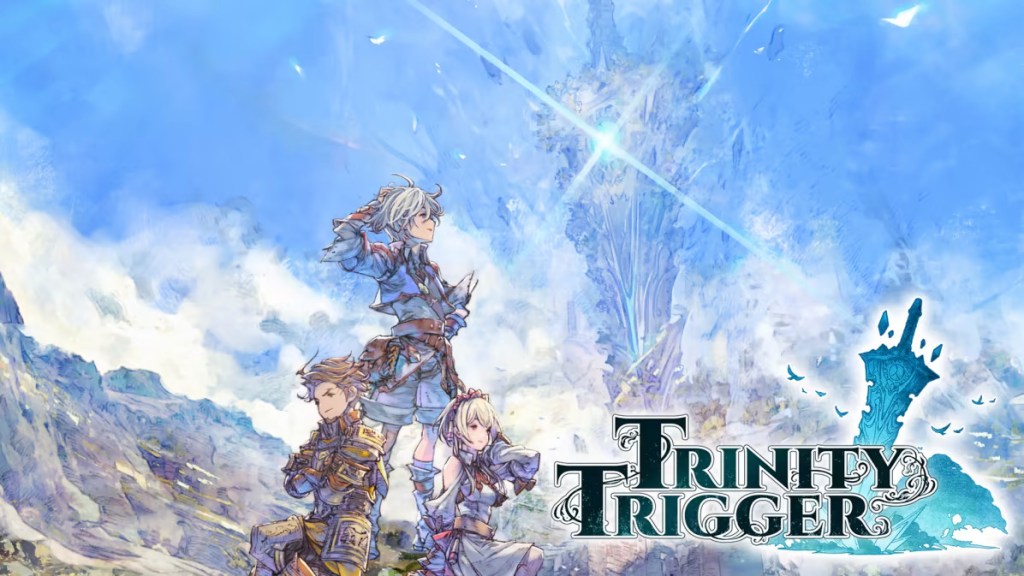
- Price: $49.99 USD (digital), $59.99 (physical)
- Developer: Three Rings Inc.
- Publishers: XSEED Games, FuRyu
- Release Date: April 25, 2023 (NA); May 16 (EU)
A review code was kindly provided by One PR Studio on behalf of XSEED Games, FuRyu, and Three Rings Inc. We thank them for being able to cover something they’ve worked so hard on.
Trinity Trigger certainly benefits from professional experience on past JRPGs, with contributions from Trial of Mana’s Yuki Nobuteru (artist) and Hiroki Kikuta (composer), Xenoblade’s character designer Raita Kazama, and the scenario writer for OCTOPATH TRAVELER, Yura Kubota.
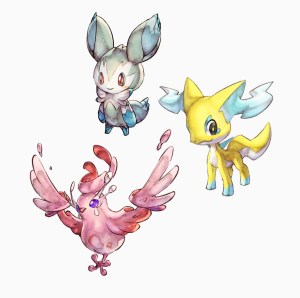
Atsuko Nishida, Tomohiro Kitakaze, and Megumi Mizutani, who all worked on the Pokémon series, designed the absolutely adorable Trigger characters. The talented group of people working on this game, along with its creative weapons system and intriguing idea for a story, really made me want to play it.
What “Triggers” the Events that Follow?
As Trinity Trigger begins, you’re told that long ago, a war between gods began. Both the celestial realm and Trinitia, where humans live, felt the effects of this war between the Gods of Order and the Gods of Chaos. During those conflicts, holy weapons fell down to Trinitia and permanently changed the environments surrounding their crash sites. There was no clear winner of the war at the time, but I think it’s safe to say that humanity will continue to suffer for the gods’ actions.
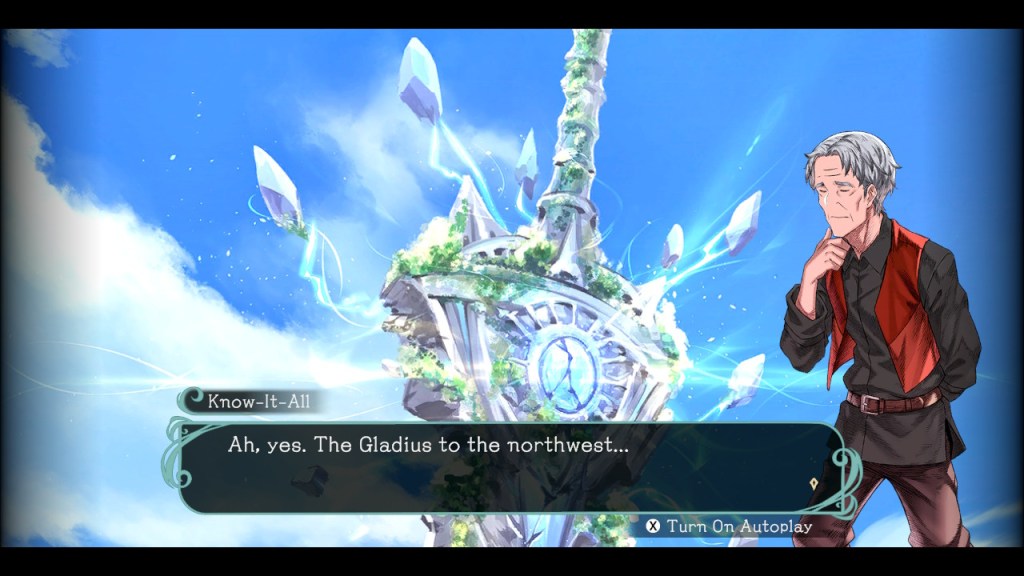
Once they wrap up the brief explanation of the lore, the story shifts to Cyan, who works as a Scavenger and sells materials found in dungeons called Armas. These Armas are gigantic towers in the form of the divine weapons that landed in Trinitia during the gods’ wars. Cyan is only a novice Scavenger, and he works by himself too, so he can’t go too far into the Arma next to his village.
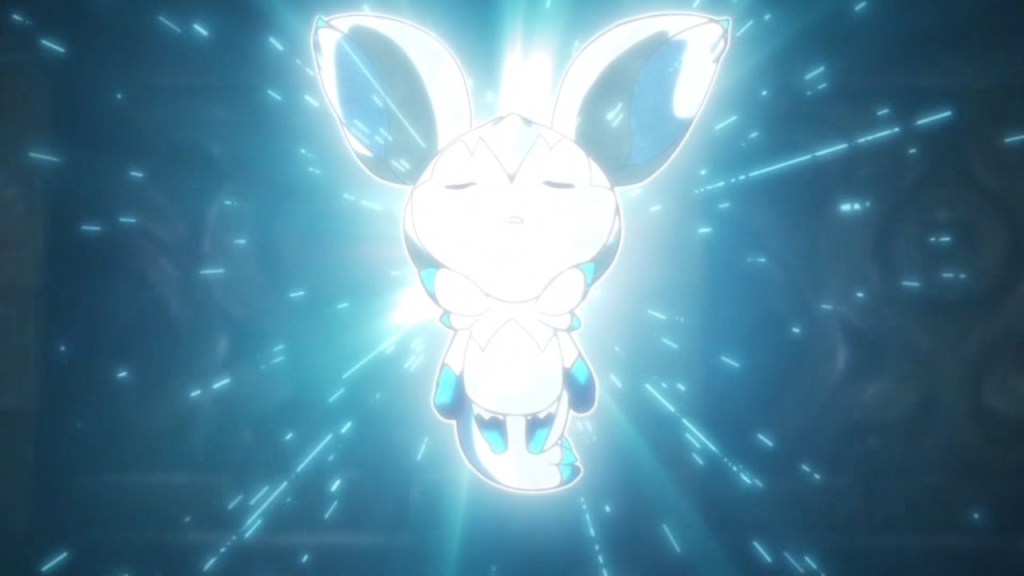
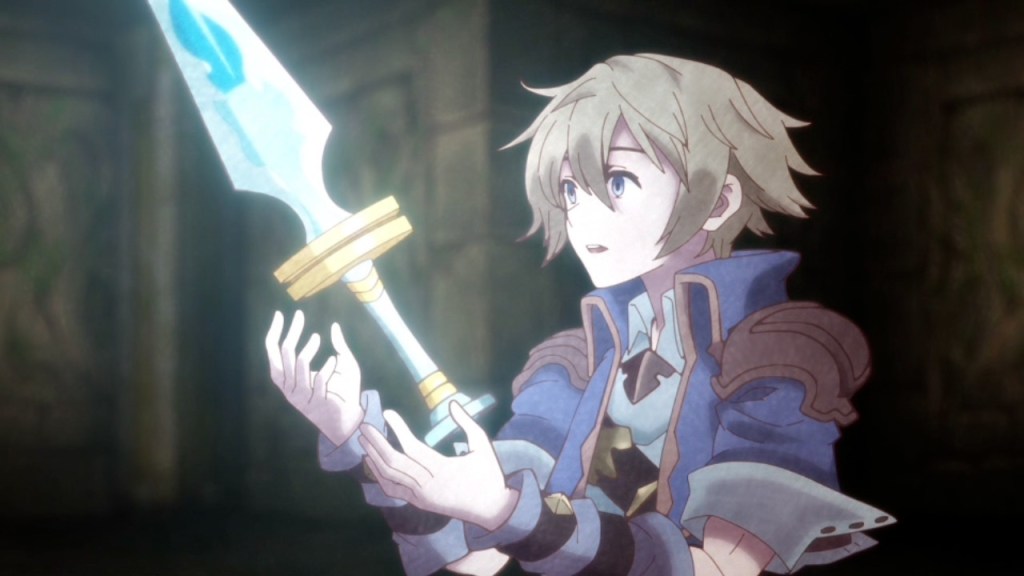
He finds a hidden section of the Gladius Arma, and encounters a monster that takes no damage from his meager weapon. Our hero is in trouble when suddenly Flamme, an adorable creature, appears in front of him and transforms into a weapon. Now equipped with a proper weapon, Cyan manages to defeat that monster and safely return home.
To Cyan’s dismay, once he returns home a woman named Elise tells him that his life is in danger. The war between the two god factions has continued into present day using proxies: human God Warriors. Cyan has had the mark of a God Warrior since birth without knowing what it meant, and naturally he wants nothing to do with this fight. He reluctantly agrees to go with Elise to try and convince the other God Warrior not to fight him. On the way to your destination, you’ll encounter additional Arma dungeons where you can unlock more weapon options.
Puzzles & Monsters & Traps, oh my!
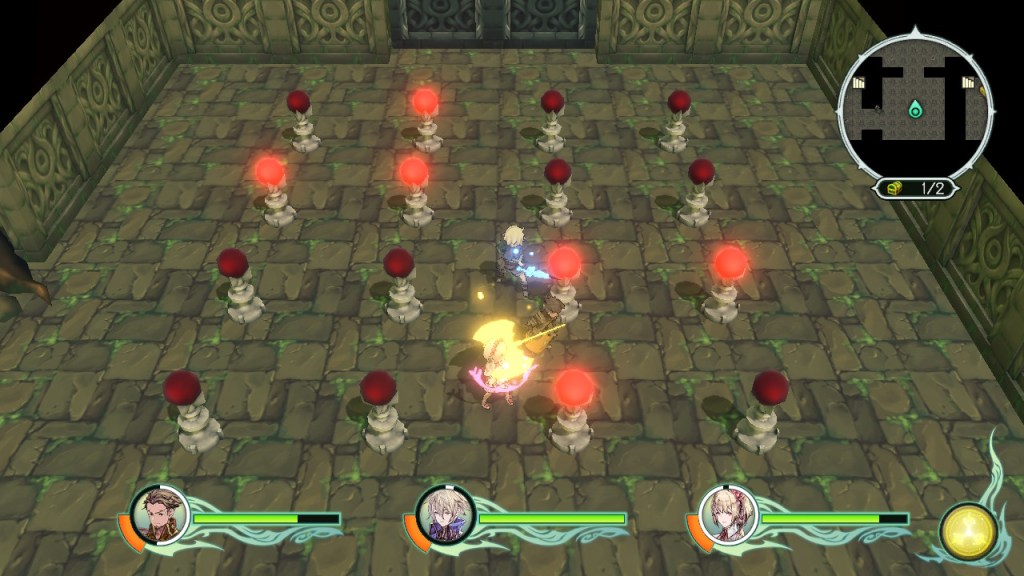
As you try to locate the people who are after Cyan, you’ll travel from town to town and visit any Armas that are close by. In between those towns (and in Armas), you’ll face more than just monsters. There are also environmental hazards to watch out for in the screens where combat occurs. An Arma may have arrow traps, or plants in the wild might hit your party with status effects if they’re destroyed. Armas also contain some basic puzzles that you’ll need to solve.
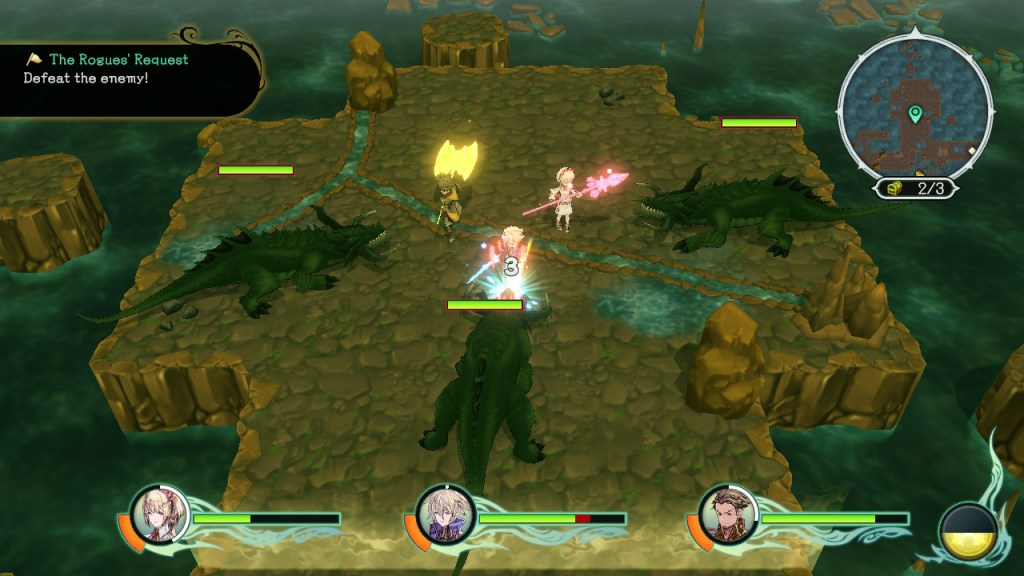
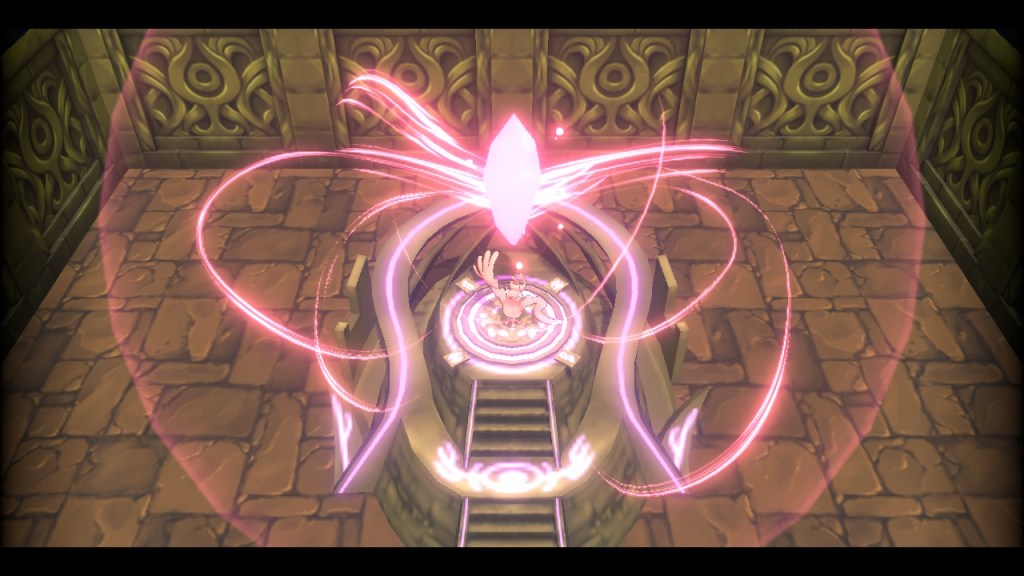
You can destroy some parts of the environment, such as rocks or cracks in Arma walls, but the main targets will of course be the monsters. Combat is action-based using Triggers. As Elise explains, they are creatures that can transform into a variety of weapons – provided that you’ve been to a weapon’s Arma and performed the ritual that teaches that weapon to the Trigger.
Lethal Weapons 3
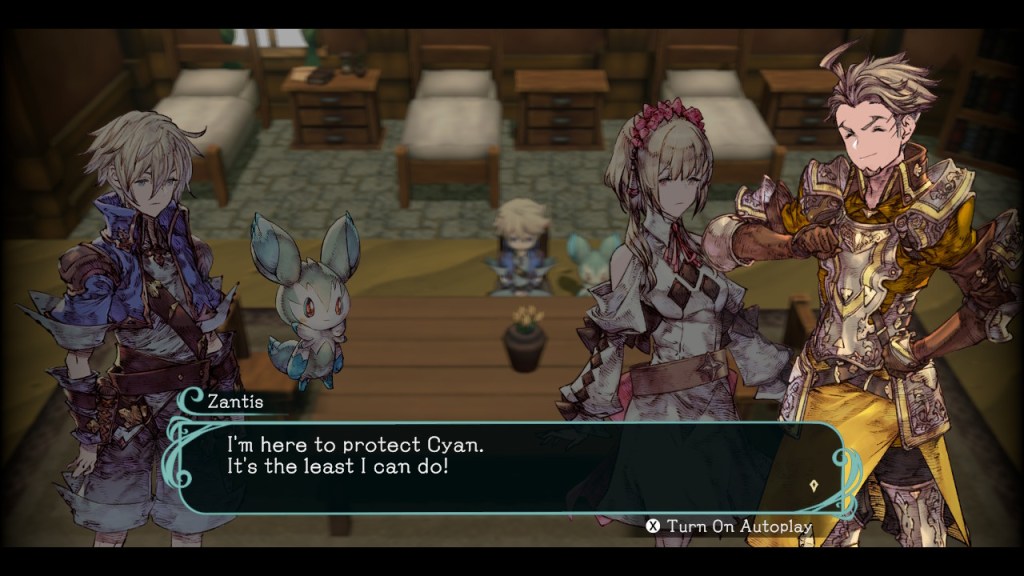
Eventually, you’ll meet the third and final party member named Zantis, who also has a Trigger. Flamme starts as a sword for Cyan, Oise as a bow for Elise, and Rai as an axe for Zantis. However, while the main hero in games often gets some special treatment with their abilities, in Trinity Trigger all three characters’ Triggers can learn how to transform into every weapon!
The character you are controlling will display what is known as the Synchro Gauge; your attacks decrease the gauge, and once it’s been drained all the way the damage you do goes way down. Honestly, I didn’t love this mechanic because I’d have to wait until the gauge filled back up to attack again.
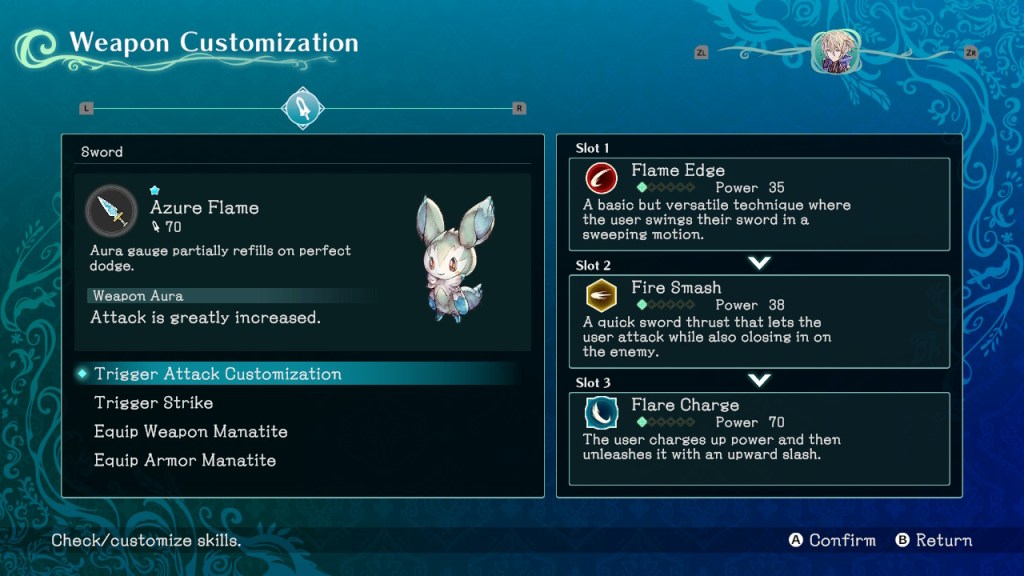
Characters’ “regular attacks” actually consist of customized combo abilities for each weapon a Trigger has unlocked. Weapons have three ability slots with two options each for you to choose from; you use the TP you earn to unlock the abilities you want to use for each weapon. These abilities can also be leveled up using TP.
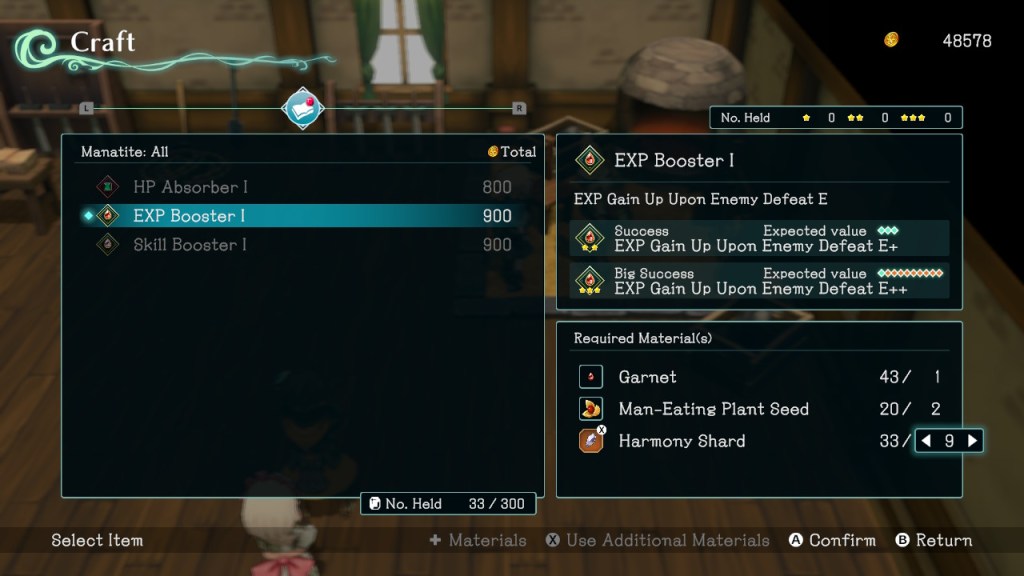
Another way you can customize your Triggers’ weapons is with Weapon or Armor Manatite, which are gems you equip in the weapon and armor slots on each weapon. I appreciated that players don’t to worry about buying armor or better weapons all the time – how could you dispose of fluffy Flamme, anyways? 🥺
Manatite can be purchased, found, or crafted; crafted Manatite tend to have more beneficial effects. It took me a while to realize that I needed to equip each weapon on each Trigger with different Manatite – they don’t apply to each weapon on a single Trigger.
I did wish we could modify existing Manatite and add effects to them, though. It doesn’t seem like you can choose what effects are added to the Manatite you craft, either. (You can also craft healing items, but unfortunately they limit your inventory to 10-20 each.)
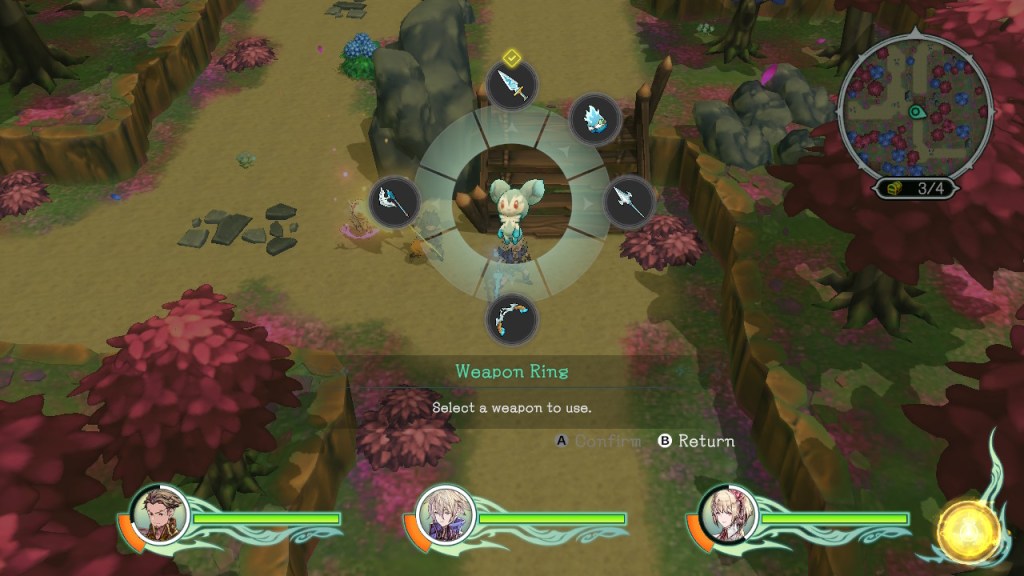
Besides the Trigger Attacks, weapons also have different uses when you fill and activate their Weapon Aura Gauge. Once you have all three party members, you can use the powerful Trinity Impact attack as long as all three characters are still able to fight. You can easily swap between weapons and/or characters mid-battle with the press of a button.
To change weapons, you use the quick and easy Weapon Wheel, and there’s also convenient access to items. Part of the reason that it’s so important to be able to change the weapon so quickly is because each enemy is weak to certain weapons, or they may be more neutral or strong against them.
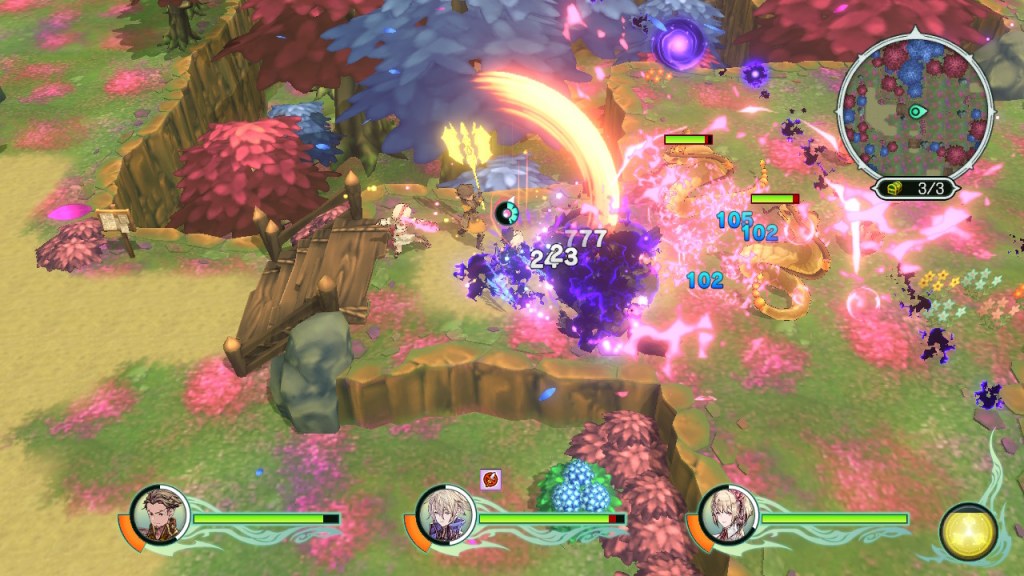
You may face groups of enemies with different weaknesses all at once, so you’ll have to swap out your weapon to have an easier time beating them. Monsters will also drop different materials depending on the weapon used to defeat them. Some bosses even have multiple phases where they change which weapon(s) they’re weak to, and it’s up to you to figure it out.
Bosses also have an Armor Gauge that you must deplete before you can chip away at their HP meter. The Armor Gauge goes down faster if you use weapons the boss is weak against, and it refills over and over again until you finally get their HP to zero. I got a little annoyed with this gauge too because sometimes it felt like it unnecessarily lengthened boss battles. Something I did like was that if you lose a boss fight, you can retry the battle, which apparently also results in the boss’ armor gauge decreasing more and more after multiple attempts.
I thought that the combat had some neat mechanics with the Triggers’ multi-weapon capabilities. However, a problem with the battles is that the AI for the other two characters could have been more intuitive, allowing them to independently swap weapons to target enemy weaknesses. Instead, I would have to change to that character and swap their weapon before changing back to who I was playing as. They also had a hard time avoiding environmental hazards on their own. There is a local co-op option for up to three players to play together, and that would probably make it work a bit better in that regard.
A Convenient Truth
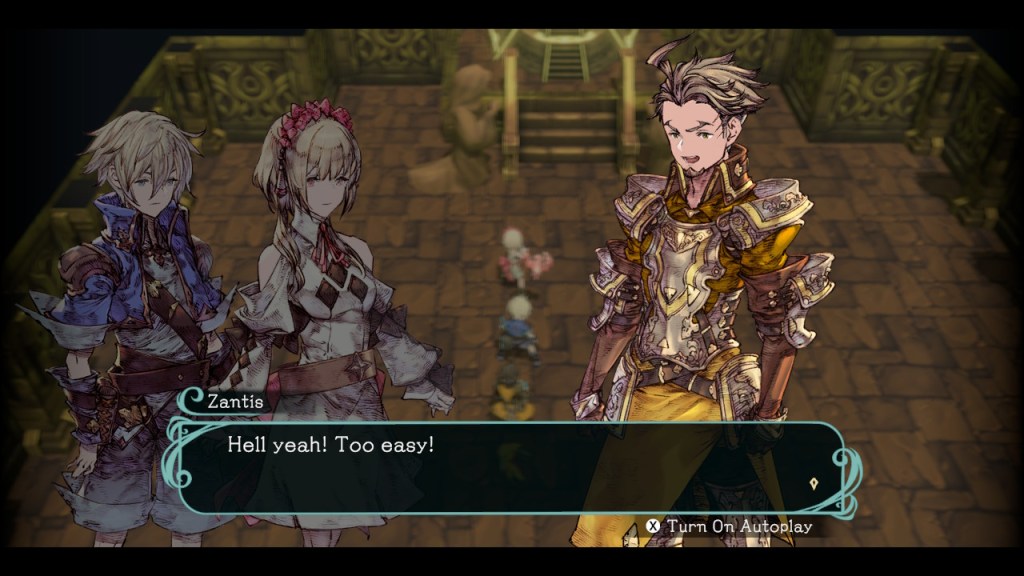
To me, it really did feel like they tried to make this a very streamlined JRPG; the combat was not too challenging, and little – if any – grinding is involved. There is only one difficulty level, and it isn’t very high until the end of the game. I don’t know if I’d say it’s too easy, although for some people it could be. I didn’t mind the difficulty level, personally. Another way they tried to make this approachable was with a linear experience, as they don’t allow you to go places you’re not supposed to go yet.
The gameplay cycle tends to have you leave the last town you were in, go through the wilderness, make it to the next town, and then explore the Arma nearby to acquire new weapon forms. There’s a little bit of backtracking for new side quests, which have icons that appear on your map, but thankfully there is an incredibly convenient fast travel mechanic in the game.
Even if you travel on foot though, the maps are never complicated. I never got lost here. They also tell you how many treasure chests are in each screen, and while some are kind of hidden, it was a breath of fresh air to not worry about missing any chests. In fact, I don’t believe there are any missables in this game unless you decide against completing side quests.
What was disappointing for me was the lack of personality in the majority of the NPCs in towns. When I fast traveled back to a previous town to complete a side quest there, I’d read the exact same dialogue for an NPC regardless of where I was in the plot. And speaking of the plot, it definitely had the potential to be interesting. Cyan, Elise, and Zantis were pretty likable protagonists, but I’d say most of the interactions in the game were just between them (and their Triggers).
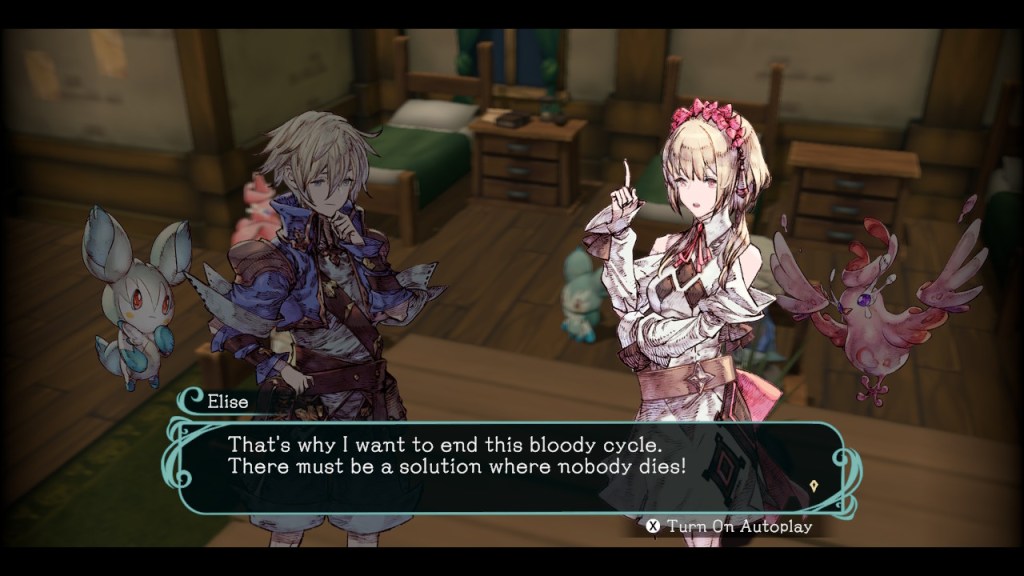
The problem with the story for me was that it felt rather low stakes for a world with divine conflict and humans being used as proxy warriors in the gods’ squabbles. I was somewhat torn on whether the simplicity of the plot was a good thing or a bad thing. I wanted to see more characters with Triggers (and their cute designs), and I also wanted more god-related content.
All in all, it’s not a bad game – it’s a perfectly competent JRPG. It could be a little bland for my tastes when it comes to story, because I always expect this type of game to have a stronger one. Perhaps the four “Extra Episode” (paid) DLC will expand on the world of Trinitia some more. Most people don’t have much spare time to game, though, and I think this could be a nice option in the short-to-mid range for busy people to play. With co-op, a group of friends could get together to enjoy a low pressure experience.
My initial playthrough took me about 23 hours, and that was with me completing all 33 side quests in the game. There is a post game with additional side quests, which may help you learn a bit more about some of the characters. The post game allows you to upgrade your Triggers more than you could during the main game. An area near the kingdom allows you to test your mettle at the Lost Lands, and you may also have an easier time going through areas marked for more experienced adventurers.
In Summary:
I liked that this is a game that seems very respectful of your time. The character art is as lovely as the Triggers’ art is cute, and the soundtrack and voice acting (English and Japanese) is well done. They seemed to cut out a lot of “fluff” that often pads the playtime of JRPGs, but they may have taken it too far with the world building. That being said, the story is serviceable, and I like a lot of the ideas here – especially the Triggers.
 Switch It On Gaming
Leave a comment